b
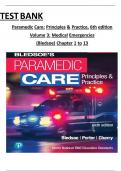
TEST BANK
b
Paramedic Care: Principles & Practice, 6th edition
b b b b b b
Volume 3: Medical Emergencies
b b b
(Bledsoe) Chapter 1 to 13
b b b b
, Volume b3: bMedical bEmergencies
Table bof bcontents:
Chapter b1: b Pulmonology
Chapter b2: bCardiology
Chapter b3: bNeurology
Chapter b4: bEndocrinology
Chapter b5: bImmunology
Chapter b6: bGastroenterology
Chapter b7: bUrology band bNephrology
Chapter b8: bToxicology band bSubstance bAbuse
Chapter b9: bHematology
Chapter b10: bInfectious bDiseases band bSepsis
Chapter b11: bPsychiatric band bBehavioral bDisorders
Chapter b12: bDiseases bof bthe bEyes, bEars, bNose, band
bThroat
Chapter b13: bNontraumatic bMusculoskeletal bDisorders
,b
Volume b3: bMedical bEmergencies
Chapter b1: b Pulmonology
1) bWhich bof bthe bfollowing bis bthe bmost bimportant bintrinsic brisk bfactor bfor brespiratory
A)bdisease?
b Environment
B) bSmoking
C) bSedentary blifestyle
D) bFamily bhistory
Answer: b D
Diff: b1 b Page bRef: b3
Standard: b Medicine b(Respiratory)
Objective: b 2
2) bAir bentering band bleaving bthe blungs bvia binspiration band bexpiration bis
A)bknown bas:
b ventilation.
B) brespirations.
C) bperfusion.
D) boxygenation.
Answer: b A
Diff: b1 b Page bRef: b8
Standard: b Medicine b(Respiratory)
Objective: b 1, b3
3) bThe bdiaphragm bis bcontrolled bby nerve.
A)bthe
b vagus
B) bolfactory
C) babducens
D) bphrenic
Answer: b D
Diff: b1 b Page bRef: b7-8
Standard: b Medicine b(Respiratory)
Objective: b 3, b4
4) bAn bexample bof bdiffusion bin bthe brespiratory bsystem bis
A)bmovement bof: bthe balveoli binto bthe bpulmonary bcapillaries.
b oxygen bfrom
B) bair bfrom bthe boutside benvironment binto bthe blungs.
C) boxygen bfrom bthe btissues binto bthe bsystemic bcapillaries.
D) bcarbon bdioxide bfrom bthe balveoli binto bthe bpulmonary
bcapillaries.
Answer: b A
Diff: b2 b Page bRef: b11
Standard: b Medicine b(Respiratory)
Objective: b 1, b4
,b
5) bAirway bresistance bis bincreased
A)bby:
b sympathetic bnervous bsystem
bstimulation.
B) bdecreased belasticity bof bthe bchest bwall.
C) banticholinergic bdrugs.
D) bbronchospasm.
Answer: b D
Diff: b2 b b Page
Standard: bRef: bb(Respiratory)
Medicine 9
Objective: b 4
6) bWhich bof bthe bfollowing bpatients bare bat brisk bfor bthe bmost bcommon bcause bof
bupper bairway
obstruction?
A) b4-year-old bmale bwith bcroup
B) b21-year-old bfemale bunconscious band bsupine bon bthe
bfloor
C) b22-year-old bfemale bstung bby ba bwasp
D) b5-year-old bfemale bwith bepiglottitis
Answer: bB
Diff: b2 b Page bRef: b25
Standard: b Medicine b(Respiratory)
Objective: b 7
7) bNormal btidal bvolume bin ban baverage b70 bkg badult bis e.
A)bapproximately
b1,500
B) b1,000
C) b750
D) b500
Answer: b D
Diff: b1 b Page bRef: b9
Standard: b Medicine b(Respiratory)
Objective: b 4
8) bAfter ba bnormal binspiration band bexpiration, ban badult bpatient bhas babout b2,400
bmL bof bair
remaining bin bthe blungs, bknown bas
bthe:
A) bexpiratory breserve bvolume.
B) bresidual bvolume.
C) bfunctional bresidual bcapacity.
D) bvital bcapacity.
Answer: b C
Diff: b1 b Page bRef: b9
Standard: b Medicine b(Respiratory)
Objective: b 4
TEST BANK
b
Paramedic Care: Principles & Practice, 6th edition
b b b b b b
Volume 3: Medical Emergencies
b b b
(Bledsoe) Chapter 1 to 13
b b b b
, Volume b3: bMedical bEmergencies
Table bof bcontents:
Chapter b1: b Pulmonology
Chapter b2: bCardiology
Chapter b3: bNeurology
Chapter b4: bEndocrinology
Chapter b5: bImmunology
Chapter b6: bGastroenterology
Chapter b7: bUrology band bNephrology
Chapter b8: bToxicology band bSubstance bAbuse
Chapter b9: bHematology
Chapter b10: bInfectious bDiseases band bSepsis
Chapter b11: bPsychiatric band bBehavioral bDisorders
Chapter b12: bDiseases bof bthe bEyes, bEars, bNose, band
bThroat
Chapter b13: bNontraumatic bMusculoskeletal bDisorders
,b
Volume b3: bMedical bEmergencies
Chapter b1: b Pulmonology
1) bWhich bof bthe bfollowing bis bthe bmost bimportant bintrinsic brisk bfactor bfor brespiratory
A)bdisease?
b Environment
B) bSmoking
C) bSedentary blifestyle
D) bFamily bhistory
Answer: b D
Diff: b1 b Page bRef: b3
Standard: b Medicine b(Respiratory)
Objective: b 2
2) bAir bentering band bleaving bthe blungs bvia binspiration band bexpiration bis
A)bknown bas:
b ventilation.
B) brespirations.
C) bperfusion.
D) boxygenation.
Answer: b A
Diff: b1 b Page bRef: b8
Standard: b Medicine b(Respiratory)
Objective: b 1, b3
3) bThe bdiaphragm bis bcontrolled bby nerve.
A)bthe
b vagus
B) bolfactory
C) babducens
D) bphrenic
Answer: b D
Diff: b1 b Page bRef: b7-8
Standard: b Medicine b(Respiratory)
Objective: b 3, b4
4) bAn bexample bof bdiffusion bin bthe brespiratory bsystem bis
A)bmovement bof: bthe balveoli binto bthe bpulmonary bcapillaries.
b oxygen bfrom
B) bair bfrom bthe boutside benvironment binto bthe blungs.
C) boxygen bfrom bthe btissues binto bthe bsystemic bcapillaries.
D) bcarbon bdioxide bfrom bthe balveoli binto bthe bpulmonary
bcapillaries.
Answer: b A
Diff: b2 b Page bRef: b11
Standard: b Medicine b(Respiratory)
Objective: b 1, b4
,b
5) bAirway bresistance bis bincreased
A)bby:
b sympathetic bnervous bsystem
bstimulation.
B) bdecreased belasticity bof bthe bchest bwall.
C) banticholinergic bdrugs.
D) bbronchospasm.
Answer: b D
Diff: b2 b b Page
Standard: bRef: bb(Respiratory)
Medicine 9
Objective: b 4
6) bWhich bof bthe bfollowing bpatients bare bat brisk bfor bthe bmost bcommon bcause bof
bupper bairway
obstruction?
A) b4-year-old bmale bwith bcroup
B) b21-year-old bfemale bunconscious band bsupine bon bthe
bfloor
C) b22-year-old bfemale bstung bby ba bwasp
D) b5-year-old bfemale bwith bepiglottitis
Answer: bB
Diff: b2 b Page bRef: b25
Standard: b Medicine b(Respiratory)
Objective: b 7
7) bNormal btidal bvolume bin ban baverage b70 bkg badult bis e.
A)bapproximately
b1,500
B) b1,000
C) b750
D) b500
Answer: b D
Diff: b1 b Page bRef: b9
Standard: b Medicine b(Respiratory)
Objective: b 4
8) bAfter ba bnormal binspiration band bexpiration, ban badult bpatient bhas babout b2,400
bmL bof bair
remaining bin bthe blungs, bknown bas
bthe:
A) bexpiratory breserve bvolume.
B) bresidual bvolume.
C) bfunctional bresidual bcapacity.
D) bvital bcapacity.
Answer: b C
Diff: b1 b Page bRef: b9
Standard: b Medicine b(Respiratory)
Objective: b 4