
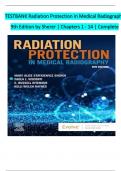
TESTBANK Radiation Protection in Medical Radiograph
9th Edition by Sherer | Chapters 1 - 14 | Complete
,TABLE OF CONTENTS
52 52
1.52Introduction52to52Radiation52Protection
2.52Radiation:52Types,52Sources,52and52Doses52Received
3.52Interaction52of52X-Radiation52with52Matter
4.52Radiation52Quantities52and52Units
5.52Radiation52Monitoring
6.52Overview52of52Cell52Biology
7.52Molecular52and52Cellular52Radiation52Biology
8.52Early52Tissue52Reactions52and52Their52Effects52on52Organ52Systems
9.52Stochastic52Effects52and52Late52Tissue52Reactions52of52Radiation52in52Organ52Systems
10.52Equipment52Design52for52Radiation52Protection
11.52Management52of52Patient52Radiation52Dose52During52Diagnostic52X-Ray52Procedures
12.52Radiation52Safety52in52Computed52Tomography52and52Mammography
13.52Management52of52Imaging52Personnel52Radiation52Dose52During52Diagnostic52X-Ray52Procedure
14.52Radioisotopes52and52Radiation52Protection
,Chapter5201:52Introduction52to52Radiation52Protection
Sherer:52Radiation52Protection52in52Medical52Radiography,529th52Edition
MULTIPLE52 CHOICE
1. Consequences52of52ionization52in52human52cells52include
1. creation52of52unstable52atoms.
2. production52of52free52electrons.
3. creation52of52highly52reactive52free52radicals52capable52of52producing52substances52po
isonous52to52the52cell.
4. creation52of52new52biologic52molecules52detrimental52to52the52living52cell.
5. injury52to52the52cell52that52may52manifest52itself52as52abnormal52function52or52loss52of52functi
.
a. 1,522,52and52352only
b. 2,523,52and52452only
c. 3,524,52and52552only
d.5 2 1,522,523,524,52and525
ANSWER:5 2 D
2. Which52of52the52following52is52a52form52of52radiation52that52is52capable52of52creating52el
ectrically52charged52particles52by52removing52orbital52electrons52from52the52atom52of52n
ormal52matter52through52which52it52passes?
a. Ionizing52radiation
b. Nonionizing52radiation
c. Subatomic52radiation
d. Ultrasonic52radiation
ANSWER:5 2 A
3. Regarding52exposure52to52ionizing52radiation,52patients52who52are52educated52to52understa
nd52the52medical52benefit52of52an52imaging52procedure52are52more52likely52to
a. assume52a52small52chance52of52biologic52damage52but52not52suppress52any52ra
diation52phobia52they52may52have.
b. cancel52their52scheduled52procedure52because52they52are52not52willing52to52a
ssume52a52small52chance52of52biologic52damage.
c. suppress52any52radiation52phobia52but52not52risk52a52small52chance52of52p
ossible52biologic52damage.
d. suppress52any52radiation52phobia52and52be52willing52to52assume52a52small52cha
nce52of52possible52biologic52damage.
ANSWER:5 2 D
4. The52millisievert52(mSv)52is52equal52to
a. 1/1052of52a52sievert.
b. 1/10052of52a52sievert.
c. 1/100052of52a52sievert.
d. 1/10,00052of52a52sievert.
ANSWER:5 2 C
, Radiation52Protection52in52Medical52Radiography528th52Edition52Sherer52T
est52Bank
5. The52advantages52of52the52BERT52method52are
1. it52does52not52imply52radiation52risk;52it52is52simply52a52means52for52comparison.
2. it52emphasizes52that52radiation52is52an52innate52part52of52our52environment.
3. it52provides52an52answer52that52is52easy52for52the52patient52to52comprehend.
a. 152and52252only
b. 152and52352only
c. 252and52352only
d. 1,522,52and523
ANSWER:5 2 D
6. If52a52patient52asks52a52radiographer52a52question52about52how52much52radiation52he52
or52she52will52receive52from52a52specific52x-ray52procedure,52the52radiographer52can
a. respond52by52using52an52estimation52based52on52the52comparison52of52radiation
52received52from52the52x-ray52to52natural52background52radiation52received.
b. avoid52the52patient’s52question52by52changing52the52subject.
c. tell52the52patient52that52it52is52unethical52to52discuss52such52concerns.
d. refuse52to52answer52the52question52and52recommend52that52he52or52she
52speak52with52the52referring52physician.
ANSWER:5 2 A
7. Why52should52the52selection52of52technical52exposure52factors52for52all52medical52imaging52proc
ures
always52follow52ALARA So52that52radiographers52and52radiologists52do52no
? 2have52to52a
a.52So52that52referring52physicians52ordering52imaging52procedures52do52not52have52to5
2accept52responsibility52for52patient52radiation52safety.
b.
patient52radiation52safety.
c. Because52radiation-
induced52cancer52does52not52appear52to52have52a52dose52level52below52whi
ch52individuals52would52have52no52chance52of52developing52this52disease.
d. Because52radiation-
induced52cancer52does52have52a52dose52level52at52which52individuals52would
52have52a52chance52of52developing52this52disease.
ANSWER:5 2 C
8. The52cardinal52principles52of52radiation52protection52include52which52of52the52following?
1. Time
2. Distance
3. Shielding
a. 152only
b. 252only
c. 352only
d. 1,522,52and523
ANSWER:5 2 D
9. In52a52hospital52setting,52which52of52the52following52professionals52is52expressly52charged5
2by52the52hospital52administration52with52being52directly52responsible52for52the52execution,
52enforcement,52and52maintenance52of52the52ALARA52program?
a. Assistant52administrator52of52the52facility
b. Chief52of52staff
9th Edition by Sherer | Chapters 1 - 14 | Complete
,TABLE OF CONTENTS
52 52
1.52Introduction52to52Radiation52Protection
2.52Radiation:52Types,52Sources,52and52Doses52Received
3.52Interaction52of52X-Radiation52with52Matter
4.52Radiation52Quantities52and52Units
5.52Radiation52Monitoring
6.52Overview52of52Cell52Biology
7.52Molecular52and52Cellular52Radiation52Biology
8.52Early52Tissue52Reactions52and52Their52Effects52on52Organ52Systems
9.52Stochastic52Effects52and52Late52Tissue52Reactions52of52Radiation52in52Organ52Systems
10.52Equipment52Design52for52Radiation52Protection
11.52Management52of52Patient52Radiation52Dose52During52Diagnostic52X-Ray52Procedures
12.52Radiation52Safety52in52Computed52Tomography52and52Mammography
13.52Management52of52Imaging52Personnel52Radiation52Dose52During52Diagnostic52X-Ray52Procedure
14.52Radioisotopes52and52Radiation52Protection
,Chapter5201:52Introduction52to52Radiation52Protection
Sherer:52Radiation52Protection52in52Medical52Radiography,529th52Edition
MULTIPLE52 CHOICE
1. Consequences52of52ionization52in52human52cells52include
1. creation52of52unstable52atoms.
2. production52of52free52electrons.
3. creation52of52highly52reactive52free52radicals52capable52of52producing52substances52po
isonous52to52the52cell.
4. creation52of52new52biologic52molecules52detrimental52to52the52living52cell.
5. injury52to52the52cell52that52may52manifest52itself52as52abnormal52function52or52loss52of52functi
.
a. 1,522,52and52352only
b. 2,523,52and52452only
c. 3,524,52and52552only
d.5 2 1,522,523,524,52and525
ANSWER:5 2 D
2. Which52of52the52following52is52a52form52of52radiation52that52is52capable52of52creating52el
ectrically52charged52particles52by52removing52orbital52electrons52from52the52atom52of52n
ormal52matter52through52which52it52passes?
a. Ionizing52radiation
b. Nonionizing52radiation
c. Subatomic52radiation
d. Ultrasonic52radiation
ANSWER:5 2 A
3. Regarding52exposure52to52ionizing52radiation,52patients52who52are52educated52to52understa
nd52the52medical52benefit52of52an52imaging52procedure52are52more52likely52to
a. assume52a52small52chance52of52biologic52damage52but52not52suppress52any52ra
diation52phobia52they52may52have.
b. cancel52their52scheduled52procedure52because52they52are52not52willing52to52a
ssume52a52small52chance52of52biologic52damage.
c. suppress52any52radiation52phobia52but52not52risk52a52small52chance52of52p
ossible52biologic52damage.
d. suppress52any52radiation52phobia52and52be52willing52to52assume52a52small52cha
nce52of52possible52biologic52damage.
ANSWER:5 2 D
4. The52millisievert52(mSv)52is52equal52to
a. 1/1052of52a52sievert.
b. 1/10052of52a52sievert.
c. 1/100052of52a52sievert.
d. 1/10,00052of52a52sievert.
ANSWER:5 2 C
, Radiation52Protection52in52Medical52Radiography528th52Edition52Sherer52T
est52Bank
5. The52advantages52of52the52BERT52method52are
1. it52does52not52imply52radiation52risk;52it52is52simply52a52means52for52comparison.
2. it52emphasizes52that52radiation52is52an52innate52part52of52our52environment.
3. it52provides52an52answer52that52is52easy52for52the52patient52to52comprehend.
a. 152and52252only
b. 152and52352only
c. 252and52352only
d. 1,522,52and523
ANSWER:5 2 D
6. If52a52patient52asks52a52radiographer52a52question52about52how52much52radiation52he52
or52she52will52receive52from52a52specific52x-ray52procedure,52the52radiographer52can
a. respond52by52using52an52estimation52based52on52the52comparison52of52radiation
52received52from52the52x-ray52to52natural52background52radiation52received.
b. avoid52the52patient’s52question52by52changing52the52subject.
c. tell52the52patient52that52it52is52unethical52to52discuss52such52concerns.
d. refuse52to52answer52the52question52and52recommend52that52he52or52she
52speak52with52the52referring52physician.
ANSWER:5 2 A
7. Why52should52the52selection52of52technical52exposure52factors52for52all52medical52imaging52proc
ures
always52follow52ALARA So52that52radiographers52and52radiologists52do52no
? 2have52to52a
a.52So52that52referring52physicians52ordering52imaging52procedures52do52not52have52to5
2accept52responsibility52for52patient52radiation52safety.
b.
patient52radiation52safety.
c. Because52radiation-
induced52cancer52does52not52appear52to52have52a52dose52level52below52whi
ch52individuals52would52have52no52chance52of52developing52this52disease.
d. Because52radiation-
induced52cancer52does52have52a52dose52level52at52which52individuals52would
52have52a52chance52of52developing52this52disease.
ANSWER:5 2 C
8. The52cardinal52principles52of52radiation52protection52include52which52of52the52following?
1. Time
2. Distance
3. Shielding
a. 152only
b. 252only
c. 352only
d. 1,522,52and523
ANSWER:5 2 D
9. In52a52hospital52setting,52which52of52the52following52professionals52is52expressly52charged5
2by52the52hospital52administration52with52being52directly52responsible52for52the52execution,
52enforcement,52and52maintenance52of52the52ALARA52program?
a. Assistant52administrator52of52the52facility
b. Chief52of52staff


