
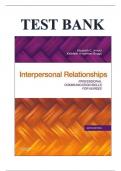
, TEST BANK INTERPERSONAL RELATIONSHIPS: PROFESSIONAL COMMUNICATION SKILLS FOR NURSES BY
q q q q q q q q q q
ELIZABETH C. ARNOLD PHD RN PMHCNS-BC (AUTHOR), KATHLEEN UNDERMAN BOGGS PHD FNP-CS (AUTHOR)
q q q q q q q q q q q q
TABLE OF CONTENT q q
Pt. I Conceptual Foundations of Nurse-Client Relationships
q q q q q q
1. Theoretical Perspectives and Contemporary Issues
q q q q
2. Professional Guides to Action in Interpersonal Relationships
q q q q q q
3. Clinical Judgment: Applying Critical Thinking and Ethical Decision Making
q q q q q q q q
4. Self-Concept in the Nurse-Client Relationship q q q q
Pt. II The Nurse-Client Relationship
q q q q
5. Structuring the Relationship q q
6. Bridges and Barriers in the Therapeutic Relationship
q q q q q q
7. Role Relationship Patterns
q q
8. The Grief Experience: Life's Losses and Endings
q q q q q q
Pt. III Therapeutic Communication
q q q
9. Communication Styles q
10. Developing Therapeutic Communication Skills in the Nurse-Client Relationship
q q q q q q q
11. Intercultural Communication q
,12. Communicating in Groupsq q
13. Communicating with Families
q q
14. Resolving Conflict Between Nurse and Client
q q q q q
15. Health Promotion and Client Learning Needs
q q q q q
16. Health Teaching in the Nurse-Client Relationship
q q q q q
Pt. IV Responding to Special Needs
q q q q q
17. Communicating with Clients Experiencing Communication Deficits
q q q q q
18. Communicating with Children
q q
19. Communicating with Older Adults
q q q
20. Communicating with Clients in Stressful Situations
q q q q q
21. Communicating with Clients in Crisis
q q q q
Pt. V Professional Issues
q q q
22. Communicating with Other Health Professionals
q q q q
23. Documentation in the Age of Computers
q q q q q
, Test Bank for Interpersonal Relationships Professional Communication
q q q q q q q
Skills for Nurses 6th Edition Arnold q q q q q
Chapter 1: Theoretical Perspectives and Contemporary Issues
q q q q q q
MULTIPLE CHOICE q
1. Which of the following best describes the role of theory in the
qqq q qq qqq qqq qqq qqq qqq qqq qqq qqq qqq qqq
nurse-client relationship? qqq
a. Theory provides a common language.qqq qqq qqq qqq
b. Theory is the essence of the nurse-client relationship.
qqq qqq qqq qqq qqq qqq qqq
c. Theory varies with changes in health care delivery.
qq q qqq qqq qqq qqq qqq qqq
d. Theory guides nursing practice. q qq qqq qqq
ANS: D qqq
Theory provides nurses with a systematic way to view client situations and a
qqq qqq qqq qqq qqq qqq q qq qqq qqq qqq qqq qqq qq q
logical way to organize and interpret data. Incorrect answers: 1. Theory does
qqq qqq qqq qqq qqq qqq qqq qqq qqq qqq qqq qqq
provide a common language for nurses, but this question asks what best
qqq qqq qqq qqq qqq qqq qqq qqq qqq qqq qqq qqq
describes the role of theory in the nurse-client relationship. 2. Theory acts as
qqq qqq qqq qqq qqq qqq qqq qqq qqq qqq qqq qqq qq
a framework or guide; it is not the essence of the relationship. 3. Theory
q qqq qqq qqq qqq qqq qqq qqq qqq qqq qqq qqq qqq qqq qqq
provides a common framework for describing practice.
qqq qqq qqq qqq qqq qqq
DIF: Cognitive Level: Comprehension REF: Text Page Reference: p. 3qqq qqq qqq qqq qqq qqq qqq qq q
TOP: Step of the Nursing Process: All phases
qqq qqq qqq qqq qqq qqq qqq
MSC: Client Needs: Safe, Effective Care Environment: Management of Care
qqq qqq qqq qqq qqq qqq qqq qqq qqq
2. Nurse Jones demonstrates the application of modern nursing theory when she:
qqq qqq qqq qqq qqq qqq qqq qqq qqq qqq
a. Administers insulin to a client with diabetes qqq qqq qqq qqq qqq qqq
b. Assists a physician with a pelvic examination
qqq qqq qqq qqq qqq qqq
c. Teaches a client techniques of self breast examination
qqq qqq qqq qqq qqq qqq qqq
d. Makes up a client’s bed qqq qqq qqq qqq
ANS: C qqq
Modern nursing theory has broadened the definition of health with a strong
qqq qqq qqq qqq qqq qqq qqq qqq qqq qqq qqq qqq
emphasis on disease prevention and health promotion. Incorrect answers: 1,2,4.
qqq qqq qqq qqq qqq qqq qqq qqq qqq qqq
These are all nursing tasks, and modern nursing theory puts less emphasis on
qqq qqq qqq qqq qqq qqq qqq qqq qqq qqq qqq qqq qq
tasks and systems.
q qqq qqq
DIF: Cognitive Level: Application REF: Text Page Reference: p. 22 TOP:
qqq q qq qqq qqq qqq qq q qqq q qq qqq q qq
Step of the Nursing Process: Implementation
qqq qqq qqq qqq qqq
MSC: Client Needs: Health Promotion and Maintenance
qqq qqq qqq qqq qqq qqq
This study source was downloaded by 100000830242422 from CourseHero.com on 12-18-2021 22:46:25 GMT -06:00
https://www.coursehero.com/file/53198227/Chapter-1pdf/
q q q q q q q q q q
ELIZABETH C. ARNOLD PHD RN PMHCNS-BC (AUTHOR), KATHLEEN UNDERMAN BOGGS PHD FNP-CS (AUTHOR)
q q q q q q q q q q q q
TABLE OF CONTENT q q
Pt. I Conceptual Foundations of Nurse-Client Relationships
q q q q q q
1. Theoretical Perspectives and Contemporary Issues
q q q q
2. Professional Guides to Action in Interpersonal Relationships
q q q q q q
3. Clinical Judgment: Applying Critical Thinking and Ethical Decision Making
q q q q q q q q
4. Self-Concept in the Nurse-Client Relationship q q q q
Pt. II The Nurse-Client Relationship
q q q q
5. Structuring the Relationship q q
6. Bridges and Barriers in the Therapeutic Relationship
q q q q q q
7. Role Relationship Patterns
q q
8. The Grief Experience: Life's Losses and Endings
q q q q q q
Pt. III Therapeutic Communication
q q q
9. Communication Styles q
10. Developing Therapeutic Communication Skills in the Nurse-Client Relationship
q q q q q q q
11. Intercultural Communication q
,12. Communicating in Groupsq q
13. Communicating with Families
q q
14. Resolving Conflict Between Nurse and Client
q q q q q
15. Health Promotion and Client Learning Needs
q q q q q
16. Health Teaching in the Nurse-Client Relationship
q q q q q
Pt. IV Responding to Special Needs
q q q q q
17. Communicating with Clients Experiencing Communication Deficits
q q q q q
18. Communicating with Children
q q
19. Communicating with Older Adults
q q q
20. Communicating with Clients in Stressful Situations
q q q q q
21. Communicating with Clients in Crisis
q q q q
Pt. V Professional Issues
q q q
22. Communicating with Other Health Professionals
q q q q
23. Documentation in the Age of Computers
q q q q q
, Test Bank for Interpersonal Relationships Professional Communication
q q q q q q q
Skills for Nurses 6th Edition Arnold q q q q q
Chapter 1: Theoretical Perspectives and Contemporary Issues
q q q q q q
MULTIPLE CHOICE q
1. Which of the following best describes the role of theory in the
qqq q qq qqq qqq qqq qqq qqq qqq qqq qqq qqq qqq
nurse-client relationship? qqq
a. Theory provides a common language.qqq qqq qqq qqq
b. Theory is the essence of the nurse-client relationship.
qqq qqq qqq qqq qqq qqq qqq
c. Theory varies with changes in health care delivery.
qq q qqq qqq qqq qqq qqq qqq
d. Theory guides nursing practice. q qq qqq qqq
ANS: D qqq
Theory provides nurses with a systematic way to view client situations and a
qqq qqq qqq qqq qqq qqq q qq qqq qqq qqq qqq qqq qq q
logical way to organize and interpret data. Incorrect answers: 1. Theory does
qqq qqq qqq qqq qqq qqq qqq qqq qqq qqq qqq qqq
provide a common language for nurses, but this question asks what best
qqq qqq qqq qqq qqq qqq qqq qqq qqq qqq qqq qqq
describes the role of theory in the nurse-client relationship. 2. Theory acts as
qqq qqq qqq qqq qqq qqq qqq qqq qqq qqq qqq qqq qq
a framework or guide; it is not the essence of the relationship. 3. Theory
q qqq qqq qqq qqq qqq qqq qqq qqq qqq qqq qqq qqq qqq qqq
provides a common framework for describing practice.
qqq qqq qqq qqq qqq qqq
DIF: Cognitive Level: Comprehension REF: Text Page Reference: p. 3qqq qqq qqq qqq qqq qqq qqq qq q
TOP: Step of the Nursing Process: All phases
qqq qqq qqq qqq qqq qqq qqq
MSC: Client Needs: Safe, Effective Care Environment: Management of Care
qqq qqq qqq qqq qqq qqq qqq qqq qqq
2. Nurse Jones demonstrates the application of modern nursing theory when she:
qqq qqq qqq qqq qqq qqq qqq qqq qqq qqq
a. Administers insulin to a client with diabetes qqq qqq qqq qqq qqq qqq
b. Assists a physician with a pelvic examination
qqq qqq qqq qqq qqq qqq
c. Teaches a client techniques of self breast examination
qqq qqq qqq qqq qqq qqq qqq
d. Makes up a client’s bed qqq qqq qqq qqq
ANS: C qqq
Modern nursing theory has broadened the definition of health with a strong
qqq qqq qqq qqq qqq qqq qqq qqq qqq qqq qqq qqq
emphasis on disease prevention and health promotion. Incorrect answers: 1,2,4.
qqq qqq qqq qqq qqq qqq qqq qqq qqq qqq
These are all nursing tasks, and modern nursing theory puts less emphasis on
qqq qqq qqq qqq qqq qqq qqq qqq qqq qqq qqq qqq qq
tasks and systems.
q qqq qqq
DIF: Cognitive Level: Application REF: Text Page Reference: p. 22 TOP:
qqq q qq qqq qqq qqq qq q qqq q qq qqq q qq
Step of the Nursing Process: Implementation
qqq qqq qqq qqq qqq
MSC: Client Needs: Health Promotion and Maintenance
qqq qqq qqq qqq qqq qqq
This study source was downloaded by 100000830242422 from CourseHero.com on 12-18-2021 22:46:25 GMT -06:00
https://www.coursehero.com/file/53198227/Chapter-1pdf/


