
Page 1
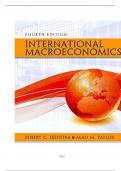
,International ,.Macroeconomics ,.4th ,.edition ,.by ,.Robert ,.C. ,.Feenstra,
,. Alan ,.M. ,.Taylor ,.Test ,.Bank ,.2023/2024
1. Which ,.of ,.the ,.following ,.is ,.NOT ,.a ,.reason ,.why ,.countries ,.trade ,.goods ,.with ,.one
,.another?
A) differences ,.in ,.technology ,.used ,.in ,.different ,.countries
B) differences ,.in ,.countries' ,.total ,.amount ,.of ,.resources
C) the ,.proximity ,.of ,.countries ,.to ,.one ,.another
D) differences ,.in ,.countries' ,.languages ,.and ,.cultures
2. David ,.Ricardo's ,.model ,.explains ,.trade ,.based ,.on:
A) labor ,.supply.
B) technology.
C) population.
D) government ,.control.
3. Which ,.of ,.the ,.following ,.is ,.the ,.MOST ,.likely ,.explanation ,.for ,.a
,.Detroit ,.construction ,.company's ,.imports ,.of ,.concrete ,.blocks ,.made
,.in ,.Windsor, ,.Ontario?
A) the ,.Ricardian ,.model
B) offshoring
C) technology
D) proximity
4. What ,.is ,.the ,.MOST ,.likely ,.reason ,.why ,.neighboring ,.nations ,.engage ,.in ,.trade?
A) labor ,.availability
B) similar ,.tastes ,.and ,.preferences
C) proximity
D) shared ,.membership ,.in ,.a ,.free-trade ,.area
Page 1
,5. A ,.country's ,.factors ,.of ,.production ,.includes:
Page 1
, A) its ,.labor, ,.capital, ,.natural ,.resources, ,.and ,.markets.
B) only ,.its ,.labor ,.and ,.capital.
C) only ,.its ,.capital ,.and ,.natural ,.resources.
D) its ,.labor, ,.capital, ,.and ,.natural ,.resources.
6. Which ,.of ,.the ,.following ,.is ,.NOT ,.considered ,.to ,.be ,.a ,.factor ,.of ,.production?
A) labor
B) capital
C) natural ,.resources
D) government
Page 1
,International ,.Macroeconomics ,.4th ,.edition ,.by ,.Robert ,.C. ,.Feenstra,
,. Alan ,.M. ,.Taylor ,.Test ,.Bank ,.2023/2024
1. Which ,.of ,.the ,.following ,.is ,.NOT ,.a ,.reason ,.why ,.countries ,.trade ,.goods ,.with ,.one
,.another?
A) differences ,.in ,.technology ,.used ,.in ,.different ,.countries
B) differences ,.in ,.countries' ,.total ,.amount ,.of ,.resources
C) the ,.proximity ,.of ,.countries ,.to ,.one ,.another
D) differences ,.in ,.countries' ,.languages ,.and ,.cultures
2. David ,.Ricardo's ,.model ,.explains ,.trade ,.based ,.on:
A) labor ,.supply.
B) technology.
C) population.
D) government ,.control.
3. Which ,.of ,.the ,.following ,.is ,.the ,.MOST ,.likely ,.explanation ,.for ,.a
,.Detroit ,.construction ,.company's ,.imports ,.of ,.concrete ,.blocks ,.made
,.in ,.Windsor, ,.Ontario?
A) the ,.Ricardian ,.model
B) offshoring
C) technology
D) proximity
4. What ,.is ,.the ,.MOST ,.likely ,.reason ,.why ,.neighboring ,.nations ,.engage ,.in ,.trade?
A) labor ,.availability
B) similar ,.tastes ,.and ,.preferences
C) proximity
D) shared ,.membership ,.in ,.a ,.free-trade ,.area
Page 1
,5. A ,.country's ,.factors ,.of ,.production ,.includes:
Page 1
, A) its ,.labor, ,.capital, ,.natural ,.resources, ,.and ,.markets.
B) only ,.its ,.labor ,.and ,.capital.
C) only ,.its ,.capital ,.and ,.natural ,.resources.
D) its ,.labor, ,.capital, ,.and ,.natural ,.resources.
6. Which ,.of ,.the ,.following ,.is ,.NOT ,.considered ,.to ,.be ,.a ,.factor ,.of ,.production?
A) labor
B) capital
C) natural ,.resources
D) government
Page 1


