

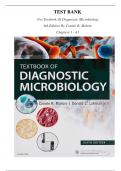
TEST BANK vv
vv For Textbook Of Diagnostic Microbiology
vv vv vv vv
vv 6th Edition By Connie R. Mahon
vv vv vv vv vv vv
Chapters 1 - 41 vv vv vv
, Mahon:vvTextbookvvofvvDiagnosticvvMicrobiology,vv6thvvEditionvvTestvvBank
Tablevvofvvcontents
Partvv1:vvIntroductionvvtovvClinicalvvMicrobiology
Chaptervv1.vvBacterialvvCellvvStructure,vvPhysiology,vvMetabolism,vvandvvGenetics
Chaptervv2.vvHost-ParasitevvInteraction
Chaptervv3.vvThevvLaboratoryvvRolevvinvvInfectionvvControl
Chaptervv4.vvControlvvofvvMicroorganisms:vvDisinfection,vvSterilization,vvandvvMicrobiologyvvSafety
Chaptervv5.vvPerformancevvImprovementvvinvvthevvMicrobiologyvvLaboratory
Chaptervv6.vvSpecimenvvCollectionvvandvvProcessing
Chaptervv7.vvMicroscopicvvExaminationvvofvvMaterialsvvfromvvInfectedvvSites
Chaptervv8.v v UsevvofvvColonyvvMorphologyvvforvvthevvPresumptivevvIdentificationvvofvvMicroorganisms
Chaptervv9.v v BiochemicalvvIdentificationvvofvvGram-NegativevvBacteria
Chaptervv10.vvImmunodiagnosisvvofvvInfectiousvvDiseases
Chaptervv11.vvApplicationsvvofvvMolecularvvDiagnostics
Chaptervv12.vvAntibacterialvvMechanismsvvofvvActionvvandvvBacterialvvResistancevvMechanisms
Chaptervv13.vvAntimicrobialvvSusceptibilityvvTesting
Partvv2:vvLaboratoryvvIdentificationvvofvvSignificantvvIsolates
Chaptervv14.vvStaphylococci
Chaptervv15.vvStreptococcus,vvEnterococcus,vvandvvOthervvCatalase-Negative,vvGram-PositivevvCocci
Chaptervv16.vvAerobicvvGram-PositivevvBacilli
Chaptervv17.vvNeisseriavvSpeciesvvandvvMoraxellavvcatarrhalis
Chaptervv18.vvHaemophilus,vvHACEK,vvLegionellavvandvvOthervvFastidiousvvGram-NegativevvBacilli
Chaptervv19.vvEnterobacteriaceae
Chaptervv20.vvVibrio,vvAeromonas,vvandvvCampylobactervvSpecies
Chaptervv21.vvNonfermentingvvandvvMiscellaneousvvGram-NegativevvBacilli
Chaptervv22.vvAnaerobesvvofvvClinicalvvImportance
Chaptervv23.vvThevvSpirochetes
Chaptervv24.vvChlamydia,vvRickettsia,vvandvvSimilarvvOrganisms
Chaptervv25.vvMycoplasmavvandvvUreaplasma
Chaptervv26.vvMycobacteriumvvtuberculosisvvandvvNontuberculousvvMycobacteria
Chaptervv27.vvMedicallyvvSignificantvvFungi
Chaptervv28.vvDiagnosticvvParasitology
Chaptervv29.vvClinicalvvVirology
Chaptervv30.vvAgentsvvofvvBioterrorvvandvvForensicvvMicrobiology
Chaptervv31.vvBiofilms:vvArchitectsvvofvvDisease
Partvv3:vvLaboratoryvvDiagnosisvvofvvInfectiousvvDiseases:vvandvvOrganvvSystemvvApproachvvtovvDiagnosticvMicrob
iology
Chaptervv32.vvUppervvandvvLowervvRespiratoryvvTractvvInfections
Chaptervv33.vvSkinvvandvvSoftvvTissuevvInfections
Chaptervv34.vvGastrointestinalvvInfectionsvvandvvFoodvvPoisoning
Chaptervv35.vvInfectionsvvofvvthevvCentralvvNervousvvSystem
Chaptervv36.vvBacteremiavvandvvSepsis
Chaptervv37.vvUrinaryvvTractvvInfections
Chaptervv38.vvGenitalvvInfectionsvvandvvSexuallyvvTransmittedvvInfections
Chaptervv39.vvInfectionsvvinvvSpecialvvPopulations
Chaptervv40.vvZoonoticvvDiseases
Chaptervv41.vvOcularvvInfections
-
,Chaptervv01:vvBacterialvvCellvvStructure,vvPhysiology,vvMetabolism,vvandvvGenet
icsvMahon:vvTextbookvvofvvDiagnosticvvMicrobiology,vv6thvvEditionvvTestvvBank
MULTIPLEvvCHOICE
1. Tovvsurvive,vvmicrobialvvinhabitantsvvhavevvlearnedvvtovvadaptvvbyvvvaryingvvallvvofvvthevvfollowing,vvexcept
a. growthvvrate.
b. growthvvinvvallvvatmosphericvvconditions.
c. growthvvatvvparticularvvtemperatures.
d. bacterialvvshape.
ANSWER:v v D
Thevvchaptervvbeginsvvbyvvdiscussingvvthevvwayvvmicrobialvvinhabitantsvvhavevvhadvvtovvevolvevvtovvs
urvivevinvvmanyvvdifferentvvnichesvvandvvhabitats.vvItvvdiscussesvvslowvvgrowers,vvrapidvvgrowers,vva
ndvvreplicationvvwithvvscarcevvorvvabundantvvnutrients,vvundervvdifferentvvatmosphericvvconditions,v
vtemperaturevvrequirements,vvandvvcellvvstructure.vvBacterialvvshapevvasvvavvform vvofvvevolutionvvisvv
notvvdiscussed.
OBJ:vv Levelvv2:vvInterpretation
2. Whovvwasvvconsideredvvthevvfathervvofvvprotozoologyvvandvvbacteriology?
a. AntonvvvanvvLeeuwenhoek
b. LouisvvPasteur
c. CarlvvLandsteiner
d. MichaelvvDouglas
ANSWER:v v A
ThevvbookvvdiscussesvvAntonvvvanvvLeeuwenhoekvvasvvthevvinventorvvofvvthevvmicroscopevvandvvthev
vfirstvvpersonvvtovvseevvthevv“beasties.”vvSovvtheyvvdubbedvvhimvvthevvfathervvofvvprotozoologyvvandvvba
cteriology.vThevvothervvthreevvindividualsvvwerevvnotvvdiscussed.
OBJ:v v Levelvv1:vvRecall
3. Prokaryoticvvcellsvvhavevvwhichvvofvvthevvfollowingvvstructuresvvinvvtheirvvcytoplasm?
a. Golgivvapparatus
b. Ribosomes
c. Mitochondria
d. Endoplasmicvvreticulum
ANSWER:v v B
Allvvthevvstructuresvvlistedvvarevvfoundvvinvveukaryoticvvcells,vvbutvvribosomesvvarevvthevvonlyvvon
esvvthatvapplyvvtovvprokaryoticvvcells.
OBJ:v v Levelvv1:vvRecall
4. ThisvvformvvofvvDNAvvisvvcommonlyvvfoundvvinvveukaryoticvvcells.
a. Linear
b. Circular
c. Plasmid
d. Colloid
TestBanks/vvSolutionvvManualsvvandvvExa
, ANSWER:v v A
CircularvvandvvplasmidvvDNAvvarevvusuallyvvfoundvvonlyvvinvvbacteria,vvnotvveukaryoticvvcells.vvColl
oidvvisvavvpropertyvvofvvproteinvvmoleculesvvandvvisvvnotvvassociatedvvwithvvnucleotides.
OBJ:v v Levelvv1:vvRecall
5. Thevvnuclearvvmembranevvinvvprokaryotesvvis
a. missing.
b. impenetrable.
c. avvclassicvvmembrane.
d. avvlipidvvbilayervvmembrane.
ANSWER:v v A
Prokaryoticvvcellsvvdovvnotvvhavevvanyvvmembrane-
boundvvstructuresvvinvvthevvcytoplasmvvincludingvvavstructuredvvnucleus.
OBJ:v v Levelvv1:vvRecall
6. Avvmicroorganismvvthatvvisvvavvunicellularvvorganismvvandvvlacksvvavvnuclearvvmembranevvand
vvtruevnucleusvvbelongsvvtovvwhichvvclassification?
a. Fungi
b. Bacteria
c. Algae
d. Parasite
ANSWER:v v B
Fungi,vvalgae,vvandvvparasitesvvarevvunicellularvveukaryoticvvorganismsvvthatvvcontainvvavvtruevvnuc
leus.vBacteriavvarevvprokaryoticvvandvvdovvnotvvcontainvvavvtruevvnucleusvvorvvnuclearvvmembrane.
OBJ:v v Levelvv1:vvRecall
7. Invvthevvlaboratory,vvthevvclinicalvvmicrobiologistvvisvvresponsiblevvforvvallvvthevvfollowing,vvexcept
a. isolatingvvmicroorganisms.
b. selectingvvtreatmentvvforvvpatients.
c. identifyingvvmicroorganisms.
d. analyzingvvbacteriavvthatvvcausevvdisease.
ANSWER:v v B
Clinicalvvmicrobiologistsvvdovvnotvvselectvvthevvtreatmentvvforvvpatients.vvTheyvvprovidevvthevvdoctorv
vwithvthevvnamevvofvvthevvorganismvvandvvthevvantibioticsvvthatvvcanvvkillvvthevvbacteria,vvbutvvnotvvinvvt
hevvfinalvvselectionvvofvvtreatmentvvprotocols.
OBJ:v v Levelvv2:vvRecall
8. Whatvvenablesvvthevvmicrobiologistvvtovvselectvvthevvcorrectvvmediavvforvvprimaryvvculturevvandvvopti
mizevthevvchancevvofvvisolatingvvavvpathogenicvvorganism?
a. Determiningvvstainingvvcharacteristics
b. Understandingvvthevvcellvvstructurevvandvvbiochemicalvvpathwaysvvofvvanvvorganism
c. Understandingvvthevvgrowthvvrequirementsvvofvvpotentialvvpathogensvvatvvspecificvvbodyvvsite
d. Knowingvvthevvdifferencesvvinvvcellvvwallsvvofvvparticularvvbacteria
ANSWER:v v C
vv For Textbook Of Diagnostic Microbiology
vv vv vv vv
vv 6th Edition By Connie R. Mahon
vv vv vv vv vv vv
Chapters 1 - 41 vv vv vv
, Mahon:vvTextbookvvofvvDiagnosticvvMicrobiology,vv6thvvEditionvvTestvvBank
Tablevvofvvcontents
Partvv1:vvIntroductionvvtovvClinicalvvMicrobiology
Chaptervv1.vvBacterialvvCellvvStructure,vvPhysiology,vvMetabolism,vvandvvGenetics
Chaptervv2.vvHost-ParasitevvInteraction
Chaptervv3.vvThevvLaboratoryvvRolevvinvvInfectionvvControl
Chaptervv4.vvControlvvofvvMicroorganisms:vvDisinfection,vvSterilization,vvandvvMicrobiologyvvSafety
Chaptervv5.vvPerformancevvImprovementvvinvvthevvMicrobiologyvvLaboratory
Chaptervv6.vvSpecimenvvCollectionvvandvvProcessing
Chaptervv7.vvMicroscopicvvExaminationvvofvvMaterialsvvfromvvInfectedvvSites
Chaptervv8.v v UsevvofvvColonyvvMorphologyvvforvvthevvPresumptivevvIdentificationvvofvvMicroorganisms
Chaptervv9.v v BiochemicalvvIdentificationvvofvvGram-NegativevvBacteria
Chaptervv10.vvImmunodiagnosisvvofvvInfectiousvvDiseases
Chaptervv11.vvApplicationsvvofvvMolecularvvDiagnostics
Chaptervv12.vvAntibacterialvvMechanismsvvofvvActionvvandvvBacterialvvResistancevvMechanisms
Chaptervv13.vvAntimicrobialvvSusceptibilityvvTesting
Partvv2:vvLaboratoryvvIdentificationvvofvvSignificantvvIsolates
Chaptervv14.vvStaphylococci
Chaptervv15.vvStreptococcus,vvEnterococcus,vvandvvOthervvCatalase-Negative,vvGram-PositivevvCocci
Chaptervv16.vvAerobicvvGram-PositivevvBacilli
Chaptervv17.vvNeisseriavvSpeciesvvandvvMoraxellavvcatarrhalis
Chaptervv18.vvHaemophilus,vvHACEK,vvLegionellavvandvvOthervvFastidiousvvGram-NegativevvBacilli
Chaptervv19.vvEnterobacteriaceae
Chaptervv20.vvVibrio,vvAeromonas,vvandvvCampylobactervvSpecies
Chaptervv21.vvNonfermentingvvandvvMiscellaneousvvGram-NegativevvBacilli
Chaptervv22.vvAnaerobesvvofvvClinicalvvImportance
Chaptervv23.vvThevvSpirochetes
Chaptervv24.vvChlamydia,vvRickettsia,vvandvvSimilarvvOrganisms
Chaptervv25.vvMycoplasmavvandvvUreaplasma
Chaptervv26.vvMycobacteriumvvtuberculosisvvandvvNontuberculousvvMycobacteria
Chaptervv27.vvMedicallyvvSignificantvvFungi
Chaptervv28.vvDiagnosticvvParasitology
Chaptervv29.vvClinicalvvVirology
Chaptervv30.vvAgentsvvofvvBioterrorvvandvvForensicvvMicrobiology
Chaptervv31.vvBiofilms:vvArchitectsvvofvvDisease
Partvv3:vvLaboratoryvvDiagnosisvvofvvInfectiousvvDiseases:vvandvvOrganvvSystemvvApproachvvtovvDiagnosticvMicrob
iology
Chaptervv32.vvUppervvandvvLowervvRespiratoryvvTractvvInfections
Chaptervv33.vvSkinvvandvvSoftvvTissuevvInfections
Chaptervv34.vvGastrointestinalvvInfectionsvvandvvFoodvvPoisoning
Chaptervv35.vvInfectionsvvofvvthevvCentralvvNervousvvSystem
Chaptervv36.vvBacteremiavvandvvSepsis
Chaptervv37.vvUrinaryvvTractvvInfections
Chaptervv38.vvGenitalvvInfectionsvvandvvSexuallyvvTransmittedvvInfections
Chaptervv39.vvInfectionsvvinvvSpecialvvPopulations
Chaptervv40.vvZoonoticvvDiseases
Chaptervv41.vvOcularvvInfections
-
,Chaptervv01:vvBacterialvvCellvvStructure,vvPhysiology,vvMetabolism,vvandvvGenet
icsvMahon:vvTextbookvvofvvDiagnosticvvMicrobiology,vv6thvvEditionvvTestvvBank
MULTIPLEvvCHOICE
1. Tovvsurvive,vvmicrobialvvinhabitantsvvhavevvlearnedvvtovvadaptvvbyvvvaryingvvallvvofvvthevvfollowing,vvexcept
a. growthvvrate.
b. growthvvinvvallvvatmosphericvvconditions.
c. growthvvatvvparticularvvtemperatures.
d. bacterialvvshape.
ANSWER:v v D
Thevvchaptervvbeginsvvbyvvdiscussingvvthevvwayvvmicrobialvvinhabitantsvvhavevvhadvvtovvevolvevvtovvs
urvivevinvvmanyvvdifferentvvnichesvvandvvhabitats.vvItvvdiscussesvvslowvvgrowers,vvrapidvvgrowers,vva
ndvvreplicationvvwithvvscarcevvorvvabundantvvnutrients,vvundervvdifferentvvatmosphericvvconditions,v
vtemperaturevvrequirements,vvandvvcellvvstructure.vvBacterialvvshapevvasvvavvform vvofvvevolutionvvisvv
notvvdiscussed.
OBJ:vv Levelvv2:vvInterpretation
2. Whovvwasvvconsideredvvthevvfathervvofvvprotozoologyvvandvvbacteriology?
a. AntonvvvanvvLeeuwenhoek
b. LouisvvPasteur
c. CarlvvLandsteiner
d. MichaelvvDouglas
ANSWER:v v A
ThevvbookvvdiscussesvvAntonvvvanvvLeeuwenhoekvvasvvthevvinventorvvofvvthevvmicroscopevvandvvthev
vfirstvvpersonvvtovvseevvthevv“beasties.”vvSovvtheyvvdubbedvvhimvvthevvfathervvofvvprotozoologyvvandvvba
cteriology.vThevvothervvthreevvindividualsvvwerevvnotvvdiscussed.
OBJ:v v Levelvv1:vvRecall
3. Prokaryoticvvcellsvvhavevvwhichvvofvvthevvfollowingvvstructuresvvinvvtheirvvcytoplasm?
a. Golgivvapparatus
b. Ribosomes
c. Mitochondria
d. Endoplasmicvvreticulum
ANSWER:v v B
Allvvthevvstructuresvvlistedvvarevvfoundvvinvveukaryoticvvcells,vvbutvvribosomesvvarevvthevvonlyvvon
esvvthatvapplyvvtovvprokaryoticvvcells.
OBJ:v v Levelvv1:vvRecall
4. ThisvvformvvofvvDNAvvisvvcommonlyvvfoundvvinvveukaryoticvvcells.
a. Linear
b. Circular
c. Plasmid
d. Colloid
TestBanks/vvSolutionvvManualsvvandvvExa
, ANSWER:v v A
CircularvvandvvplasmidvvDNAvvarevvusuallyvvfoundvvonlyvvinvvbacteria,vvnotvveukaryoticvvcells.vvColl
oidvvisvavvpropertyvvofvvproteinvvmoleculesvvandvvisvvnotvvassociatedvvwithvvnucleotides.
OBJ:v v Levelvv1:vvRecall
5. Thevvnuclearvvmembranevvinvvprokaryotesvvis
a. missing.
b. impenetrable.
c. avvclassicvvmembrane.
d. avvlipidvvbilayervvmembrane.
ANSWER:v v A
Prokaryoticvvcellsvvdovvnotvvhavevvanyvvmembrane-
boundvvstructuresvvinvvthevvcytoplasmvvincludingvvavstructuredvvnucleus.
OBJ:v v Levelvv1:vvRecall
6. Avvmicroorganismvvthatvvisvvavvunicellularvvorganismvvandvvlacksvvavvnuclearvvmembranevvand
vvtruevnucleusvvbelongsvvtovvwhichvvclassification?
a. Fungi
b. Bacteria
c. Algae
d. Parasite
ANSWER:v v B
Fungi,vvalgae,vvandvvparasitesvvarevvunicellularvveukaryoticvvorganismsvvthatvvcontainvvavvtruevvnuc
leus.vBacteriavvarevvprokaryoticvvandvvdovvnotvvcontainvvavvtruevvnucleusvvorvvnuclearvvmembrane.
OBJ:v v Levelvv1:vvRecall
7. Invvthevvlaboratory,vvthevvclinicalvvmicrobiologistvvisvvresponsiblevvforvvallvvthevvfollowing,vvexcept
a. isolatingvvmicroorganisms.
b. selectingvvtreatmentvvforvvpatients.
c. identifyingvvmicroorganisms.
d. analyzingvvbacteriavvthatvvcausevvdisease.
ANSWER:v v B
Clinicalvvmicrobiologistsvvdovvnotvvselectvvthevvtreatmentvvforvvpatients.vvTheyvvprovidevvthevvdoctorv
vwithvthevvnamevvofvvthevvorganismvvandvvthevvantibioticsvvthatvvcanvvkillvvthevvbacteria,vvbutvvnotvvinvvt
hevvfinalvvselectionvvofvvtreatmentvvprotocols.
OBJ:v v Levelvv2:vvRecall
8. Whatvvenablesvvthevvmicrobiologistvvtovvselectvvthevvcorrectvvmediavvforvvprimaryvvculturevvandvvopti
mizevthevvchancevvofvvisolatingvvavvpathogenicvvorganism?
a. Determiningvvstainingvvcharacteristics
b. Understandingvvthevvcellvvstructurevvandvvbiochemicalvvpathwaysvvofvvanvvorganism
c. Understandingvvthevvgrowthvvrequirementsvvofvvpotentialvvpathogensvvatvvspecificvvbodyvvsite
d. Knowingvvthevvdifferencesvvinvvcellvvwallsvvofvvparticularvvbacteria
ANSWER:v v C


