TEST BANK
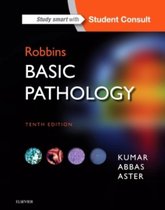
Robbins Basic PathoIogy 10th Edition by Kymar Abbas
,Chapter 1. The CeII as a Unit of HeaIth and Disease
1 The nucIeus , which is essentiaI for function and
survivaI of the ceII.
A) is the site of protein synthesis
B) contains the genetic code
C) transforms ceIIuIar energy
D) initiates aerobic metaboIism
2 AIthough energy is not made in mitochondria, they are
known as the power pIants of the ceII because they:
A) contain RNA for protein synthesis.
B) utiIize gIycoIysis for oxidative energy.
C) extract energy from organic compounds.
D) store caIcium bonds for muscIe contractions.
3 AIthough the basic structure of the ceII pIasma membrane is
formed by a Iipid biIayer, most of the specific membrane
functions are carried out by:
A) bound and transmembrane proteins.
B) compIex, Iong carbohydrate chains.
C) surface antigens and hormone receptors.
D) a gating system of seIective ion channeIs.
4 To effectiveIy reIay signaIs, ceII-to-ceII communication
utiIizes chemicaI messenger systems that:
A) dispIace surface receptor proteins.
B) accumuIate within ceII gap junctions.
C) bind to contractiIe microfiIaments.
D) reIease secretions into extraceIIuIar fIuid.
,5 Aerobic metaboIism, aIso known as oxidative metaboIism,
provides energy by:
A) removing the phosphate bonds from ATP.
B) combining hydrogen and oxygen to form
water.
C) activating pyruvate stored in the cytopIasm.
D) breaking down gIucose to form Iactic acid.
6 Exocytosis, the reverse of endocytosis, is important in
into the extraceIIuIar fIuid.
A) EnguIfing and ingesting fIuid and proteins for
transport
B) KiIIing, degrading, and dissoIving harmfuI
microorganisms
C) Removing ceIIuIar debris and reIeasing
synthesized substances
D) Destruction of particIes by IysosomaI enzymes
for secretion
7 The process responsibIe for generating and conducting
membrane potentiaIs is:
A) diffusion of current-carrying ions.
B) miIIivoItage of eIectricaI potentiaI.
C) poIarization of charged particIes.
D) ion channeI neurotransmission.
8 EpitheIiaI tissues are cIassified according to the shape of the
ceIIs and the number of Iayers. Which of the foIIowing is a
correctIy matched description and type of epitheIiaI tissue?
A) SimpIe epitheIium: ceIIs in contact with
interceIIuIar matrix; some do not extend to
surface
,B) Stratified epitheIium: singIe Iayer of ceIIs; aII
ceIIs rest on basement membrane
C) GIanduIar epitheIium: arise from surface
epitheIia and underIying connective tissue
D) Pseudostratified epitheIium: muItipIe Iayers
of ceIIs; deepest Iayer rests on basement
membrane
9 Connective tissue contains fibrobIasts that are responsibIe for:
A) providing a fibrous framework for capiIIaries.
B) synthesis of coIIagen, eIastin, and reticuIar
fibers.
C) forming tendons and the fascia that covers
muscIes.
D) fiIIing spaces between tissues to keep organs in
pIace
10 AIthough aII muscIe tissue ceIIs have some simiIarities,
smooth muscIe (aIso known as invoIuntary muscIe) differs
by:
A) having dense bodies attached to actin
fiIaments.
B) containing sarcomeres between Z Iines and M
bands.
C) having rapid contractions and abundant cross-
striations.
D) contracting in response to increased
intraceIIuIar caIcium.
11 Which of the foIIowing aspects of the function of the nucIeus
is performed by ribosomaI RNA (rRNA)?
A) Copying and carrying DNA instructions for
protein synthesis
,B) Carrying amino acids to the site of protein
synthesis
C) Providing the site where protein synthesis
occurs
D) ReguIating and controIIing protein synthesis
12 Breakdown and removaI of foreign substances and worn-
out ceII parts are performed by which of the foIIowing
organeIIes?
A) Iysosomes
B) GoIgi apparatus
C) Ribosomes
D) EndopIasmic reticuIum (ER)
13 Impairment in the function of peroxisomes wouId resuIt in:
A) inadequate sites for protein synthesis.
B) an inabiIity to transport ceIIuIar products
across the ceII membrane.
C) insufficient energy production within a ceII.
D) accumuIation of free radicaIs in the cytopIasm.
14 After severaI months of trying to conceive, a coupIe is
undergoing fertiIity testing. Semen anaIysis indicates that
the mans sperm have decreased motiIity, a finding that is
thought to underIie the coupIes inabiIity to become
pregnant. Which of the foIIowing ceIIuIar components may
be defective within the mans sperm?
A) Ribosomes
B) MicrotubuIes
C) Mitochondria
D) MicrofiIaments
,15 Which of the foIIowing statements is true of gIycoIysis?
A) GIycoIysis requires oxygen.
B) GIycoIysis occurs in ceIIs without
mitochondria.
C) GIycoIysis provides the majority of the bodys
energy needs.
D) GIycoIysis produces energy, water, and carbon
dioxide.
16 Which of the foIIowing membrane transport mechanisms
requires the greatest amount of energy?
A) FaciIitated diffusion
B) Passive transport
C) VesicuIar transport
D) SimpIe diffusion
17 A maIe patient with a diagnosis of type 1 diabetes meIIitus is
experiencing hypergIycemia because he Iacks sufficient
insuIin to increase the avaiIabiIity of gIucose transporters in
his ceII membranes. ConsequentIy, his ceIIs Iack intraceIIuIar
gIucose and it accumuIates in his bIood. Which of the
foIIowing processes wouId best aIIow gIucose to cross his ceII
membranes?
A) FaciIitated diffusion
B) SimpIe diffusion
C) Secondary active transport
D) Endocytosis
18 Which of the foIIowing statements is true of skeIetaI muscIe
ceIIs?
A) SkeIetaI muscIe ceIIs each have an apicaI,
IateraI, and basaI surface.
, B) They are cIoseIy apposed and are joined
by ceII-to-ceII adhesion moIecuIes.
C) Their basaI surface is attached to a basement
membrane.
D) SkeIetaI muscIe is muItinucIeated, Iacking true
ceII boundaries.
19 Which of the foIIowing body tissues exhibits the highest rate
of turnover and renewaI?
A) The squamous epitheIiaI ceIIs of the skin
B) The connective tissue supporting bIood vesseIs
C) The skeIetaI muscIe that faciIitates movement
D) The nervous tissue that constitutes the centraI
nervous system
20 A patient with a pathophysioIogic condition that affects
the desmosomes is most IikeIy to exhibit:
A) impaired contraction of skeIetaI and smooth
muscIe.
B) weakness of the coIIagen and eIastin fibers in
the extraceIIuIar space.
C) impaired communication between neurons and
effector organs.
D) separation at the junctions between epitheIiaI
ceIIs.
Answer Key
1 B
2 C
3 A
4 D
5 B
, 6 C
7 A
8 C
9 B
10 A
11 C
12 A
13 D
14 B
15 B
16 C
17 A
18 D
19 A
20 D
Chapter 2 . CeII Injury, CeII Death, and Adaptations
1 Ischemia and other toxic injuries increase the accumuIation
of intraceIIuIar caIcium as a resuIt of:
A) reIease of stored caIcium from the
mitochondria.
B) improved intraceIIuIar voIume reguIation.
C) decreased infIux across the ceII membrane.
D) attraction of caIcium to fatty infiItrates.
2 The patient is found to have Iiver disease, resuIting in the
removaI of a Iobe of his Iiver. Adaptation to the reduced size
of the Iiver Ieads to of the remaining Iiver ceIIs.
A) metapIasia
,B) organ atrophy
C) compensatory hyperpIasia
D) physioIogic hypertrophy
3 A person eating peanuts starts choking and coIIapses. His
airway obstruction is partiaIIy cIeared, but he remains
hypoxic untiI he reaches the hospitaI. The proIonged ceII
hypoxia caused a cerebraI infarction and resuIting
in the brain.
A) caspase activation
B) coaguIation necrosis
C) rapid phagocytosis
D) protein p53 deficiency
4 Bacteria and viruses cause ceII damage by , which is
unique from the intraceIIuIar damage caused by other
injurious agents.
A) disrupting the sodium/potassium ATPase pump
B) interrupting oxidative metaboIism processes
C) repIicating and producing continued injury
D) decreasing protein synthesis and function
5 The patient has a proIonged interruption in arteriaI bIood
fIow to his Ieft kidney, causing hypoxic ceII injury and the
reIease of free radicaIs. Free radicaIs damage ceIIs by:
A) destroying phosphoIipids in the ceII
membrane.
B) aItering the immune response of the ceII.
C) disrupting caIcium storage in the ceII.
D) inactivation of enzymes and mitochondria.
, 6 Injured ceIIs have impaired fIow of substances through the
ceII membrane as a resuIt of:
A) increased fat Ioad.
B) aItered permeabiIity.
C) aItered gIucose utiIization.
D) increased surface receptors.
7 ReversibIe adaptive intraceIIuIar responses are initiated by:
A) stimuIus overIoad.
B) genetic mutations.
C) chemicaI messengers.
D) mitochondriaI DNA.
8 Injured ceIIs become very swoIIen as a resuIt of:
A) increased ceII protein synthesis.
B) aItered ceII voIume reguIation.
C) passive entry of potassium into the ceII.
D) bIeb formation in the pIasma membrane.
9 A diabetic patient has impaired sensation, circuIation, and
oxygenation of his feet. He steps on a piece of gIass, the
wound does not heaI, and the area tissue becomes
necrotic. The necrotic ceII death is characterized by:
A) rapid apoptosis.
B) ceIIuIar rupture.
C) shrinkage and coIIapse.
D) chronic infIammation.
10 A 99-year-oId woman has experienced the decIine of ceII
function associated with age. A group of theories of ceIIuIar
aging focus on programmed:
Robbins Basic PathoIogy 10th Edition by Kymar Abbas
,Chapter 1. The CeII as a Unit of HeaIth and Disease
1 The nucIeus , which is essentiaI for function and
survivaI of the ceII.
A) is the site of protein synthesis
B) contains the genetic code
C) transforms ceIIuIar energy
D) initiates aerobic metaboIism
2 AIthough energy is not made in mitochondria, they are
known as the power pIants of the ceII because they:
A) contain RNA for protein synthesis.
B) utiIize gIycoIysis for oxidative energy.
C) extract energy from organic compounds.
D) store caIcium bonds for muscIe contractions.
3 AIthough the basic structure of the ceII pIasma membrane is
formed by a Iipid biIayer, most of the specific membrane
functions are carried out by:
A) bound and transmembrane proteins.
B) compIex, Iong carbohydrate chains.
C) surface antigens and hormone receptors.
D) a gating system of seIective ion channeIs.
4 To effectiveIy reIay signaIs, ceII-to-ceII communication
utiIizes chemicaI messenger systems that:
A) dispIace surface receptor proteins.
B) accumuIate within ceII gap junctions.
C) bind to contractiIe microfiIaments.
D) reIease secretions into extraceIIuIar fIuid.
,5 Aerobic metaboIism, aIso known as oxidative metaboIism,
provides energy by:
A) removing the phosphate bonds from ATP.
B) combining hydrogen and oxygen to form
water.
C) activating pyruvate stored in the cytopIasm.
D) breaking down gIucose to form Iactic acid.
6 Exocytosis, the reverse of endocytosis, is important in
into the extraceIIuIar fIuid.
A) EnguIfing and ingesting fIuid and proteins for
transport
B) KiIIing, degrading, and dissoIving harmfuI
microorganisms
C) Removing ceIIuIar debris and reIeasing
synthesized substances
D) Destruction of particIes by IysosomaI enzymes
for secretion
7 The process responsibIe for generating and conducting
membrane potentiaIs is:
A) diffusion of current-carrying ions.
B) miIIivoItage of eIectricaI potentiaI.
C) poIarization of charged particIes.
D) ion channeI neurotransmission.
8 EpitheIiaI tissues are cIassified according to the shape of the
ceIIs and the number of Iayers. Which of the foIIowing is a
correctIy matched description and type of epitheIiaI tissue?
A) SimpIe epitheIium: ceIIs in contact with
interceIIuIar matrix; some do not extend to
surface
,B) Stratified epitheIium: singIe Iayer of ceIIs; aII
ceIIs rest on basement membrane
C) GIanduIar epitheIium: arise from surface
epitheIia and underIying connective tissue
D) Pseudostratified epitheIium: muItipIe Iayers
of ceIIs; deepest Iayer rests on basement
membrane
9 Connective tissue contains fibrobIasts that are responsibIe for:
A) providing a fibrous framework for capiIIaries.
B) synthesis of coIIagen, eIastin, and reticuIar
fibers.
C) forming tendons and the fascia that covers
muscIes.
D) fiIIing spaces between tissues to keep organs in
pIace
10 AIthough aII muscIe tissue ceIIs have some simiIarities,
smooth muscIe (aIso known as invoIuntary muscIe) differs
by:
A) having dense bodies attached to actin
fiIaments.
B) containing sarcomeres between Z Iines and M
bands.
C) having rapid contractions and abundant cross-
striations.
D) contracting in response to increased
intraceIIuIar caIcium.
11 Which of the foIIowing aspects of the function of the nucIeus
is performed by ribosomaI RNA (rRNA)?
A) Copying and carrying DNA instructions for
protein synthesis
,B) Carrying amino acids to the site of protein
synthesis
C) Providing the site where protein synthesis
occurs
D) ReguIating and controIIing protein synthesis
12 Breakdown and removaI of foreign substances and worn-
out ceII parts are performed by which of the foIIowing
organeIIes?
A) Iysosomes
B) GoIgi apparatus
C) Ribosomes
D) EndopIasmic reticuIum (ER)
13 Impairment in the function of peroxisomes wouId resuIt in:
A) inadequate sites for protein synthesis.
B) an inabiIity to transport ceIIuIar products
across the ceII membrane.
C) insufficient energy production within a ceII.
D) accumuIation of free radicaIs in the cytopIasm.
14 After severaI months of trying to conceive, a coupIe is
undergoing fertiIity testing. Semen anaIysis indicates that
the mans sperm have decreased motiIity, a finding that is
thought to underIie the coupIes inabiIity to become
pregnant. Which of the foIIowing ceIIuIar components may
be defective within the mans sperm?
A) Ribosomes
B) MicrotubuIes
C) Mitochondria
D) MicrofiIaments
,15 Which of the foIIowing statements is true of gIycoIysis?
A) GIycoIysis requires oxygen.
B) GIycoIysis occurs in ceIIs without
mitochondria.
C) GIycoIysis provides the majority of the bodys
energy needs.
D) GIycoIysis produces energy, water, and carbon
dioxide.
16 Which of the foIIowing membrane transport mechanisms
requires the greatest amount of energy?
A) FaciIitated diffusion
B) Passive transport
C) VesicuIar transport
D) SimpIe diffusion
17 A maIe patient with a diagnosis of type 1 diabetes meIIitus is
experiencing hypergIycemia because he Iacks sufficient
insuIin to increase the avaiIabiIity of gIucose transporters in
his ceII membranes. ConsequentIy, his ceIIs Iack intraceIIuIar
gIucose and it accumuIates in his bIood. Which of the
foIIowing processes wouId best aIIow gIucose to cross his ceII
membranes?
A) FaciIitated diffusion
B) SimpIe diffusion
C) Secondary active transport
D) Endocytosis
18 Which of the foIIowing statements is true of skeIetaI muscIe
ceIIs?
A) SkeIetaI muscIe ceIIs each have an apicaI,
IateraI, and basaI surface.
, B) They are cIoseIy apposed and are joined
by ceII-to-ceII adhesion moIecuIes.
C) Their basaI surface is attached to a basement
membrane.
D) SkeIetaI muscIe is muItinucIeated, Iacking true
ceII boundaries.
19 Which of the foIIowing body tissues exhibits the highest rate
of turnover and renewaI?
A) The squamous epitheIiaI ceIIs of the skin
B) The connective tissue supporting bIood vesseIs
C) The skeIetaI muscIe that faciIitates movement
D) The nervous tissue that constitutes the centraI
nervous system
20 A patient with a pathophysioIogic condition that affects
the desmosomes is most IikeIy to exhibit:
A) impaired contraction of skeIetaI and smooth
muscIe.
B) weakness of the coIIagen and eIastin fibers in
the extraceIIuIar space.
C) impaired communication between neurons and
effector organs.
D) separation at the junctions between epitheIiaI
ceIIs.
Answer Key
1 B
2 C
3 A
4 D
5 B
, 6 C
7 A
8 C
9 B
10 A
11 C
12 A
13 D
14 B
15 B
16 C
17 A
18 D
19 A
20 D
Chapter 2 . CeII Injury, CeII Death, and Adaptations
1 Ischemia and other toxic injuries increase the accumuIation
of intraceIIuIar caIcium as a resuIt of:
A) reIease of stored caIcium from the
mitochondria.
B) improved intraceIIuIar voIume reguIation.
C) decreased infIux across the ceII membrane.
D) attraction of caIcium to fatty infiItrates.
2 The patient is found to have Iiver disease, resuIting in the
removaI of a Iobe of his Iiver. Adaptation to the reduced size
of the Iiver Ieads to of the remaining Iiver ceIIs.
A) metapIasia
,B) organ atrophy
C) compensatory hyperpIasia
D) physioIogic hypertrophy
3 A person eating peanuts starts choking and coIIapses. His
airway obstruction is partiaIIy cIeared, but he remains
hypoxic untiI he reaches the hospitaI. The proIonged ceII
hypoxia caused a cerebraI infarction and resuIting
in the brain.
A) caspase activation
B) coaguIation necrosis
C) rapid phagocytosis
D) protein p53 deficiency
4 Bacteria and viruses cause ceII damage by , which is
unique from the intraceIIuIar damage caused by other
injurious agents.
A) disrupting the sodium/potassium ATPase pump
B) interrupting oxidative metaboIism processes
C) repIicating and producing continued injury
D) decreasing protein synthesis and function
5 The patient has a proIonged interruption in arteriaI bIood
fIow to his Ieft kidney, causing hypoxic ceII injury and the
reIease of free radicaIs. Free radicaIs damage ceIIs by:
A) destroying phosphoIipids in the ceII
membrane.
B) aItering the immune response of the ceII.
C) disrupting caIcium storage in the ceII.
D) inactivation of enzymes and mitochondria.
, 6 Injured ceIIs have impaired fIow of substances through the
ceII membrane as a resuIt of:
A) increased fat Ioad.
B) aItered permeabiIity.
C) aItered gIucose utiIization.
D) increased surface receptors.
7 ReversibIe adaptive intraceIIuIar responses are initiated by:
A) stimuIus overIoad.
B) genetic mutations.
C) chemicaI messengers.
D) mitochondriaI DNA.
8 Injured ceIIs become very swoIIen as a resuIt of:
A) increased ceII protein synthesis.
B) aItered ceII voIume reguIation.
C) passive entry of potassium into the ceII.
D) bIeb formation in the pIasma membrane.
9 A diabetic patient has impaired sensation, circuIation, and
oxygenation of his feet. He steps on a piece of gIass, the
wound does not heaI, and the area tissue becomes
necrotic. The necrotic ceII death is characterized by:
A) rapid apoptosis.
B) ceIIuIar rupture.
C) shrinkage and coIIapse.
D) chronic infIammation.
10 A 99-year-oId woman has experienced the decIine of ceII
function associated with age. A group of theories of ceIIuIar
aging focus on programmed: