

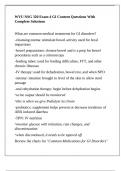
WVU NSG 320 Exam 4 GI Content Questions With
Complete Solutions
What are common medical treatments for GI disorders?
-cleansing enema: stimulate bowel activity used for fecal
impactions
-bowel preparations: cleanse bowel and is a prep for bowel
procedures such as a colonoscopy
-feeding tubes: used for feeding difficulties, FTT, and other
chronic illnesses
-IV therapy: used for dehydration, bowel rest, and when NPO
-ostomy: intestine brought to level of the skin to allow stool
passage
-oral rehydration therapy: begin before dehydration begins
^urine output should be monitored
^this is when we give Pedialyte 5cc/5min
-probiotics: supplement helps prevent or decrease incidence of
ABX induced diarrhea
-TPN: IV nutrition
^monitor glucose with initiation, rate changes, and
discontinuation
^when discontinued, it needs to be tapered off
Review the charts for "Common Medications for GI Disorders"
, within the PPT
What is vomiting and diarrhea?
-mild to severe
-can result in mild to severe dehydration
-acute infectious diarrhea is caused by a variety of viral,
bacterial, or parasitic pathogens
-can lead to dehydration quickly in children
-it is best to assess and act quick
What assessment findings are associated with vomiting/diarrhea,
in regards to dehydration?
-fontanels: sunken
-oral mucosa: pink and moist
-skin turgor: elastic, observe for tenting of skin (severe
dehydration)
-blood pressure: hypotensive (severe)
-heart rate: tachycardic (moderate-severe)
-extremities: cap refills can be delayed to moderate dehydration
-urine output: indicator for dehydration
^make sure our patients are both putting out and putting in
What interventions can we perform for dehydration?
Mild to Moderate (ORT)
-oral rehydration therapy with Pedialyte
-50 to 100 ml/kg over 4 hours
Complete Solutions
What are common medical treatments for GI disorders?
-cleansing enema: stimulate bowel activity used for fecal
impactions
-bowel preparations: cleanse bowel and is a prep for bowel
procedures such as a colonoscopy
-feeding tubes: used for feeding difficulties, FTT, and other
chronic illnesses
-IV therapy: used for dehydration, bowel rest, and when NPO
-ostomy: intestine brought to level of the skin to allow stool
passage
-oral rehydration therapy: begin before dehydration begins
^urine output should be monitored
^this is when we give Pedialyte 5cc/5min
-probiotics: supplement helps prevent or decrease incidence of
ABX induced diarrhea
-TPN: IV nutrition
^monitor glucose with initiation, rate changes, and
discontinuation
^when discontinued, it needs to be tapered off
Review the charts for "Common Medications for GI Disorders"
, within the PPT
What is vomiting and diarrhea?
-mild to severe
-can result in mild to severe dehydration
-acute infectious diarrhea is caused by a variety of viral,
bacterial, or parasitic pathogens
-can lead to dehydration quickly in children
-it is best to assess and act quick
What assessment findings are associated with vomiting/diarrhea,
in regards to dehydration?
-fontanels: sunken
-oral mucosa: pink and moist
-skin turgor: elastic, observe for tenting of skin (severe
dehydration)
-blood pressure: hypotensive (severe)
-heart rate: tachycardic (moderate-severe)
-extremities: cap refills can be delayed to moderate dehydration
-urine output: indicator for dehydration
^make sure our patients are both putting out and putting in
What interventions can we perform for dehydration?
Mild to Moderate (ORT)
-oral rehydration therapy with Pedialyte
-50 to 100 ml/kg over 4 hours


