Test Bank for Medical-Surgical Nursing Concepts
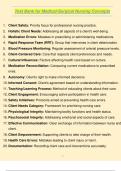
1. Client Safety: Priority focus for professional nursing practice.
2. Holistic Client Needs: Addressing all aspects of a client's well-being.
3. Medication Errors: Mistakes in prescribing or administering medications.
4. Rapid Response Team (RRT): Group that intervenes in client deterioration.
5. Blood Pressure Monitoring: Regular assessment of arterial pressure levels.
6. Client-Centered Care: Care that respects client preferences and needs.
7. Cultural Influences: Factors affecting health care based on culture.
8. Medication Reconciliation: Comparing current medications to prescribed
ones.
9. Autonomy: Client's right to make informed decisions.
10. Informed Consent: Client's agreement based on understanding information.
11. Teaching/Learning Process: Method of educating clients about their care.
12. Client Engagement: Encouraging active participation in health care.
13. Safety Initiatives: Protocols aimed at preventing health care errors.
14. Client Needs Category: Framework for prioritizing nursing care.
15. Physiological Integrity: Maintaining bodily functions and health status.
16. Psychosocial Integrity: Addressing emotional and social aspects of care.
17. Effective Communication: Clear exchange of information between nurse and
client.
18. Client Empowerment: Supporting clients to take charge of their health.
19. Health Care Errors: Mistakes leading to client injury or harm.
20. Documentation: Recording client care and interventions accurately.
1/9
, 21. Basic Needs: Fundamental requirements for client well-being.
22. Caregiver Hand Hygiene: Practice of washing hands to prevent infection.
23. Client Orientation: Familiarizing clients with their care environment.
24. National Client Safety Goals: Standards aimed at improving patient safety.
25. Client Family Involvement: Engaging family members in the client's care.
26. Health Care Provider Communication: Interaction between client and health
care professionals.
27. Monitoring Vital Signs: Regular checks of essential health indicators.
28. Client's Armband: Identification tool to ensure correct patient care.
29. Veracity: Providing accurate information to clients.
30. Fidelity: Keeping promises made to clients.
31. Social Justice: Treating clients fairly and equitably.
32. LGBTQ Communication: Avoid assumptions; ask respectful questions.
33. Health Care Disparities: Inequities in health care access and treatment.
34. SBAR: Communication format: Situation, Background, Assessment,
Recommendation.
35. Background (SBAR): Relevant history and context for the situation.
36. Delegation: Assigning tasks to others while maintaining accountability.
37 Supervision: Monitoring and guiding delegated tasks effectively.
38. Quality Improvement (QI): Systematic efforts to enhance health care quality.
39. Magnet Status: Recognition for excellence in nursing practices.
40. Interprofessional Collaboration: Working together across disciplines for
better care.
2/9
1. Client Safety: Priority focus for professional nursing practice.
2. Holistic Client Needs: Addressing all aspects of a client's well-being.
3. Medication Errors: Mistakes in prescribing or administering medications.
4. Rapid Response Team (RRT): Group that intervenes in client deterioration.
5. Blood Pressure Monitoring: Regular assessment of arterial pressure levels.
6. Client-Centered Care: Care that respects client preferences and needs.
7. Cultural Influences: Factors affecting health care based on culture.
8. Medication Reconciliation: Comparing current medications to prescribed
ones.
9. Autonomy: Client's right to make informed decisions.
10. Informed Consent: Client's agreement based on understanding information.
11. Teaching/Learning Process: Method of educating clients about their care.
12. Client Engagement: Encouraging active participation in health care.
13. Safety Initiatives: Protocols aimed at preventing health care errors.
14. Client Needs Category: Framework for prioritizing nursing care.
15. Physiological Integrity: Maintaining bodily functions and health status.
16. Psychosocial Integrity: Addressing emotional and social aspects of care.
17. Effective Communication: Clear exchange of information between nurse and
client.
18. Client Empowerment: Supporting clients to take charge of their health.
19. Health Care Errors: Mistakes leading to client injury or harm.
20. Documentation: Recording client care and interventions accurately.
1/9
, 21. Basic Needs: Fundamental requirements for client well-being.
22. Caregiver Hand Hygiene: Practice of washing hands to prevent infection.
23. Client Orientation: Familiarizing clients with their care environment.
24. National Client Safety Goals: Standards aimed at improving patient safety.
25. Client Family Involvement: Engaging family members in the client's care.
26. Health Care Provider Communication: Interaction between client and health
care professionals.
27. Monitoring Vital Signs: Regular checks of essential health indicators.
28. Client's Armband: Identification tool to ensure correct patient care.
29. Veracity: Providing accurate information to clients.
30. Fidelity: Keeping promises made to clients.
31. Social Justice: Treating clients fairly and equitably.
32. LGBTQ Communication: Avoid assumptions; ask respectful questions.
33. Health Care Disparities: Inequities in health care access and treatment.
34. SBAR: Communication format: Situation, Background, Assessment,
Recommendation.
35. Background (SBAR): Relevant history and context for the situation.
36. Delegation: Assigning tasks to others while maintaining accountability.
37 Supervision: Monitoring and guiding delegated tasks effectively.
38. Quality Improvement (QI): Systematic efforts to enhance health care quality.
39. Magnet Status: Recognition for excellence in nursing practices.
40. Interprofessional Collaboration: Working together across disciplines for
better care.
2/9