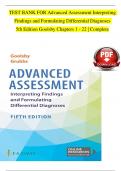
TEST BANK FOR Advanced Assessment Interpreting
Findings and Formulating Differential Diagnoses
5th Edition Goolsby Chapters 1 - 22 | Complete
, TABLE OF CONTENTS80 80
Chapter801.80Assessment80and80Clinical80Decision80Making:80An80Overview
Chapter802.80Genomic80Assessment:80Interpreting80Findings80and80Formulating80Differential80Diagnoses
Chapter803.80Skin
Chapter804.80Head,80Face,80and80Neck
Chapter805.80The80Eye
Chapter806.80Ear,80Nose,80Mouth,80and80Throat
Chapter807.80Cardiac80and80Peripheral80Vascular80Systems
Chapter808.80Respiratory80System
Chapter809.80Breasts
Chapter8010.80Abdomen
Chapter8011.80Genitourinary80System
Chapter8012.80Male80Reproductive80System
Chapter8013.80Female80Reproductive80System
Chapter8014.80Musculoskeletal80System
Chapter8015.80Neurological80System
Chapter8016.80Nonspecific80Complaints
Chapter8017.80Psychiatric80Mental80Health
Chapter8018.80Pediatric80Patients
Chapter8019.80Pregnant80Patients
Chapter8020.80Assessment80of80the80Transgender80or80Gender80Diverse80Adult
Chapter8021.80Older80Patients
Chapter8022.80Persons80With80Disabilities
, Chapter801.80Assessment80and80Clinical80Decision80Making:80An80Overview
Multiple80 Choice
Identify80the80choice80that80best80completes80the80statement80or80answers80the80question.
80 1. Which80type80of80clinical80decision-making80is80most80reliable?
A. Intuitive
B. Analytical
C. Experiential
D. Augenblick
80 2. Which80of80the80following80is80false?80To80obtain80adequate80history,80health-care80providers80must80be:
A. Methodical80and80systematic
B. Attentive80to80the80patient’s80verbal80and80nonverbal80
language
C. Able80to80accurately80interpret80the80patient’s80respon
ses
D. Adept80at80reading80into80the80patient’s80statements
80 3. Essential80parts80of80a80health80history80include80all80of80the80following80except:
A. Chief80complaint
B. History80of80the80present80illness
C. Current80vital80signs
D. All80of80the80above80are80essential80history80co
mponents
80 4. Which80of80the80following80is80false?80While80performing80the80physical80examination,80the80examiner80must80be80able80to:
A. Differentiate80between80normal80and80abnormal80findings
B. Recall80knowledge80of80a80range80of80conditions80and80their80associated80signs80
and80symptoms
C. Recognize80how80certain80conditions80affect80the80response80to80other80condition
s
D. Foresee80unpredictable80findings
80 5. The80following80is80the80least80reliable80source80of80information80for80diagnostic80statistics:
A. Evidence-based80investigations
B. Primary80reports80of80research
, C. Estimation80based80on80a80provider’s80exp
erience
D. Published80meta-analyses
80 6. The80following80can80be80used80to80assist80in80sound80clinical80decision-making:
A. Algorithm80published80in80a80peer-
reviewed80journal80article
B. Clinical80practice80guidelines
C. Evidence-based80research
D. All80of80the80above
80 7. If80a80diagnostic80study80has80high80sensitivity,80 this80indicates80a:
A. High80percentage80of80persons80with80the80given80condition80will80have80an80
abnormal80result
B. Low80percentage80of80persons80with80the80given80condition80will80have80an80a
bnormal80result
C. Low80likelihood80of80normal80result80in80persons80without80a80given80conditio
n
D. None80of80the80above
80 8. If80a80diagnostic80study80has80high80specificity,80 this80indicates80a:
A. Low80percentage80of80healthy80individuals80will80show80a80normal80resu
lt
B. High80percentage80of80healthy80individuals80will80show80a80normal80resu
lt
C. High80percentage80of80individuals80with80a80disorder80will80show80a80no
rmal80result
D. Low80percentage80of80individuals80with80a80disorder80will80show80an80a
bnormal80result
80 9. A80likelihood80ratio80above80180indicates80that80a80diagnostic80test80showing80a:
A. Positive80result80is80strongly80associated80with80the80disease
B. Negative80result80is80strongly80associated80with80absence80of80
the80disease
C. Positive80result80is80weakly80associated80with80the80disease
D. Negative80result80is80weakly80associated80with80absence80of80t
he80disease
Findings and Formulating Differential Diagnoses
5th Edition Goolsby Chapters 1 - 22 | Complete
, TABLE OF CONTENTS80 80
Chapter801.80Assessment80and80Clinical80Decision80Making:80An80Overview
Chapter802.80Genomic80Assessment:80Interpreting80Findings80and80Formulating80Differential80Diagnoses
Chapter803.80Skin
Chapter804.80Head,80Face,80and80Neck
Chapter805.80The80Eye
Chapter806.80Ear,80Nose,80Mouth,80and80Throat
Chapter807.80Cardiac80and80Peripheral80Vascular80Systems
Chapter808.80Respiratory80System
Chapter809.80Breasts
Chapter8010.80Abdomen
Chapter8011.80Genitourinary80System
Chapter8012.80Male80Reproductive80System
Chapter8013.80Female80Reproductive80System
Chapter8014.80Musculoskeletal80System
Chapter8015.80Neurological80System
Chapter8016.80Nonspecific80Complaints
Chapter8017.80Psychiatric80Mental80Health
Chapter8018.80Pediatric80Patients
Chapter8019.80Pregnant80Patients
Chapter8020.80Assessment80of80the80Transgender80or80Gender80Diverse80Adult
Chapter8021.80Older80Patients
Chapter8022.80Persons80With80Disabilities
, Chapter801.80Assessment80and80Clinical80Decision80Making:80An80Overview
Multiple80 Choice
Identify80the80choice80that80best80completes80the80statement80or80answers80the80question.
80 1. Which80type80of80clinical80decision-making80is80most80reliable?
A. Intuitive
B. Analytical
C. Experiential
D. Augenblick
80 2. Which80of80the80following80is80false?80To80obtain80adequate80history,80health-care80providers80must80be:
A. Methodical80and80systematic
B. Attentive80to80the80patient’s80verbal80and80nonverbal80
language
C. Able80to80accurately80interpret80the80patient’s80respon
ses
D. Adept80at80reading80into80the80patient’s80statements
80 3. Essential80parts80of80a80health80history80include80all80of80the80following80except:
A. Chief80complaint
B. History80of80the80present80illness
C. Current80vital80signs
D. All80of80the80above80are80essential80history80co
mponents
80 4. Which80of80the80following80is80false?80While80performing80the80physical80examination,80the80examiner80must80be80able80to:
A. Differentiate80between80normal80and80abnormal80findings
B. Recall80knowledge80of80a80range80of80conditions80and80their80associated80signs80
and80symptoms
C. Recognize80how80certain80conditions80affect80the80response80to80other80condition
s
D. Foresee80unpredictable80findings
80 5. The80following80is80the80least80reliable80source80of80information80for80diagnostic80statistics:
A. Evidence-based80investigations
B. Primary80reports80of80research
, C. Estimation80based80on80a80provider’s80exp
erience
D. Published80meta-analyses
80 6. The80following80can80be80used80to80assist80in80sound80clinical80decision-making:
A. Algorithm80published80in80a80peer-
reviewed80journal80article
B. Clinical80practice80guidelines
C. Evidence-based80research
D. All80of80the80above
80 7. If80a80diagnostic80study80has80high80sensitivity,80 this80indicates80a:
A. High80percentage80of80persons80with80the80given80condition80will80have80an80
abnormal80result
B. Low80percentage80of80persons80with80the80given80condition80will80have80an80a
bnormal80result
C. Low80likelihood80of80normal80result80in80persons80without80a80given80conditio
n
D. None80of80the80above
80 8. If80a80diagnostic80study80has80high80specificity,80 this80indicates80a:
A. Low80percentage80of80healthy80individuals80will80show80a80normal80resu
lt
B. High80percentage80of80healthy80individuals80will80show80a80normal80resu
lt
C. High80percentage80of80individuals80with80a80disorder80will80show80a80no
rmal80result
D. Low80percentage80of80individuals80with80a80disorder80will80show80an80a
bnormal80result
80 9. A80likelihood80ratio80above80180indicates80that80a80diagnostic80test80showing80a:
A. Positive80result80is80strongly80associated80with80the80disease
B. Negative80result80is80strongly80associated80with80absence80of80
the80disease
C. Positive80result80is80weakly80associated80with80the80disease
D. Negative80result80is80weakly80associated80with80absence80of80t
he80disease