Sociology 4/22/19
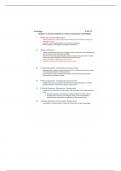
Chapter 10, Social Institutions: Politics, Education and Religion
I. What are Social Institutions?
- Social institutions are systems and structures that shape the activities of groups and
individuals in society.
- You can’t <visit= a social institution; it is a structure, not a place.
- Politics, education, and religion are examples of institutions
II. What is Politics?
- Politics: the methods and tactics of managing a nation or state as well as administering
and controlling its internal and external affairs
- Government: the formal, organized agency that exercises power and control in modern
society, especially through the creation and enforcement of laws
- Power is the ability to impose one’s will on others
- Authority is the non-coercive, legitimate exercise of power
III. Political Systems: Authoritarian Government
- Authoritarianism: a system of government by and for a small number of elites that does
not include representation of ordinary citizens
- A dictatorship is a type of authoritarianism where the leader typically seizes power
rather than being selected or elected
IV. Political Systems: Totalitarian Government
- Totalitarianism: the most extreme and modern form of authoritarianism, in which the
government seeks to control every aspect of citizen’s lives
V. Political Systems: Monarchic Government
- A monarchy is government by a king or queen, with succession of rulers kept within the
family
o Absolute monarchies: typically have complete authority over their subjects
o Constitutional monarchs are royal figures whose powers are defined by a
political charter and limited by a parliament or other governing body
VI. Political Systems: Democratic Government
- A democracy is a political system in which all citizens have the right to participate
Chapter 10, Social Institutions: Politics, Education and Religion
I. What are Social Institutions?
- Social institutions are systems and structures that shape the activities of groups and
individuals in society.
- You can’t <visit= a social institution; it is a structure, not a place.
- Politics, education, and religion are examples of institutions
II. What is Politics?
- Politics: the methods and tactics of managing a nation or state as well as administering
and controlling its internal and external affairs
- Government: the formal, organized agency that exercises power and control in modern
society, especially through the creation and enforcement of laws
- Power is the ability to impose one’s will on others
- Authority is the non-coercive, legitimate exercise of power
III. Political Systems: Authoritarian Government
- Authoritarianism: a system of government by and for a small number of elites that does
not include representation of ordinary citizens
- A dictatorship is a type of authoritarianism where the leader typically seizes power
rather than being selected or elected
IV. Political Systems: Totalitarian Government
- Totalitarianism: the most extreme and modern form of authoritarianism, in which the
government seeks to control every aspect of citizen’s lives
V. Political Systems: Monarchic Government
- A monarchy is government by a king or queen, with succession of rulers kept within the
family
o Absolute monarchies: typically have complete authority over their subjects
o Constitutional monarchs are royal figures whose powers are defined by a
political charter and limited by a parliament or other governing body
VI. Political Systems: Democratic Government
- A democracy is a political system in which all citizens have the right to participate