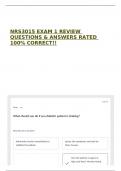
NRS3015 EXAM 1 REVIEW
QUESTIONS & ANSWERS RATED
100% CORRECT!!
1 of 49
Term
What should you do if you diabetic patient is shaking?
Give this one a try later!
Administer insulin immediately to Ignore the symptoms and wait for
stabilize the patient. them to pass.
Give the patient a sugary or
high carb food. Monitor blood
, Give the patient a high glucose levels regularly. Hold
protein snack to help. insulin.
Don't know?
2 of 49
Definition
- Extreme thirst (polydipsia)
- Frequent urination (polyuria)
- Excess hunger (polyphagia)
- Extreme fatigue
- Dry, itchy skin
- Slow healing sores
- Unintentional weight loss
- Tingling or loss of feeling in the feet
- Blurry eyesight
Give this one a try later!
Signs and symptoms of malignant
hyperthermia Signs and symptoms of dehiscence
Signs and symptoms Signs and symptoms
of hyperglycemia of uncontrolled
diabetes
Don't know?
3 of 49
,Term
When should your patient eat in relativity of taking regular insulin?
Give this one a try later!
insulin should be taken at least regular insulin should be taken only
an hour before meals. after meals.
regular insulin works best
if you take it 30 minutes patients should eat immediately
before you eat. after taking regular insulin.
Don't know?
4 of 49
Definition
Dyspnea, cyanosis, rapid and shallow breathing, cough,
diminished or absent breath sounds.
Give this one a try later!
Signs and symptoms
Signs of a respiratory infection of
atelectasis
Symptoms of a panic attack Indicators of a stroke
, Don't know?
5 of 49
Term
How do we prevent atelectasis in a patient?
Give this one a try later!
administering high doses of sedatives to keep the patient calm.
using oxygen therapy exclusively to prevent lung complications.
encouraging the patient to remain in bed as much as possible.
adequate analgesia, incentive spirometry (IS), deep breathing exercises,
continuous positive airway pressure, mobilisation of secretions and
early ambulation.
Don't know?
QUESTIONS & ANSWERS RATED
100% CORRECT!!
1 of 49
Term
What should you do if you diabetic patient is shaking?
Give this one a try later!
Administer insulin immediately to Ignore the symptoms and wait for
stabilize the patient. them to pass.
Give the patient a sugary or
high carb food. Monitor blood
, Give the patient a high glucose levels regularly. Hold
protein snack to help. insulin.
Don't know?
2 of 49
Definition
- Extreme thirst (polydipsia)
- Frequent urination (polyuria)
- Excess hunger (polyphagia)
- Extreme fatigue
- Dry, itchy skin
- Slow healing sores
- Unintentional weight loss
- Tingling or loss of feeling in the feet
- Blurry eyesight
Give this one a try later!
Signs and symptoms of malignant
hyperthermia Signs and symptoms of dehiscence
Signs and symptoms Signs and symptoms
of hyperglycemia of uncontrolled
diabetes
Don't know?
3 of 49
,Term
When should your patient eat in relativity of taking regular insulin?
Give this one a try later!
insulin should be taken at least regular insulin should be taken only
an hour before meals. after meals.
regular insulin works best
if you take it 30 minutes patients should eat immediately
before you eat. after taking regular insulin.
Don't know?
4 of 49
Definition
Dyspnea, cyanosis, rapid and shallow breathing, cough,
diminished or absent breath sounds.
Give this one a try later!
Signs and symptoms
Signs of a respiratory infection of
atelectasis
Symptoms of a panic attack Indicators of a stroke
, Don't know?
5 of 49
Term
How do we prevent atelectasis in a patient?
Give this one a try later!
administering high doses of sedatives to keep the patient calm.
using oxygen therapy exclusively to prevent lung complications.
encouraging the patient to remain in bed as much as possible.
adequate analgesia, incentive spirometry (IS), deep breathing exercises,
continuous positive airway pressure, mobilisation of secretions and
early ambulation.
Don't know?