NUR 684- Test#3
NURS 684 ACTUAL EXAM 3 LATEST VERSION WITH
UPDATED QUESTIONS AND ACCURATE
ANSWERS\\VERIFIED ANSWERS GRADED A+
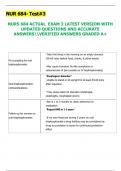
-Take first thing in the morning on an empty stomach
(30-60 mins before food, drinks, & other meds)
Pt counseling for oral
bisphosphonates
-May cause transient flu-like symptoms or
osteonecrosis of jaw (usually w/ IV bisphosphonates)
*Esophageal disorder*
-Unable to stand or sit upright for at least 30-60 mins
Oral bisphosphonates- after ingestion
contraindications
^may cause upper GI disorders (dysphagia,
esophagitis, esophageal ulcers)
-See in 1 to 3 months to check adherence to
medication
*Repeat BMD in 1-2 years*
Follow-up for women on
oral bisphosphonates -If no new fractures during 5 years on oral
bisphosphonate a drug holiday may be considered as
drug accumulates in bone for continued protective
effect
,Most common causative Gonorrhea or chlamydia
agents of PID?
-Infertility
Possible sequelae of PID? -Ectopic pregnancy
-Chronic pelvic pain
-Moderate-severe bilateral lower abdominal pain
-Often worse with intercourse & after defecation or
PID- pain characteristics
urination
-Often starts or worsens after menses
-Dyspareunia with deep penetration
PID- subjective findings
-Postcoital bleeding
-Cervical motion tenderness
-Bilateral abdominal & adnexal tenderness
-Possible pelvic mass
PID- objective findings
-Possible mucopurulent cervicitis
-Temp > 101
-Wet mount: increased WBCs
PID- labs -U/A: positive leukocytes
-CBC: increased WBCs & elevated ESR
Gold standard for Laparoscopy
diagnosis of PID?
Initiate empiric treatment -Cervical motion tenderness
of PID for sexually active -Uterine tenderness
young women with lower -Adnexal tenderness
abdominal or pelvic pain if
one or more of these
minimum criteria are
present and no other
apparent cause for the
illness
, -Fever >101
-Abnormal cervical or vaginal mucopurulent
discharge
Additional criteria that
-Increased WBCs on wet mount
support PID diagnosis
-Elevated ESR
-Elevated C-reactive protein
-Cervical infection with GC or chlamydia
Pap smear alone every 3 years (21-65 years old)
Cervical cancer screening
OR
recommendations
Pap smear + HPV test every 5 years (30-65 years old)
Cervical cancer screening Should continue routine screening for at least 20
for women with history of years after spontaneous regression or treatment
CIN2 or a more serious
diagnosis?
Beginning at age 45-50 till 75
Colorectal cancer
-guaiac fecal occult blood test (yearly) OR stool DNA
screening
tests (every 3 years)
recommendations
OR
-colonoscopy every 10 years
Beginning at age 40-50
Breast cancer screening Can stop at 74 years old
recommendations
Mammograms every 1-2 years
Diabetes screening Every 3 years starting at age 45
recommendations
2 doses of recombinant zoster vaccine (RZV) 2-6
months apart for adults aged 50 or older
Herpes zoster vaccine
^regardless of past episode of herpes zoster or
receipt of zoster vaccine live (ZVL) (Zostavax)
NURS 684 ACTUAL EXAM 3 LATEST VERSION WITH
UPDATED QUESTIONS AND ACCURATE
ANSWERS\\VERIFIED ANSWERS GRADED A+
-Take first thing in the morning on an empty stomach
(30-60 mins before food, drinks, & other meds)
Pt counseling for oral
bisphosphonates
-May cause transient flu-like symptoms or
osteonecrosis of jaw (usually w/ IV bisphosphonates)
*Esophageal disorder*
-Unable to stand or sit upright for at least 30-60 mins
Oral bisphosphonates- after ingestion
contraindications
^may cause upper GI disorders (dysphagia,
esophagitis, esophageal ulcers)
-See in 1 to 3 months to check adherence to
medication
*Repeat BMD in 1-2 years*
Follow-up for women on
oral bisphosphonates -If no new fractures during 5 years on oral
bisphosphonate a drug holiday may be considered as
drug accumulates in bone for continued protective
effect
,Most common causative Gonorrhea or chlamydia
agents of PID?
-Infertility
Possible sequelae of PID? -Ectopic pregnancy
-Chronic pelvic pain
-Moderate-severe bilateral lower abdominal pain
-Often worse with intercourse & after defecation or
PID- pain characteristics
urination
-Often starts or worsens after menses
-Dyspareunia with deep penetration
PID- subjective findings
-Postcoital bleeding
-Cervical motion tenderness
-Bilateral abdominal & adnexal tenderness
-Possible pelvic mass
PID- objective findings
-Possible mucopurulent cervicitis
-Temp > 101
-Wet mount: increased WBCs
PID- labs -U/A: positive leukocytes
-CBC: increased WBCs & elevated ESR
Gold standard for Laparoscopy
diagnosis of PID?
Initiate empiric treatment -Cervical motion tenderness
of PID for sexually active -Uterine tenderness
young women with lower -Adnexal tenderness
abdominal or pelvic pain if
one or more of these
minimum criteria are
present and no other
apparent cause for the
illness
, -Fever >101
-Abnormal cervical or vaginal mucopurulent
discharge
Additional criteria that
-Increased WBCs on wet mount
support PID diagnosis
-Elevated ESR
-Elevated C-reactive protein
-Cervical infection with GC or chlamydia
Pap smear alone every 3 years (21-65 years old)
Cervical cancer screening
OR
recommendations
Pap smear + HPV test every 5 years (30-65 years old)
Cervical cancer screening Should continue routine screening for at least 20
for women with history of years after spontaneous regression or treatment
CIN2 or a more serious
diagnosis?
Beginning at age 45-50 till 75
Colorectal cancer
-guaiac fecal occult blood test (yearly) OR stool DNA
screening
tests (every 3 years)
recommendations
OR
-colonoscopy every 10 years
Beginning at age 40-50
Breast cancer screening Can stop at 74 years old
recommendations
Mammograms every 1-2 years
Diabetes screening Every 3 years starting at age 45
recommendations
2 doses of recombinant zoster vaccine (RZV) 2-6
months apart for adults aged 50 or older
Herpes zoster vaccine
^regardless of past episode of herpes zoster or
receipt of zoster vaccine live (ZVL) (Zostavax)