

2 .
28
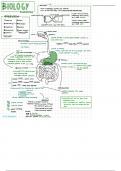
PERISTALSIS
occurs in stomach and intestines
oesophagus
·
,
occurs on the muscle walls which contract to push the food along
·
DIGESTION
·
circular muscle contracts
,
muscles contract muscles relaxed
circular muscle layer
longitudinal muscle relaxes
,
-
o n
m e m
e
- gut is made narrower
O Ingestion circular
I
mouth
- muscle relaxes
·
- longitudinal muscle contracts
② DIGESTION 2
Oesophagus made wider
gut is
longitudinal muscle layer (outer layer
3 ADSORPTION 3 Stomach
4 ASSIMILATION " Small intestine
~salivary glands
S
5 EGESTION process of digestion
mouth z MOUTH
down)
I
whole process -
enzymes secreted by Salivary gland (amylase +
maltase) to
break down starch
2
oesophagus
amylase Maltase
-peristalsis-muscle moving too d STARCH ,
MaLTOSE ,
GLUCOSE
into stomach
process of chewing
. 30- 2
2 . 31 - breaks down food . Inc . SA : V so enzyme acts more
2
-
Gj-
:
4 . 1 LIVER+GALLBLADDER - makes food easier to swallo
W
S
liver produces bile although it is
,
stored in gallbladder . Bile has 2 roles :
2
-
neutrauses stomach acd to prevent
-
3
STOMACH
damage to tissue of small intesting
-
↑
Stomach churns-mixes food and add
- emulsifies globules of fat -
800
En- T·
e- - -- 1
-
Optimum pH for protease
acidic-
4 ( -se
Y-- S Stomach is
- -
-kills any unwanted
" small intestine
&↳S
↑ - S
microbes
S
S
-
49 enzymes are secreted &
"
to broke
I
. &
T
~T
-
down remaining food
↳
enzymes come from pancreas [I -
2
protease
amino acids
protein
amylase maltas
2 .
29
starch maltose glucose
"Pase
lipids fatty acds+ glycerol
4b . Food molecules are diffused into blood stream 4 2 .
Pancreas
:
n&
releases enzymes into small
intestine
2 32
.
↳ pancreas t liver are not part of the
ADAPTATIONS
allmentary .
canal
↳ ultimately increase absorption
·
to - Whilst they affect the digestion process
,
- absorption movement of small molecules contact with the
-
They do not come into
Y chemical process from digestive system into
food
-blood (glucose + amino acds)
organs secreting ->
lymph (fatty acds +
glycerol
# 1 : VILLI
enzymes
·
large SA Villi finger
·
short deffusion distance I cell thick
·
Steep conc .
gradient close to blood vessels
28
PERISTALSIS
occurs in stomach and intestines
oesophagus
·
,
occurs on the muscle walls which contract to push the food along
·
DIGESTION
·
circular muscle contracts
,
muscles contract muscles relaxed
circular muscle layer
longitudinal muscle relaxes
,
-
o n
m e m
e
- gut is made narrower
O Ingestion circular
I
mouth
- muscle relaxes
·
- longitudinal muscle contracts
② DIGESTION 2
Oesophagus made wider
gut is
longitudinal muscle layer (outer layer
3 ADSORPTION 3 Stomach
4 ASSIMILATION " Small intestine
~salivary glands
S
5 EGESTION process of digestion
mouth z MOUTH
down)
I
whole process -
enzymes secreted by Salivary gland (amylase +
maltase) to
break down starch
2
oesophagus
amylase Maltase
-peristalsis-muscle moving too d STARCH ,
MaLTOSE ,
GLUCOSE
into stomach
process of chewing
. 30- 2
2 . 31 - breaks down food . Inc . SA : V so enzyme acts more
2
-
Gj-
:
4 . 1 LIVER+GALLBLADDER - makes food easier to swallo
W
S
liver produces bile although it is
,
stored in gallbladder . Bile has 2 roles :
2
-
neutrauses stomach acd to prevent
-
3
STOMACH
damage to tissue of small intesting
-
↑
Stomach churns-mixes food and add
- emulsifies globules of fat -
800
En- T·
e- - -- 1
-
Optimum pH for protease
acidic-
4 ( -se
Y-- S Stomach is
- -
-kills any unwanted
" small intestine
&↳S
↑ - S
microbes
S
S
-
49 enzymes are secreted &
"
to broke
I
. &
T
~T
-
down remaining food
↳
enzymes come from pancreas [I -
2
protease
amino acids
protein
amylase maltas
2 .
29
starch maltose glucose
"Pase
lipids fatty acds+ glycerol
4b . Food molecules are diffused into blood stream 4 2 .
Pancreas
:
n&
releases enzymes into small
intestine
2 32
.
↳ pancreas t liver are not part of the
ADAPTATIONS
allmentary .
canal
↳ ultimately increase absorption
·
to - Whilst they affect the digestion process
,
- absorption movement of small molecules contact with the
-
They do not come into
Y chemical process from digestive system into
food
-blood (glucose + amino acds)
organs secreting ->
lymph (fatty acds +
glycerol
# 1 : VILLI
enzymes
·
large SA Villi finger
·
short deffusion distance I cell thick
·
Steep conc .
gradient close to blood vessels


