

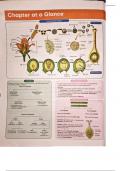
Chapter at a Glance
Pre-fertilisation Events
Pollen grains (n) Microgametophytes
Microspores (n)
Anther Meiosis mitosis
Microsporocyte (2n) Tube cell
Flower of mature Generative
nucleus
cell
sporophyte
Petal
Epldermis
Stigma
-Endothecium Pollen
Anther Vacuole Tube cel
Style tube
Middle layers Exine. -Tube
Intine nucleus
Stamen Microspore
Ovary mother cells
Germ Generative
cell
Ovule Tapetum pore
-Filament
Sepal
Surviving Antipodal
cells
Receptacle megaspore Integuments
Three
Meiosis mitosis
9 Ovule Tube cell Sperm (2)
nucleus
Polar nuclei
Megagametophytes
Megaspores (n) Apoptotic Egg cell
Megasporocyte (2n) Synergids
megaspore
Pollination Outbreeding Devices
Process of transfer of pollen grains from anther and their deposition into • To discourage self-pollination and to encourage cross-pollination as
the stigmatic surface of flower.
continued self-polination leads to inbreeding depression.
Types of Pollination
• Devices
Non-synchronisation of pollen release and stigma receptivity
0C
(0)
(Dichogamy - Protandry Protogyny)
/
Same Flower
o DifferentFlower (ü) Position of anthers and stigma in such a way that pollens cannot come
(Autogamy) (Allogamy) in contact of stigma of some flower (Heterostyly, Herkogamy).
• Self-pollination (ii) Self incompatibility
(iv) Production of unisexual flower (Dicliny).
Pollen-Pistil Interaction
Same PlantDs Different Plant
c
Pollen Deposition on Stigma
(Geitonogamy) (Xenogamy)
•Functionally cross •Cross-pollination Compatiblity Check
o
pollination, but genetically
similar to autogamy
Ifcompatible I incompatible
Pollen grain accepted Pollen grain rejected
Agents of Pollination
Pollen germinates to form pollen tube No pollen germination
Abiotic Biotic Content of generative cells or male gametes
transfers into pollen tube
Wind Water Insects Birds
(Anemophily) (Hydrophily ) Growth of pollen tube due to boron inositol
(Entomophily) (Ornithophily)
sugar complex through stigma and style by Pollen tube
secreting enzymes.
Antipodal
Epihydrophilly Hypohydrophily Bats Others Entry into ovule through micropyle Polar nuclei
Vallisneria (Chiropterophily) (ants, rodents, (generally) via synergids with filiform apparatus
e.g. e.g. Zostera
reptiles, guiding the entry of pollen tube. Pollen tube Egg
cel
primates, etc.) entrycan be through micropyle -Synergid
(Porogamy) or
chalaza (Chalazogamy).
Pre-fertilisation Events
Pollen grains (n) Microgametophytes
Microspores (n)
Anther Meiosis mitosis
Microsporocyte (2n) Tube cell
Flower of mature Generative
nucleus
cell
sporophyte
Petal
Epldermis
Stigma
-Endothecium Pollen
Anther Vacuole Tube cel
Style tube
Middle layers Exine. -Tube
Intine nucleus
Stamen Microspore
Ovary mother cells
Germ Generative
cell
Ovule Tapetum pore
-Filament
Sepal
Surviving Antipodal
cells
Receptacle megaspore Integuments
Three
Meiosis mitosis
9 Ovule Tube cell Sperm (2)
nucleus
Polar nuclei
Megagametophytes
Megaspores (n) Apoptotic Egg cell
Megasporocyte (2n) Synergids
megaspore
Pollination Outbreeding Devices
Process of transfer of pollen grains from anther and their deposition into • To discourage self-pollination and to encourage cross-pollination as
the stigmatic surface of flower.
continued self-polination leads to inbreeding depression.
Types of Pollination
• Devices
Non-synchronisation of pollen release and stigma receptivity
0C
(0)
(Dichogamy - Protandry Protogyny)
/
Same Flower
o DifferentFlower (ü) Position of anthers and stigma in such a way that pollens cannot come
(Autogamy) (Allogamy) in contact of stigma of some flower (Heterostyly, Herkogamy).
• Self-pollination (ii) Self incompatibility
(iv) Production of unisexual flower (Dicliny).
Pollen-Pistil Interaction
Same PlantDs Different Plant
c
Pollen Deposition on Stigma
(Geitonogamy) (Xenogamy)
•Functionally cross •Cross-pollination Compatiblity Check
o
pollination, but genetically
similar to autogamy
Ifcompatible I incompatible
Pollen grain accepted Pollen grain rejected
Agents of Pollination
Pollen germinates to form pollen tube No pollen germination
Abiotic Biotic Content of generative cells or male gametes
transfers into pollen tube
Wind Water Insects Birds
(Anemophily) (Hydrophily ) Growth of pollen tube due to boron inositol
(Entomophily) (Ornithophily)
sugar complex through stigma and style by Pollen tube
secreting enzymes.
Antipodal
Epihydrophilly Hypohydrophily Bats Others Entry into ovule through micropyle Polar nuclei
Vallisneria (Chiropterophily) (ants, rodents, (generally) via synergids with filiform apparatus
e.g. e.g. Zostera
reptiles, guiding the entry of pollen tube. Pollen tube Egg
cel
primates, etc.) entrycan be through micropyle -Synergid
(Porogamy) or
chalaza (Chalazogamy).


