Health and Social Care - Unit 2 Exam |82
Questions & Answers
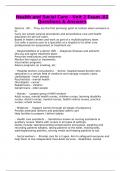
Doctors - GP - -They are the first (primary) point of contact when someone is
ill.
Carry out simple surgical procedures and preventative care and health
education for service users.
Based in health centers and work as part of a multidisciplinary team.
Can refer a service user to a specialist at a hospital or to other care
professionals for assessment or treatment etc.
- Responsibilities of a doctor (GP) - -Diagnose illnesses and ailments
Discuss and agree treatment plans
Prescribe medications and treatments
Monitor the impact or treatments
Vaccination programs
Advice programs on smoking, etc.
- Hospital doctors (consultants) - -Senior, hospital based doctors who
specialise in a certain field of medicine and manage complex cases.
cardiologists - heart disease
Psychiatrists - mental health
Oncologists - cancer
Pediatricians - children
Geriatricians - older people
- Nurses - -Largest group of NHS workers
Adult nurses, mental health nurses, children nurses, learning disability
nurses, district nurses, neontal nurses, health visitors nurses, practice
nurses, school nurses
- Midwives - -Support women through all stages of pregnancy
Provide antenatal (before) and postnatal (after) care
Help families to prepare / deliver babies
- Health care assistants - -Sometimes known as nursing assistants or
auxiliary nurses. Works with nurses in all types of settings.
Duties include; taking/recording temperatures and pulses, weighing and
recording patients weights, taking patients to the toilet, making beds,
washing/dressing patients, serving meals and helping patients to eat.
- Social workers - -Provide care for a ll ages. Aim to safeguard everyone and
help them to live independent lives.Adult services - disabilities, mental
, health, learning difficulties. Child services - protect children from abuse and
harm.
- Occupational therapists - -Work with people of all ages who have difficulty
in carrying out the practical routines of daily life. Help people to live
independent lives.
- Youth Workers - -Work with people between the ages of 11-15. Help
people to reach their full potential and become responsible member of
society.
Run health campaigns, organise activities and projects, run sports teams,
manage youth community projects, work with parents to support the
development of children.
- Care assistants - -Provide practical help and support for people who
struggle with everyday activities.
Help with personal daily care, general household tasks, paying bills and
writing letters and liaising with other health care professionals
- Care managers - -They manage the provision of residential care for;
adults/young adults with learning difficulties, older people in
residential/nursing homes, people in supported housing, people receiving
hospice care.
Responsible for a care setting running and functioning.
- Support workers - -Linked closely to a healthcare or nursing assistant role.
Work alongside lots of different professionals.
- Examples of policies - -Health and safety, equality and diversity,
medication, safeguarding, disclosure and barring service (DBS) refferal,
complaints, death of a resident.
- Prescribing medication - -A doctors role (traditionally) however some
nurses can prescribe medication (if they have had extra training). Some
other professionals can prescribe medication, e.g. dentist
- Surgery - -Health care workers in the community play a major role in
helping patients to recover, e.g. visits, assessments, changing dressings.
- Radiotherapy - -High-energy radiation (radiotherapists). Patients may need
follow up support from a GP to promote healing.
- Organ transplant - -Patients may need support from a counsellor. Patients
need to be prepared mentally and physically
- Support for lifestyle changes - -Counselling
Questions & Answers
Doctors - GP - -They are the first (primary) point of contact when someone is
ill.
Carry out simple surgical procedures and preventative care and health
education for service users.
Based in health centers and work as part of a multidisciplinary team.
Can refer a service user to a specialist at a hospital or to other care
professionals for assessment or treatment etc.
- Responsibilities of a doctor (GP) - -Diagnose illnesses and ailments
Discuss and agree treatment plans
Prescribe medications and treatments
Monitor the impact or treatments
Vaccination programs
Advice programs on smoking, etc.
- Hospital doctors (consultants) - -Senior, hospital based doctors who
specialise in a certain field of medicine and manage complex cases.
cardiologists - heart disease
Psychiatrists - mental health
Oncologists - cancer
Pediatricians - children
Geriatricians - older people
- Nurses - -Largest group of NHS workers
Adult nurses, mental health nurses, children nurses, learning disability
nurses, district nurses, neontal nurses, health visitors nurses, practice
nurses, school nurses
- Midwives - -Support women through all stages of pregnancy
Provide antenatal (before) and postnatal (after) care
Help families to prepare / deliver babies
- Health care assistants - -Sometimes known as nursing assistants or
auxiliary nurses. Works with nurses in all types of settings.
Duties include; taking/recording temperatures and pulses, weighing and
recording patients weights, taking patients to the toilet, making beds,
washing/dressing patients, serving meals and helping patients to eat.
- Social workers - -Provide care for a ll ages. Aim to safeguard everyone and
help them to live independent lives.Adult services - disabilities, mental
, health, learning difficulties. Child services - protect children from abuse and
harm.
- Occupational therapists - -Work with people of all ages who have difficulty
in carrying out the practical routines of daily life. Help people to live
independent lives.
- Youth Workers - -Work with people between the ages of 11-15. Help
people to reach their full potential and become responsible member of
society.
Run health campaigns, organise activities and projects, run sports teams,
manage youth community projects, work with parents to support the
development of children.
- Care assistants - -Provide practical help and support for people who
struggle with everyday activities.
Help with personal daily care, general household tasks, paying bills and
writing letters and liaising with other health care professionals
- Care managers - -They manage the provision of residential care for;
adults/young adults with learning difficulties, older people in
residential/nursing homes, people in supported housing, people receiving
hospice care.
Responsible for a care setting running and functioning.
- Support workers - -Linked closely to a healthcare or nursing assistant role.
Work alongside lots of different professionals.
- Examples of policies - -Health and safety, equality and diversity,
medication, safeguarding, disclosure and barring service (DBS) refferal,
complaints, death of a resident.
- Prescribing medication - -A doctors role (traditionally) however some
nurses can prescribe medication (if they have had extra training). Some
other professionals can prescribe medication, e.g. dentist
- Surgery - -Health care workers in the community play a major role in
helping patients to recover, e.g. visits, assessments, changing dressings.
- Radiotherapy - -High-energy radiation (radiotherapists). Patients may need
follow up support from a GP to promote healing.
- Organ transplant - -Patients may need support from a counsellor. Patients
need to be prepared mentally and physically
- Support for lifestyle changes - -Counselling