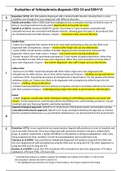
Evaluation of Schizophrenia diagnosis (ICD-10 and DSM-V)
Rosenhan (1973): 201/250 patients diagnosed with a mental health disorder showing there is some
S reliability even though they were diagnosed with different disorders.
Suicide prevention: Ketter (2005) said that misdiagnosis due to symptom overlap can lead to years of
delay in receiving treatment during which degeneration and suicide can occur.
Ophoff et al (2011): Assessed 50000 PP’s genes. Found that 3/7 gene locations associated with
P schizophrenia were also associated with bipolar disorder, allowing gene therapies to be produced that
can simultaneously treat both illnesses. (Impact = Treatment is time and cost effective).
Gender bias:
- Cotton et al suggested that women tend to be more high functioning so they are less likely to be
diagnosed with schizophrenia. (Impact = women suffer longer and can also deteriorate).
- Lewin (1984): Found that the number of females diagnosed with schizophrenia reduced if the
diagnostic criteria were made clearer. (Impact = less women put on strong medications)
- Powell: He gave 290 male and female psychiatrists 2 case studies of patient behaviours. When they
were described as male, 56% of cases were diagnosed. When they were described as female 20% of
cases were diagnosed. (Impact = less women diagnosed, they suffer longer and can deteriorate).
Culture bias:
- Harrison et al (1984): Found that people with West-Indian origin were over-diagnosed with
I schizophrenia by white doctors, due to their ethnic background (Impact = labelling, strong medications)
- Cochrane (1977): Found that prevalence of schizophrenia in West Indies is 1%, but people with African-
Caribbean origin are 7 times more likely to be diagnosed with schizophrenia whilst living in the UK.
(Impact = labelling, strong medications)
- Escobar found psychiatrists tend over-interpret symptoms and don’t trust black patients to be honest
with their symptoms (Impact = underdiagnosing, longer time taken to get treatment, deterioration)
Issues:
- Schleff: Diagnosis classification labels individuals leading to self-fulfilling prophecies and lower self-
esteem. (Counterarguments could include patients benefitting from understanding symptoms: Can get
treatment and care from psychiatrists and family members).
Supports biological approach: Ophoff et al’s study found a link between genes and symptom overlap.
Contradicts behaviourist approach: Ophoff et al’s study contradicts behaviourist approach as it shows
that the symptoms (behaviours e.g. psychomotor disturbances), are not learned from the environment.
A
C Rosenhan (1973): In one experiment two experimenters feigned hallucinations to enter in hospitals and
acted normally afterwards. They were diagnosed with psychiatric disorders and given antipsychotic
drugs. In another experiment, a facility identified 41/250 patients as being pseudopatients, with 2 also
being suspected by other members of staff. No pseudopatients had actually been sent.
Cheniaux et al (2009): Two psychiatrists individually diagnosed 100 patients using both the DSM and
ICD. One diagnosed 26 with schizophrenia using the DSM and 44 using the ICD. The other diagnosed 13
using the DSM and 24 using the ICD.
Buckley et al (2009): Found that 50% of patients with schizophrenia also have depression. 47% abuse
substances. 29% have PTSD. 23% have OCD
* Contradicting evidence is evidence against the reliability and validity of the DSM-V or ICD-10 and
the evaluation criticises the DSM-V and ICD-10
** The highlighted parts describe the impact of the finding or the impact related to the finding
Rosenhan (1973): 201/250 patients diagnosed with a mental health disorder showing there is some
S reliability even though they were diagnosed with different disorders.
Suicide prevention: Ketter (2005) said that misdiagnosis due to symptom overlap can lead to years of
delay in receiving treatment during which degeneration and suicide can occur.
Ophoff et al (2011): Assessed 50000 PP’s genes. Found that 3/7 gene locations associated with
P schizophrenia were also associated with bipolar disorder, allowing gene therapies to be produced that
can simultaneously treat both illnesses. (Impact = Treatment is time and cost effective).
Gender bias:
- Cotton et al suggested that women tend to be more high functioning so they are less likely to be
diagnosed with schizophrenia. (Impact = women suffer longer and can also deteriorate).
- Lewin (1984): Found that the number of females diagnosed with schizophrenia reduced if the
diagnostic criteria were made clearer. (Impact = less women put on strong medications)
- Powell: He gave 290 male and female psychiatrists 2 case studies of patient behaviours. When they
were described as male, 56% of cases were diagnosed. When they were described as female 20% of
cases were diagnosed. (Impact = less women diagnosed, they suffer longer and can deteriorate).
Culture bias:
- Harrison et al (1984): Found that people with West-Indian origin were over-diagnosed with
I schizophrenia by white doctors, due to their ethnic background (Impact = labelling, strong medications)
- Cochrane (1977): Found that prevalence of schizophrenia in West Indies is 1%, but people with African-
Caribbean origin are 7 times more likely to be diagnosed with schizophrenia whilst living in the UK.
(Impact = labelling, strong medications)
- Escobar found psychiatrists tend over-interpret symptoms and don’t trust black patients to be honest
with their symptoms (Impact = underdiagnosing, longer time taken to get treatment, deterioration)
Issues:
- Schleff: Diagnosis classification labels individuals leading to self-fulfilling prophecies and lower self-
esteem. (Counterarguments could include patients benefitting from understanding symptoms: Can get
treatment and care from psychiatrists and family members).
Supports biological approach: Ophoff et al’s study found a link between genes and symptom overlap.
Contradicts behaviourist approach: Ophoff et al’s study contradicts behaviourist approach as it shows
that the symptoms (behaviours e.g. psychomotor disturbances), are not learned from the environment.
A
C Rosenhan (1973): In one experiment two experimenters feigned hallucinations to enter in hospitals and
acted normally afterwards. They were diagnosed with psychiatric disorders and given antipsychotic
drugs. In another experiment, a facility identified 41/250 patients as being pseudopatients, with 2 also
being suspected by other members of staff. No pseudopatients had actually been sent.
Cheniaux et al (2009): Two psychiatrists individually diagnosed 100 patients using both the DSM and
ICD. One diagnosed 26 with schizophrenia using the DSM and 44 using the ICD. The other diagnosed 13
using the DSM and 24 using the ICD.
Buckley et al (2009): Found that 50% of patients with schizophrenia also have depression. 47% abuse
substances. 29% have PTSD. 23% have OCD
* Contradicting evidence is evidence against the reliability and validity of the DSM-V or ICD-10 and
the evaluation criticises the DSM-V and ICD-10
** The highlighted parts describe the impact of the finding or the impact related to the finding