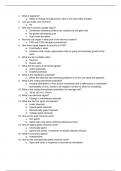
1. What is plasticity?
a. Ability to change throughout life, take in info and make changes
2. Can you make new neurons?
a. No
3. Why don’t neurons usually repair?
a. Sometimes inhibitory proteins are released by the glial cells
b. No growth stimulating cues
c. Scar tissue formation
4. Neurons can repair in what part of the nervous system?
a. PNS only CNS damage is permemant
5. How does repair happen to neurons in PNS?
a. If cell body is intact
b. Schwann cells create regeneration tube to guide and stimulate growth of the
axon.
6. What are the excitable cells?
a. Neurons
b. Muscle cells
7. What are the types of electrical signals?
a. Action potentials
b. Graded potentials
8. What is the equilibrium potential?
a. When the electrical and chemical gradients of an ion are equal and opposite
9. What is the resting membrane potential?
a. Unequal distribution of ions across membrane due to differences in membrane
permeability of ions, needs to be negative number to allow for excitability.
10. What is the resting memebrane potential of an average cell?
a. -65 to -85 mV (-70mV)
11. What’s an electrical signal?
a. Change in memebrane potential
12. What are the four types of channels?
a. Leaks channels
b. Ligand gated channels
c. Mechanically gated channels
d. Voltage gated channels
13. How do the leak channels work?
a. Non gated
b. Gates open and close randomly allowing ion flow
14. How do ligand gated channels work?
a. Chemically gated
b. Opens and closes in response to specific ligands stimulus
15. What’s a common ligand?
a. Acetylcholine
16. How do the mechanically gated channels work?
a. Open and close in response to mechanical stimulation
a. Ability to change throughout life, take in info and make changes
2. Can you make new neurons?
a. No
3. Why don’t neurons usually repair?
a. Sometimes inhibitory proteins are released by the glial cells
b. No growth stimulating cues
c. Scar tissue formation
4. Neurons can repair in what part of the nervous system?
a. PNS only CNS damage is permemant
5. How does repair happen to neurons in PNS?
a. If cell body is intact
b. Schwann cells create regeneration tube to guide and stimulate growth of the
axon.
6. What are the excitable cells?
a. Neurons
b. Muscle cells
7. What are the types of electrical signals?
a. Action potentials
b. Graded potentials
8. What is the equilibrium potential?
a. When the electrical and chemical gradients of an ion are equal and opposite
9. What is the resting membrane potential?
a. Unequal distribution of ions across membrane due to differences in membrane
permeability of ions, needs to be negative number to allow for excitability.
10. What is the resting memebrane potential of an average cell?
a. -65 to -85 mV (-70mV)
11. What’s an electrical signal?
a. Change in memebrane potential
12. What are the four types of channels?
a. Leaks channels
b. Ligand gated channels
c. Mechanically gated channels
d. Voltage gated channels
13. How do the leak channels work?
a. Non gated
b. Gates open and close randomly allowing ion flow
14. How do ligand gated channels work?
a. Chemically gated
b. Opens and closes in response to specific ligands stimulus
15. What’s a common ligand?
a. Acetylcholine
16. How do the mechanically gated channels work?
a. Open and close in response to mechanical stimulation