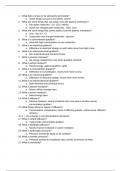
1. What does it mean to be selectively permeable?
a. Some things can get in and others cannot
2. What are some things that can easily cross the plasma membrane?
a. Non polar molecules - O2, CO2, steroid
b. Small non charged polar molecules - H2O, urea
3. What are some things that cannot easily cross the plasma membrane?
a. Ions - Na+,K+, Cl-
b. Large polar non charged molecules - glucose
4. What is a concentration gradient?
a. Area with high concentration to low contraction
5. What is an electrical gradient?
a. Difference in electrical charge on each side move from high to low
6. What is an electrochemical gradient?
a. Mix of electrical and chemical forces
7. What is passive transport?
a. No energy needed from cell, down gradient, downhill
8. What is active transport?
a. Needs energy, against gradient, uphill
9. What is a concentration gradient?
a. Difference in concentration, moves from more to less
10. What is an electrical gradient?
a. Difference in electrical charge, moves from more to less
11. What is an electrochemical gradient?
a. Both electrical and chemical forces
12. What is passive transport?
a. Moves without energy input
13. What is active transport?
a. Need energy input
14. What is diffusion?
a. Passive transport, mixing of particle from one area to another across
concentration gradient
15. What things influence speed of diffusion?
a. Concentration, temperature, mass of diffusing particle, surface area, diffusion
distance.
16. J = -DA (change in conc)/(membrane thickness)
17. What is simple diffusion?
a. Typical with concentration gradient
18. What is facilitated diffusion?
a. Needs channel mediated or carrier mediated
19. What is hydrostatic pressure?
a. Pressure exerted by liquid on its container
20. What is osmotic pressure?
a. Pressure needed to completely stop osmotic movement of water
21. What is osmolarity?
a. Some things can get in and others cannot
2. What are some things that can easily cross the plasma membrane?
a. Non polar molecules - O2, CO2, steroid
b. Small non charged polar molecules - H2O, urea
3. What are some things that cannot easily cross the plasma membrane?
a. Ions - Na+,K+, Cl-
b. Large polar non charged molecules - glucose
4. What is a concentration gradient?
a. Area with high concentration to low contraction
5. What is an electrical gradient?
a. Difference in electrical charge on each side move from high to low
6. What is an electrochemical gradient?
a. Mix of electrical and chemical forces
7. What is passive transport?
a. No energy needed from cell, down gradient, downhill
8. What is active transport?
a. Needs energy, against gradient, uphill
9. What is a concentration gradient?
a. Difference in concentration, moves from more to less
10. What is an electrical gradient?
a. Difference in electrical charge, moves from more to less
11. What is an electrochemical gradient?
a. Both electrical and chemical forces
12. What is passive transport?
a. Moves without energy input
13. What is active transport?
a. Need energy input
14. What is diffusion?
a. Passive transport, mixing of particle from one area to another across
concentration gradient
15. What things influence speed of diffusion?
a. Concentration, temperature, mass of diffusing particle, surface area, diffusion
distance.
16. J = -DA (change in conc)/(membrane thickness)
17. What is simple diffusion?
a. Typical with concentration gradient
18. What is facilitated diffusion?
a. Needs channel mediated or carrier mediated
19. What is hydrostatic pressure?
a. Pressure exerted by liquid on its container
20. What is osmotic pressure?
a. Pressure needed to completely stop osmotic movement of water
21. What is osmolarity?