
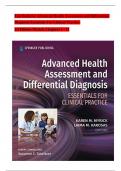
Test Bank for Advanced Health Assessment and Differential
Diagnosis Essentials For Clinical Practice
1st Edition Myrick, Chapters 1 - 12
,Advanced Health Assessment and Differential Diagnosis Essentials for Clinical Practice 1stE
GY GY GY GY GY GY GY GY GY GY G
Y
dition Myrick Test Bank
GY GY GY
Table of Contents:
GY GY
Chapter 1. Health History, The Patient Interview, And Motivational Interviewing
GY GY GY GY GY GY GY GY GY
Chapter 2. Advanced Health Assessment of the Head, Neck, and Lymphatic System
GY GY GY GY GY GY GY GY GY GY GY
Chapter 3. Advanced Health Assessment of the Nose, Mouth, and Throat
GY GY GY GY GY GY GY GY GY GY
Chapter 4. Advanced Health Assessment of the Eyes and Ears
GY GY GY GY GY GY GY GY GY
Chapter 5. Advanced Health Assessment of Skin, Hair, and Nails
GY GY GY GY GY GY GY GY GY
Chapter 6. Advanced Health Assessment of the Cardiovascular System
GY GY GY GY GY GY GY GY
Chapter 7 Advanced Health Assessment of the Respiratory System
GY GY GY GY GY GY GY GY
Chapter 8 Advanced Health Assessment of the Abdomen, Rectum, and Anus
GY GY GY GY GY GY GY GY GY GY
Chapter 9 Advanced Health Assessment of the Male Genitourinary System
GY GY GY GY GY GY GY GY GY
Chapter 10 Advanced Assessment of the Female Reproductive System
GY GY GY GY GY GY GY GY
Chapter 11 Advanced Health Assessment of the Neurological System
GY GY GY GY GY GY GY GY
Chapter 12 Advanced Health Assessment of the Musculoskeletal System
GY GY GY GY GY GY GY GY
,Advanced Health Assessment and Differential Diagnosis Essentials for Clinical Practice
GY GY GY GY GY GY GY GY GY G
1stEdition Myrick Test Bank
Y G
Y GY GY GY
Chapter 1: Health History, The Patient Interview, And Motivational Interviewing
GY GY GY GY GY GY GY GY GY
MULTIPLE CHOICE GY
1. The nurse is preparing to conduct a health history. Which of these statements best des
GY GY GY GY GY GY GY GY GY GY GY GY GY GY
cribesthe purpose of a health history?
Y
G GY GY GY GY GY
a To provide an opportunity for interaction between the patient and the nurse
GY GY GY GY GY GY GY GY GY GY GY
.
b To provide a form for obtaining the patients biographic information
GY GY GY GY GY GY GY GY GY
.
c To document the normal and abnormal findings of a physical assessment
GY GY GY GY GY GY GY GY GY GY
.
d To provide a database of subjective information about the patients past an
GY GY GY GY GY GY GY GY GY GY GY
. dcurrent health
Y
G GY
ANSWER: D GY
The purpose of the health history is to collect subjective datawhat the person says about him or
GY GY GY GY GY GY GY GY GY GY GY GY GY GY GY GY Y
G
herself. The other options are not correct.
GY GY GY GY GY GY
DIF: Cognitive Level: Understanding (Comprehension) REF: dm. 49
GY GY GY GY GY GY GY
MSC: Client Needs: Safe and Effective Care Environment: Management of Care
GY GY GY GY GY GY GY GY GY GY
2. When the nurse is evaluating the reliability of a patients responses, which of these state
GY GY GY GY GY GY GY GY GY GY GY GY GY GY
mentswould be correct? The patient:
Y
G GY GY GY GY
a Has a history of drug abuse and therefore is not reliable.
GY GY GY GY GY GY GY GY GY GY
.
b Provided consistent information and therefore is reliable.
GY GY GY GY GY GY
.
c Smiled throughout interview and therefore is assumed reliable.
GY GY GY GY GY GY GY
.
d Would not answer questions concerning stress and therefore is not reliable.
GY GY GY GY GY GY GY GY GY GY
.
ANSWER: B GY
A reliable person always gives the same answers, even when questions are rephrased or are
GY GY GY GY GY GY GY GY GY GY GY GY GY GY Y
G
repeated later in the interview. The other statements are not correct.
GY GY GY GY GY GY GY GY GY GY
DIF: Cognitive Level: Applying (Application) REF: dm. 49
GY GY GY GY GY GY GY
, MSC: Client Needs: Safe and Effective Care Environment: Management of Care
GY GY GY GY GY GY GY GY GY GY
3. A 59-year- GY
old patient tells the nurse that he has ulcerative colitis. He has been having blackstools f
GY GY GY GY GY GY GY GY GY GY GY GY GY GY Y
G GY
or the last 24 hours. How would the nurse best document his reason for seeking care?
GY GY GY GY GY GY GY GY GY GY GY GY GY GY GY
a J.M. is a 59-year-old man seeking treatment for ulcerative colitis.
GY GY GY GY GY GY GY GY GY
.
b J.M. came into the clinic complaining of having black stools for the past 2
GY GY GY GY GY GY GY GY GY GY GY GY GY
. 4hours.
Y
G
c J.M. is a 59-year- GY GY GY
. old man who states that he has ulcerative colitis and wants itchecked.
GY GY GY GY GY GY GY GY GY GY GY Y
G
d J.M. is a 59-year- GY GY GY
. old man who states that he has been having black stools forthe past 24 ho
GY GY GY GY GY GY GY GY GY GY GY Y
G GY GY GY
urs.
ANSWER: D GY
The reason for seeking care is a brief spontaneous statement in the persons own words that
GY GY GY GY GY GY GY GY GY GY GY GY GY GY GY Y
G
describes the reason for the visit. It states one (possibly two) signs or symptoms and their d
GY GY GY GY GY GY GY GY GY GY GY GY GY GY GY GY
uration. It is enclosed in quotation marks to indicate the persons exact words.
GY GY GY GY GY GY GY GY GY GY GY GY
DIF: Cognitive Level: Applying (Application) REF: dm. 50
GY GY GY GY GY GY GY
MSC: Client Needs: Safe and Effective Care Environment: Management of Care
GY GY GY GY GY GY GY GY GY GY
4. A patient tells the nurse that she has had abdominal pain for the past week. What would
GY GY GY GY GY GY GY GY GY GY GY GY GY GY GY GY G
be thenurses best response?
Y GY Y
G GY GY
a Can you point to where it hurts?
GY GY GY GY GY GY
.
b Well talk more about that later in the interview.
GY GY GY GY GY GY GY GY
.
c What have you had to eat in the last 24 hours?
GY GY GY GY GY GY GY GY GY GY
.
d Have you ever had any surgeries on your abdomen?
GY GY GY GY GY GY GY GY
.
ANSWER: A GY
A final summary of any symptom the person has should include, along with seven other cr
GY GY GY GY GY GY GY GY GY GY GY GY GY GY GY
iticalcharacteristics, Location: specific. The person is asked to point to the location.
Y
G GY GY GY GY GY GY GY GY GY GY GY
DIF: Cognitive Level: Applying (Application) REF: dm. 50
GY GY GY GY GY GY GY
MSC: Client Needs: Safe and Effective Care Environment: Management of Care
GY GY GY GY GY GY GY GY GY GY
5. A 29-year- GY
old woman tells the nurse that she has excruciating pain in her back. Which wouldbe the
GY GY GY GY GY GY GY GY GY GY GY GY GY GY Y
G GY GY
nurses appropriate response to the womans statement?
GY GY GY GY GY GY
Diagnosis Essentials For Clinical Practice
1st Edition Myrick, Chapters 1 - 12
,Advanced Health Assessment and Differential Diagnosis Essentials for Clinical Practice 1stE
GY GY GY GY GY GY GY GY GY GY G
Y
dition Myrick Test Bank
GY GY GY
Table of Contents:
GY GY
Chapter 1. Health History, The Patient Interview, And Motivational Interviewing
GY GY GY GY GY GY GY GY GY
Chapter 2. Advanced Health Assessment of the Head, Neck, and Lymphatic System
GY GY GY GY GY GY GY GY GY GY GY
Chapter 3. Advanced Health Assessment of the Nose, Mouth, and Throat
GY GY GY GY GY GY GY GY GY GY
Chapter 4. Advanced Health Assessment of the Eyes and Ears
GY GY GY GY GY GY GY GY GY
Chapter 5. Advanced Health Assessment of Skin, Hair, and Nails
GY GY GY GY GY GY GY GY GY
Chapter 6. Advanced Health Assessment of the Cardiovascular System
GY GY GY GY GY GY GY GY
Chapter 7 Advanced Health Assessment of the Respiratory System
GY GY GY GY GY GY GY GY
Chapter 8 Advanced Health Assessment of the Abdomen, Rectum, and Anus
GY GY GY GY GY GY GY GY GY GY
Chapter 9 Advanced Health Assessment of the Male Genitourinary System
GY GY GY GY GY GY GY GY GY
Chapter 10 Advanced Assessment of the Female Reproductive System
GY GY GY GY GY GY GY GY
Chapter 11 Advanced Health Assessment of the Neurological System
GY GY GY GY GY GY GY GY
Chapter 12 Advanced Health Assessment of the Musculoskeletal System
GY GY GY GY GY GY GY GY
,Advanced Health Assessment and Differential Diagnosis Essentials for Clinical Practice
GY GY GY GY GY GY GY GY GY G
1stEdition Myrick Test Bank
Y G
Y GY GY GY
Chapter 1: Health History, The Patient Interview, And Motivational Interviewing
GY GY GY GY GY GY GY GY GY
MULTIPLE CHOICE GY
1. The nurse is preparing to conduct a health history. Which of these statements best des
GY GY GY GY GY GY GY GY GY GY GY GY GY GY
cribesthe purpose of a health history?
Y
G GY GY GY GY GY
a To provide an opportunity for interaction between the patient and the nurse
GY GY GY GY GY GY GY GY GY GY GY
.
b To provide a form for obtaining the patients biographic information
GY GY GY GY GY GY GY GY GY
.
c To document the normal and abnormal findings of a physical assessment
GY GY GY GY GY GY GY GY GY GY
.
d To provide a database of subjective information about the patients past an
GY GY GY GY GY GY GY GY GY GY GY
. dcurrent health
Y
G GY
ANSWER: D GY
The purpose of the health history is to collect subjective datawhat the person says about him or
GY GY GY GY GY GY GY GY GY GY GY GY GY GY GY GY Y
G
herself. The other options are not correct.
GY GY GY GY GY GY
DIF: Cognitive Level: Understanding (Comprehension) REF: dm. 49
GY GY GY GY GY GY GY
MSC: Client Needs: Safe and Effective Care Environment: Management of Care
GY GY GY GY GY GY GY GY GY GY
2. When the nurse is evaluating the reliability of a patients responses, which of these state
GY GY GY GY GY GY GY GY GY GY GY GY GY GY
mentswould be correct? The patient:
Y
G GY GY GY GY
a Has a history of drug abuse and therefore is not reliable.
GY GY GY GY GY GY GY GY GY GY
.
b Provided consistent information and therefore is reliable.
GY GY GY GY GY GY
.
c Smiled throughout interview and therefore is assumed reliable.
GY GY GY GY GY GY GY
.
d Would not answer questions concerning stress and therefore is not reliable.
GY GY GY GY GY GY GY GY GY GY
.
ANSWER: B GY
A reliable person always gives the same answers, even when questions are rephrased or are
GY GY GY GY GY GY GY GY GY GY GY GY GY GY Y
G
repeated later in the interview. The other statements are not correct.
GY GY GY GY GY GY GY GY GY GY
DIF: Cognitive Level: Applying (Application) REF: dm. 49
GY GY GY GY GY GY GY
, MSC: Client Needs: Safe and Effective Care Environment: Management of Care
GY GY GY GY GY GY GY GY GY GY
3. A 59-year- GY
old patient tells the nurse that he has ulcerative colitis. He has been having blackstools f
GY GY GY GY GY GY GY GY GY GY GY GY GY GY Y
G GY
or the last 24 hours. How would the nurse best document his reason for seeking care?
GY GY GY GY GY GY GY GY GY GY GY GY GY GY GY
a J.M. is a 59-year-old man seeking treatment for ulcerative colitis.
GY GY GY GY GY GY GY GY GY
.
b J.M. came into the clinic complaining of having black stools for the past 2
GY GY GY GY GY GY GY GY GY GY GY GY GY
. 4hours.
Y
G
c J.M. is a 59-year- GY GY GY
. old man who states that he has ulcerative colitis and wants itchecked.
GY GY GY GY GY GY GY GY GY GY GY Y
G
d J.M. is a 59-year- GY GY GY
. old man who states that he has been having black stools forthe past 24 ho
GY GY GY GY GY GY GY GY GY GY GY Y
G GY GY GY
urs.
ANSWER: D GY
The reason for seeking care is a brief spontaneous statement in the persons own words that
GY GY GY GY GY GY GY GY GY GY GY GY GY GY GY Y
G
describes the reason for the visit. It states one (possibly two) signs or symptoms and their d
GY GY GY GY GY GY GY GY GY GY GY GY GY GY GY GY
uration. It is enclosed in quotation marks to indicate the persons exact words.
GY GY GY GY GY GY GY GY GY GY GY GY
DIF: Cognitive Level: Applying (Application) REF: dm. 50
GY GY GY GY GY GY GY
MSC: Client Needs: Safe and Effective Care Environment: Management of Care
GY GY GY GY GY GY GY GY GY GY
4. A patient tells the nurse that she has had abdominal pain for the past week. What would
GY GY GY GY GY GY GY GY GY GY GY GY GY GY GY GY G
be thenurses best response?
Y GY Y
G GY GY
a Can you point to where it hurts?
GY GY GY GY GY GY
.
b Well talk more about that later in the interview.
GY GY GY GY GY GY GY GY
.
c What have you had to eat in the last 24 hours?
GY GY GY GY GY GY GY GY GY GY
.
d Have you ever had any surgeries on your abdomen?
GY GY GY GY GY GY GY GY
.
ANSWER: A GY
A final summary of any symptom the person has should include, along with seven other cr
GY GY GY GY GY GY GY GY GY GY GY GY GY GY GY
iticalcharacteristics, Location: specific. The person is asked to point to the location.
Y
G GY GY GY GY GY GY GY GY GY GY GY
DIF: Cognitive Level: Applying (Application) REF: dm. 50
GY GY GY GY GY GY GY
MSC: Client Needs: Safe and Effective Care Environment: Management of Care
GY GY GY GY GY GY GY GY GY GY
5. A 29-year- GY
old woman tells the nurse that she has excruciating pain in her back. Which wouldbe the
GY GY GY GY GY GY GY GY GY GY GY GY GY GY Y
G GY GY
nurses appropriate response to the womans statement?
GY GY GY GY GY GY


