Se parece a mi madre , parecer – to look like
When describing the house make up stuff
Ir + a + infinitivo
Ayudar – to help
El ano que viene – the coming year
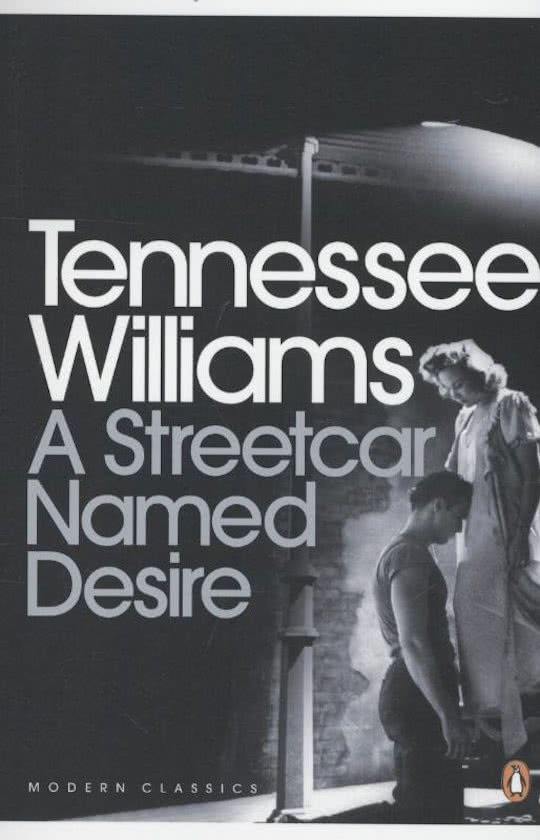
A Streetcar Named Desire
GENRE
Tragedy
o the protagonist, Blanche’s downfall+ aims to produce a final catharsis or emotional
outlet as we experience feelings of pity and terror at her fate.
o Tragic comedy
Some people see Stanley as the hero of the play/ protagonist and cheer is
dominance over Blanche and laugh at his wisecracks and applaud his happy
ending with his wife and child.
Memory play
o William’s created a new genre in the modern theatre: a heightened naturalism that
allows dreams or nightmares to coexist with reality. This is used to emphasise the
major themes of the play.
o Memories used to structure the play in a non linear way.
o Is one in which the past constantly influences the main characters present life
Traumatic experience
Alan’s death
Time is arrested
When she hallucinates
Failure to make amends and thereby relive the experience
Overcome by guilt and becomes mad
o Seek to convey a symbolic truth as opposed to a naturalistic imitation of reality.
o William’s use of the varsouviana to move Blanche in and out of her memories in the
past adds immeasurably to the audience’s understanding of her character
eventhough it is completely artificial
o Williams has organised the structural framing in which Blanche is memory of Alan’s
suicide is embedded to minimise our chances of achieving an objective critical stance
and encourage us to empathise with her instead.
Southern Gothic
o The wealthy lifestyle of the southern gentry and their distruction by the urban
steamroller of modern american industry.
o Blanche represent faded corrupt culture of the south.\
Morality play
o Though there is no admission of sin or guilt in the play, we are aware of an
inescapable movement towards catastrophe, and that some measure of punishment
will be metted out to the guilty
o Those who board the ‘streetcar’ of desire are helpless once they have made their
choice to ride in it.
In scene 1 Blanche changes from the streetcar to desire to one going to
cemeteries. Which are sin and death. Moral is clear, she is moving towards
sin and death
The image of the streetcar as the driving force of passion conveys
the helplessness of its riders but also stresses the element of choice
as they have made the decision to board it.
, STRUCTRURE
Two parallel storylines
o Growing conflict between Blanche and Stanley
o Gradual crumbling of Blanche’s sanity
Not divided into traditional acts but consists of 11 episodic scenes.
Unlike the typical 3 act structure where each act reaches a climax, each of the 11 scenes
reaches a climax and then ends with an anticlimactic, often more reflective moment.
First 6 scenes follow one another quite slowly, next 4 scenes move at a greater speed,
thereby creating the tension of a violent and tragic climax. The last scene maintains the
illusion of humdrum everyday activities which is shattered by Blanche’s struggle to escape
followed by the restored illusion of calm.
Action of the play covers a period of 5 months+ chronologically presented to develop an
understatndong of Blanche’s spiral into a destruction which is tragic and inevitable.
The concept of a series of playlets is reinforced by the element of repetition. The deaths at
bell rief , the death of Blanche’s husband, her fear of growing old. All these dramnatically
necessary in more than one scene. Although presented from different angles the repetitions
will strengthen the impression that these scenes stand independent of one another.
SCENE 1
Setting
o In greek mythology the initial feels are equivalent of paradise but at the same time
were also the dwelling place of the dead.
Irony in the choice of name of this run down shabby street
The scene is vibrant with life but Blanche sees only poverty
o Contrast of black eunice in the negro women to Blanche’s stiffness.
Music
o Two different musics
Blanche’s new surroundings- blue piano
Creates an atmosphere, grounds in reality
Polka- tragic past and guilt
Non naturalistic sound effect heard only by blanche and no other
character on stage
Symbolises husband’s death and centered into an extreme state of
panic, fear and guilt
Stresses on aspect of plot and blanches character
Used to alert audience to blanche’s guilty feelings about suicide
Stage directions
o Evocative, precise in use of imagery and can be contrasted with language used with
most of the characters with the exception of blanche and stella.
o Uneducated speech of rest of the characters
o Infuse neighborhood with raw animalistic feeling through figurative language
“You can almost feel the warm breath of the brown river”
o Sketches a portrait of stanley and stresses the sexual magnatism of this ‘gawdy seed
bearer’
o Red skinned package from hunter like a stone age primitive hunter
o “Pride of a richly feathered male bird among hens”
o “Cats screeching outside the window” punctuate sexuality of the scene.
o “Suggest a moth” preference for nighttime
Violence
o Bel rieve- beautiful dream in french
When describing the house make up stuff
Ir + a + infinitivo
Ayudar – to help
El ano que viene – the coming year
A Streetcar Named Desire
GENRE
Tragedy
o the protagonist, Blanche’s downfall+ aims to produce a final catharsis or emotional
outlet as we experience feelings of pity and terror at her fate.
o Tragic comedy
Some people see Stanley as the hero of the play/ protagonist and cheer is
dominance over Blanche and laugh at his wisecracks and applaud his happy
ending with his wife and child.
Memory play
o William’s created a new genre in the modern theatre: a heightened naturalism that
allows dreams or nightmares to coexist with reality. This is used to emphasise the
major themes of the play.
o Memories used to structure the play in a non linear way.
o Is one in which the past constantly influences the main characters present life
Traumatic experience
Alan’s death
Time is arrested
When she hallucinates
Failure to make amends and thereby relive the experience
Overcome by guilt and becomes mad
o Seek to convey a symbolic truth as opposed to a naturalistic imitation of reality.
o William’s use of the varsouviana to move Blanche in and out of her memories in the
past adds immeasurably to the audience’s understanding of her character
eventhough it is completely artificial
o Williams has organised the structural framing in which Blanche is memory of Alan’s
suicide is embedded to minimise our chances of achieving an objective critical stance
and encourage us to empathise with her instead.
Southern Gothic
o The wealthy lifestyle of the southern gentry and their distruction by the urban
steamroller of modern american industry.
o Blanche represent faded corrupt culture of the south.\
Morality play
o Though there is no admission of sin or guilt in the play, we are aware of an
inescapable movement towards catastrophe, and that some measure of punishment
will be metted out to the guilty
o Those who board the ‘streetcar’ of desire are helpless once they have made their
choice to ride in it.
In scene 1 Blanche changes from the streetcar to desire to one going to
cemeteries. Which are sin and death. Moral is clear, she is moving towards
sin and death
The image of the streetcar as the driving force of passion conveys
the helplessness of its riders but also stresses the element of choice
as they have made the decision to board it.
, STRUCTRURE
Two parallel storylines
o Growing conflict between Blanche and Stanley
o Gradual crumbling of Blanche’s sanity
Not divided into traditional acts but consists of 11 episodic scenes.
Unlike the typical 3 act structure where each act reaches a climax, each of the 11 scenes
reaches a climax and then ends with an anticlimactic, often more reflective moment.
First 6 scenes follow one another quite slowly, next 4 scenes move at a greater speed,
thereby creating the tension of a violent and tragic climax. The last scene maintains the
illusion of humdrum everyday activities which is shattered by Blanche’s struggle to escape
followed by the restored illusion of calm.
Action of the play covers a period of 5 months+ chronologically presented to develop an
understatndong of Blanche’s spiral into a destruction which is tragic and inevitable.
The concept of a series of playlets is reinforced by the element of repetition. The deaths at
bell rief , the death of Blanche’s husband, her fear of growing old. All these dramnatically
necessary in more than one scene. Although presented from different angles the repetitions
will strengthen the impression that these scenes stand independent of one another.
SCENE 1
Setting
o In greek mythology the initial feels are equivalent of paradise but at the same time
were also the dwelling place of the dead.
Irony in the choice of name of this run down shabby street
The scene is vibrant with life but Blanche sees only poverty
o Contrast of black eunice in the negro women to Blanche’s stiffness.
Music
o Two different musics
Blanche’s new surroundings- blue piano
Creates an atmosphere, grounds in reality
Polka- tragic past and guilt
Non naturalistic sound effect heard only by blanche and no other
character on stage
Symbolises husband’s death and centered into an extreme state of
panic, fear and guilt
Stresses on aspect of plot and blanches character
Used to alert audience to blanche’s guilty feelings about suicide
Stage directions
o Evocative, precise in use of imagery and can be contrasted with language used with
most of the characters with the exception of blanche and stella.
o Uneducated speech of rest of the characters
o Infuse neighborhood with raw animalistic feeling through figurative language
“You can almost feel the warm breath of the brown river”
o Sketches a portrait of stanley and stresses the sexual magnatism of this ‘gawdy seed
bearer’
o Red skinned package from hunter like a stone age primitive hunter
o “Pride of a richly feathered male bird among hens”
o “Cats screeching outside the window” punctuate sexuality of the scene.
o “Suggest a moth” preference for nighttime
Violence
o Bel rieve- beautiful dream in french