
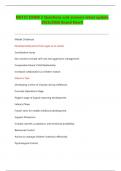
NU131 EXAM 3 Questions and answers latest update
2025/2026 Brand New!!
_____________________________________________________________________________________________
Middle Childhood
Developmental period from ages six to twelve.
Socialization Issues
Key concerns include self-care and aggression management.
Cooperative Parent-Child Relationship
Increased collaboration as children mature.
Erikson's Task
Developing a sense of industry during childhood.
Concrete Operations Stage
Piaget's stage of logical reasoning development.
Latency Phase
Freud's term for middle childhood development.
Support Dimension
Includes warmth, acceptance, and emotional availability.
Behavioral Control
Actions to manage children's behavior effectively.
Psychological Control
, Manipulation of child's thoughts and emotions.
Social Influences
Increased peer interactions and outside challenges.
Prosocial Lies
Lies told to protect or benefit others.
Parenting Adjustments
Changes in practices due to developmental shifts.
Sibling Arrival
Family structure change impacting child dynamics.
Safety and Sustenance
Providing basic needs like food and shelter.
Stimulating and Instructing
Encouraging learning through toys and activities.
Health Care Access
Encouraging children to engage with health practitioners.
Parental Monitoring
Shifting from hands-on to executive oversight.
Encouraging Achievement
Supporting children's high expectations and efforts.
Socioemotional Support


