Anatomy6of6Orofacial6Structures69th6Edition6Brand6Test6Bank
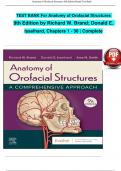
TEST BANK For Anatomy of Orofacial Structures
9th Edition by Richard W. Brand; Donald E.
Isselhard, Chapters 1 - 36 | Complete
, Anatomy6of6Orofacial6Structures69th6Edition6Brand6Test6Bank
UNIT I: INTRODUCTION
6 6
1. Oral Cavity
6 6
Unit I Test
6 6
Unit I Suggested Readings
6 6 6
UNIT II: DENTAL ANATOMY
6 6 6
2. The Tooth: Functions and Terms
6 6 6 6 6
3. Fundamental and Preventative Curvatures
6 6 6 6
4. Dentition
6
5. Development, Form, and Eruption
6 6 6 6
6. Occlusion
6
7. Dental Anomalies
6 6
8. Supporting Structures
6 6
9. Clinical Considerations
6 6
10. Tooth Identification
6 6
11. Root Morphology
6 6
12. Incisors
6
13. Canines
6
14. Premolars
6
15. Molars
6
16. Deciduous Dentition
6 6
Unit II Test
6 6
Unit II Suggested Readings
6 6 6
UNIT III: ORAL HISTOLOGY AND EMBRYOLOGY
6 6 6 6 6
17. Basic Tissues
6 6
18. Development of Orofacial Complex
6 6 6 6
19. Dental Lamina and Enamel Organ
6 6 6 6 6
20. Enamel, Dentin, and Pulp
6 6 6 6
21. Root Formation and Attachment Apparatus
6 6 6 6 6
22. Eruption and Shedding of Teeth
6 6 6 6 6
23. Oral Mucous Membrane
6 6 6
24. The Tongue
6 6
25. Histology of the Salivary Glands
6 6 6 6 6
Unit III Test
6 6
Unit III Suggested Readings
6 6 6
UNIT IV: HEAD AND NECK ANATOMY
6 6 6 6 6
26. Osteology of the Skull
6 6 6 6
27. Nose, Nasal Cavity, and Paranasal Sinuses
6 6 6 6 6 6
28. Muscles of Mastication, Hyoid Muscles, and Sternocleidomastoid and Trapezius
6 6 6 6 6 6 6 6 6 6
Muscles
29. Temporomandibular Joint
6 6
30. Muscles of Facial Expression
6 6 6 6
31. Soft Palate and Pharynx
6 6 6 6
32. Arterial Supply and Venous Drainage
6 6 6 6 6
33. Salivary Glands
6 6
34. Nervous System
6 6
35. Lymphatics and Spread of Dental Infection
6 6 6 6 6 6
36. Anatomical Considerations in Local Anesthesia
6 6 6 6 6 6
, Anatomy6of6Orofacial6Structures69th6Edition6Brand6Test6Bank
Chapter 01: Oral Cavity
6 6 6
Brand/Isselhard: Anatomy of Orofacial Structures, 9th Edition
6 6 6 6 6 6
MULTIPLE6CHOICE
1. A6diastema6is6a6space6between6two6teeth6in6the6same6arch.6When6this6occurs6between6the6
maxillary6central6incisors,6it6is6often6the6result6of6a6pronounced6labial6frenum.
a. Both6statements6are6true.
b. The6first6statement6is6true;6the6second6statement6is6false.
c. The6first6statement6is6false;6the6second6statement6is6true.
d. Both6statements6are6false.
ANSWER:6 A
A6space,6or6lack6of6contact6area,6between6any6two6teeth6in6the6same6arch6is6called6a6diastema.6W
hen6a6diastema6occurs6between6the6maxillary6central6incisors,6it6is6often6the6result6of6a6pronoun
ced6labial6frenum6extending6to6the6crest6of6the6alveolar6ridge6and6possibly6over6the6ridge.6This6
band6of6firm6connective6tissue6causes6the6erupting6incisors6to6be6pushed6aside6resulting6in6a6dia
stema,6or6space.6Correction6of6a6diastema6usually6involves6surgical6removal,6or6cutting,6of6the6fr
enal6tissue6between6teeth.
REF:6 p.63
OBJ:6 To6describe6the6boundaries6and6sub-boundaries6of6the6oral6cavity6and6the6structures6in6each6area
NAT:6CDA:6GC6I.A.6.6Identify6basic6oral6anatomy6and6physiology,6including6but6not6limited6to:6oral6
cavity.6TOP: BLOOM:6Remembering
2. Torus6palatinus6is6seen6on6the
a. soft6palate
b. hard6palate
c. alveolar6ridge
d. oral6pharynx
ANSWER:6 B
Torus6palatinus6is6excess6bone6growth6and6occurs6in6the6midline6of6the6hard6palate.6It6may6grow
6to6varying6sizes6and6is6generally6only6a6problem6when6the6construction6of6a6maxillary6denture6i
s6necessary.6In6health,6such6bony6protuberances,6or6excess6bone6growths,6do6not6occur6on6the6s
oft6palate,6alveolar6ridge,6or6oral6pharynx.
, Anatomy6of6Orofacial6Structures69th6Edition6Brand6Test6Bank
REF:6 p.65
OBJ:6To6define6the6terms6vestibule,6oral6cavity6proper,6mucobuccal6fold,6frenum,6alveolar6mucosa,6gingiv
a,6exostoses,6torus6palatinus,6and6torus6mandibularis
NAT:6CDA:6GC6I.A.2.6Identify6basic6oral6anatomy6and6physiology,6including6but6not6limited6to:6
bones.6TOP: BLOOM:6Remembering
3. Contraction6of6which6muscle6raises6the6tongue6upward?
a. Mylohyoid
b. Palatopharyngeal
c. Palatoglossal
d. Levator6glossal
ANSWER:6 A
TEST BANK For Anatomy of Orofacial Structures
9th Edition by Richard W. Brand; Donald E.
Isselhard, Chapters 1 - 36 | Complete
, Anatomy6of6Orofacial6Structures69th6Edition6Brand6Test6Bank
UNIT I: INTRODUCTION
6 6
1. Oral Cavity
6 6
Unit I Test
6 6
Unit I Suggested Readings
6 6 6
UNIT II: DENTAL ANATOMY
6 6 6
2. The Tooth: Functions and Terms
6 6 6 6 6
3. Fundamental and Preventative Curvatures
6 6 6 6
4. Dentition
6
5. Development, Form, and Eruption
6 6 6 6
6. Occlusion
6
7. Dental Anomalies
6 6
8. Supporting Structures
6 6
9. Clinical Considerations
6 6
10. Tooth Identification
6 6
11. Root Morphology
6 6
12. Incisors
6
13. Canines
6
14. Premolars
6
15. Molars
6
16. Deciduous Dentition
6 6
Unit II Test
6 6
Unit II Suggested Readings
6 6 6
UNIT III: ORAL HISTOLOGY AND EMBRYOLOGY
6 6 6 6 6
17. Basic Tissues
6 6
18. Development of Orofacial Complex
6 6 6 6
19. Dental Lamina and Enamel Organ
6 6 6 6 6
20. Enamel, Dentin, and Pulp
6 6 6 6
21. Root Formation and Attachment Apparatus
6 6 6 6 6
22. Eruption and Shedding of Teeth
6 6 6 6 6
23. Oral Mucous Membrane
6 6 6
24. The Tongue
6 6
25. Histology of the Salivary Glands
6 6 6 6 6
Unit III Test
6 6
Unit III Suggested Readings
6 6 6
UNIT IV: HEAD AND NECK ANATOMY
6 6 6 6 6
26. Osteology of the Skull
6 6 6 6
27. Nose, Nasal Cavity, and Paranasal Sinuses
6 6 6 6 6 6
28. Muscles of Mastication, Hyoid Muscles, and Sternocleidomastoid and Trapezius
6 6 6 6 6 6 6 6 6 6
Muscles
29. Temporomandibular Joint
6 6
30. Muscles of Facial Expression
6 6 6 6
31. Soft Palate and Pharynx
6 6 6 6
32. Arterial Supply and Venous Drainage
6 6 6 6 6
33. Salivary Glands
6 6
34. Nervous System
6 6
35. Lymphatics and Spread of Dental Infection
6 6 6 6 6 6
36. Anatomical Considerations in Local Anesthesia
6 6 6 6 6 6
, Anatomy6of6Orofacial6Structures69th6Edition6Brand6Test6Bank
Chapter 01: Oral Cavity
6 6 6
Brand/Isselhard: Anatomy of Orofacial Structures, 9th Edition
6 6 6 6 6 6
MULTIPLE6CHOICE
1. A6diastema6is6a6space6between6two6teeth6in6the6same6arch.6When6this6occurs6between6the6
maxillary6central6incisors,6it6is6often6the6result6of6a6pronounced6labial6frenum.
a. Both6statements6are6true.
b. The6first6statement6is6true;6the6second6statement6is6false.
c. The6first6statement6is6false;6the6second6statement6is6true.
d. Both6statements6are6false.
ANSWER:6 A
A6space,6or6lack6of6contact6area,6between6any6two6teeth6in6the6same6arch6is6called6a6diastema.6W
hen6a6diastema6occurs6between6the6maxillary6central6incisors,6it6is6often6the6result6of6a6pronoun
ced6labial6frenum6extending6to6the6crest6of6the6alveolar6ridge6and6possibly6over6the6ridge.6This6
band6of6firm6connective6tissue6causes6the6erupting6incisors6to6be6pushed6aside6resulting6in6a6dia
stema,6or6space.6Correction6of6a6diastema6usually6involves6surgical6removal,6or6cutting,6of6the6fr
enal6tissue6between6teeth.
REF:6 p.63
OBJ:6 To6describe6the6boundaries6and6sub-boundaries6of6the6oral6cavity6and6the6structures6in6each6area
NAT:6CDA:6GC6I.A.6.6Identify6basic6oral6anatomy6and6physiology,6including6but6not6limited6to:6oral6
cavity.6TOP: BLOOM:6Remembering
2. Torus6palatinus6is6seen6on6the
a. soft6palate
b. hard6palate
c. alveolar6ridge
d. oral6pharynx
ANSWER:6 B
Torus6palatinus6is6excess6bone6growth6and6occurs6in6the6midline6of6the6hard6palate.6It6may6grow
6to6varying6sizes6and6is6generally6only6a6problem6when6the6construction6of6a6maxillary6denture6i
s6necessary.6In6health,6such6bony6protuberances,6or6excess6bone6growths,6do6not6occur6on6the6s
oft6palate,6alveolar6ridge,6or6oral6pharynx.
, Anatomy6of6Orofacial6Structures69th6Edition6Brand6Test6Bank
REF:6 p.65
OBJ:6To6define6the6terms6vestibule,6oral6cavity6proper,6mucobuccal6fold,6frenum,6alveolar6mucosa,6gingiv
a,6exostoses,6torus6palatinus,6and6torus6mandibularis
NAT:6CDA:6GC6I.A.2.6Identify6basic6oral6anatomy6and6physiology,6including6but6not6limited6to:6
bones.6TOP: BLOOM:6Remembering
3. Contraction6of6which6muscle6raises6the6tongue6upward?
a. Mylohyoid
b. Palatopharyngeal
c. Palatoglossal
d. Levator6glossal
ANSWER:6 A