
clinically oriented anatomy
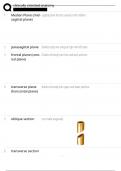
1. Median Plane (mid- sagittal plane that lies exactly in the midline
sagittal plane)
2. parasagittal plane Divides body into unequal right and left sides
3. frontal plane (coro- Divides the body into front and back portions.
nal plane)
4. transverse plane divides the body into upper and lower portions
(horizontal plane)
5. oblique section cuts made diagonally
6. transverse section
, clinically oriented anatomy
cut made along a horizontal plane to divide the body into upper and lower
regions
7. longitudinal sec- a plane along the long axis of an organ
tion
8. opposition Movement of the thumb to touch the fingertips
9. Reposition opposite of opposition
10. osteoporosis risk post-menopause; calcium intake; activity level
factors
, clinically oriented anatomy
11. What is osteoporo- a medical condition in which the bones become brittle and fragile from loss
sis? of tissue, typically as a result of hormonal changes, or deficiency of calcium or
vitamin D.
12. osteoporotic bone bone densitty reduced
13. What is a sternal Bone marrow biopsy of sternum. BM taken from upper 1/3 of sternum (in b/w
puncture? 2nd and 3rd rib attachment).
14. When does synos- As you develop into an adult
tosis occur?
15. How is age deter- the ossification centers of diaphysis and epiphysis are looked at and age is
mined from bone ? determined by
1. appearance of calcified material
2. disappearance of epiphyseal plate
girls grow faster than boys because estrogen has a stronger effect on bone
that testosterone.
16. disease on bone some diseases produce early epiphyseal closure or premature epiphyseal
growth closure.
17. what can be mis- the displayed epiphyseal plate
taken for a fracture
, clinically oriented anatomy
around the epiphy-
seal plate ?
18. what can the sepa- a displaced piece of a fractured bone
ration of an epiph-
ysis be seen like ?
19. avascular narcosis? loss of blood supply to a bone tissue, causes death to the bone tissue.
-after every fracture small areas of adjacent bone undergo necrosis
20. how do the ribs rib ends in a costal cartilage. True ribs (1-7) attach directly to the sternum
articulate with the via their costal cartilage. The false ribs (8-12) either attach to the sternum
sternum ? indirectly or not at all. Ribs8-10 have their costal cartilages attached to the
cartilage of the next higher rib.
21. classifications of true- 1-7 attach directly to sternum
ribs false- 8-10 attach indirectly to sternum, connect to the ribs right above them
floating- 11-12 do not attach to sternum, end up in the posterior abdominal
musculature
22. Typical ribs - fea- 3-9
tures
typical rib consists of a head, neck, and body: The head is wedge-shaped and
has two articular facets separated by a wedge of bone. One facet articulates
1. Median Plane (mid- sagittal plane that lies exactly in the midline
sagittal plane)
2. parasagittal plane Divides body into unequal right and left sides
3. frontal plane (coro- Divides the body into front and back portions.
nal plane)
4. transverse plane divides the body into upper and lower portions
(horizontal plane)
5. oblique section cuts made diagonally
6. transverse section
, clinically oriented anatomy
cut made along a horizontal plane to divide the body into upper and lower
regions
7. longitudinal sec- a plane along the long axis of an organ
tion
8. opposition Movement of the thumb to touch the fingertips
9. Reposition opposite of opposition
10. osteoporosis risk post-menopause; calcium intake; activity level
factors
, clinically oriented anatomy
11. What is osteoporo- a medical condition in which the bones become brittle and fragile from loss
sis? of tissue, typically as a result of hormonal changes, or deficiency of calcium or
vitamin D.
12. osteoporotic bone bone densitty reduced
13. What is a sternal Bone marrow biopsy of sternum. BM taken from upper 1/3 of sternum (in b/w
puncture? 2nd and 3rd rib attachment).
14. When does synos- As you develop into an adult
tosis occur?
15. How is age deter- the ossification centers of diaphysis and epiphysis are looked at and age is
mined from bone ? determined by
1. appearance of calcified material
2. disappearance of epiphyseal plate
girls grow faster than boys because estrogen has a stronger effect on bone
that testosterone.
16. disease on bone some diseases produce early epiphyseal closure or premature epiphyseal
growth closure.
17. what can be mis- the displayed epiphyseal plate
taken for a fracture
, clinically oriented anatomy
around the epiphy-
seal plate ?
18. what can the sepa- a displaced piece of a fractured bone
ration of an epiph-
ysis be seen like ?
19. avascular narcosis? loss of blood supply to a bone tissue, causes death to the bone tissue.
-after every fracture small areas of adjacent bone undergo necrosis
20. how do the ribs rib ends in a costal cartilage. True ribs (1-7) attach directly to the sternum
articulate with the via their costal cartilage. The false ribs (8-12) either attach to the sternum
sternum ? indirectly or not at all. Ribs8-10 have their costal cartilages attached to the
cartilage of the next higher rib.
21. classifications of true- 1-7 attach directly to sternum
ribs false- 8-10 attach indirectly to sternum, connect to the ribs right above them
floating- 11-12 do not attach to sternum, end up in the posterior abdominal
musculature
22. Typical ribs - fea- 3-9
tures
typical rib consists of a head, neck, and body: The head is wedge-shaped and
has two articular facets separated by a wedge of bone. One facet articulates


