

YTREWQ
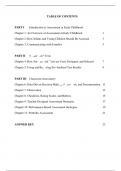
TABLE OF CONTENTS
PART I Introduction to Assessment in Early Childhood
Chapter 1: An Overview of Assessment in Early Childhood 1
Chapter 2: How Infants and Young Children Should Be Assessed 3
Chapter 3: Communicating with Families 5
M
PART II Standardized Tests
Chapter 4: How Standardized Tests are Used, Designed, and Selected 7
EL
Chapter 5: Using and Reporting Standardized Test Results 9
AN
PART III Classroom Assessments
Chapter 6: Data-Driven Decision Making, Assessment, and Documentation 11
IE
Chapter 7: Observation 13
Chapter 8: Checklists, Rating Scales, and Rubrics 15
??
Chapter 9: Teacher-Designed Assessment Strategies 17
??
Chapter 10: Performance-Based Assessment Strategies 19
Chapter 11: Portfolio Assessment 21
ANSWER KEY 23
UYTREW
, YTREWQ
CHAPTER 1
AN OVERVIEW OF ASSESSMENT IN EARLY CHILDHOOD
Short Essay Questions
1. Describe the purposes of assessment.
2. Describe concerns pertaining to assessing infants and toddlers.
3. What are some of the challenges that should be considered when assessing young
children with cultural and language differences?
Multiple Choice
1. Why is assessment with infants and preschool children used?
A. To determine developmental progress or to diagnose developmental delays.
B. To identify children for special education services.
M
C. To ensure that government agencies have developmental statistics on young children.
D. To qualify children with disabilities for residential facilities.
2. What was the result of the child study movement?
EL
A. The establishment of IQ testing
B. The establishment of developmental norms
C. The call for teaching preschooler’s academic skills
AN
D. The narrowing of family participation
3. The first standardized tests were
A. Published by large commercial companies
B. Started as informal assessments
C. Only used with young children
IE
D. Used in laboratory schools at universities
4. Legislation to address the needs of children with disabilities was
??
A. First required for infants and toddlers
B. Developed with one omnibus law
C. Gradually expanded with ongoing legislation
??
D. A top priority of congress
5. Concerns about assessing English Language Learners (ELLs) include all of the following
EXCEPT
A. Lower reading and language fluency scores may impact assessment results
B. Disproportionate numbers of ELLs are being placed in special education
C. ELLs should always be assessed and placed in special education classes when they
first enter American schools
D. The screening results for ELLs may not accurately reflect their development due to
cultural and language differences
6. Bronfenbrenner’s work greatly influenced
A. Standardized testing
B. Legislation for children with disabilities
JHGFDS
, YTREWQ
C. The Child Study Movement
D. Head Start
7. Inclusion means children with disabilities are
A. Included in extracurricular activities
B. Mainstreamed with children with typical development for part of the day
C. Included in the same activities as children with typical development
D. Included in residential facilities
8. One issue with the accountability era testing is
A. States were surprised by complaints of how easy the tests were
B. States felt children with disabilities should be given the same tests as other children
C. States were disappointed that children were not tested in all academic areas
M
D. States did not feel the tests were fair for all populations of children
9. Alternative assessments can
A. Measure how children apply what they learn
EL
B. Provide a standardized measure of children’s knowledge
C. Measure children’s knowledge once they have learned how to read
D. Only measure the information children learn in the school context
AN
10. The purpose of Common Core Standards is
A. To provide flexibility to states in measuring student achievement
B. To establish greater uniformity in what children are learning nationally
C. To ensure easier expectations for education across the nation
D. To help state create greater diversity of goals
IE
??
??
JHGFDS
, YTREWQ
CHAPTER 2
HOW INFANTS AND YOUNG CHILDREN SHOULD BE ASSESSED
Short Essay Questions
1. Why is the following principle important to a quality assessment process for English
Language Learners? Assessment should be fair for all children.
2. Describe elements of an assessment system for young children.
3. Why is it important for teachers to understand variations in children’s development as it
relates to assessment and recommended by NAEYC?
Multiple Choice
1. Why should assessments be used in the classroom?
A. To plan instruction for the average class member
M
B. To understand individual progress in learning and development
C. To ensure children are retained for a grade level
D. To use results to increase class recognition
EL
2. When initiating assessments with young children, which of the following is correct?
A. A group of children should be selected to assess together.
B. The examiner should be alert to shyness or fatigue in the child.
AN
C. The examiner should begin the assessment process as soon as possible when the child
enters the room.
D. The examiner should always complete the test once it is started
3. Infants who are at risk for developmental delays are most likely to be examined by a
IE
A. Cardiologist
B. Psychiatrist
C. Pediatrician
D. Nurse practitioner
??
4. Which of the following is an example of performance assessment?
A. Computer software programs
??
B. Standardized tests
C. Teacher-directed interviews
D. Work samples
5. When does the pre-assessment process begin?
A. Prior to planning curriculum based on individual needs
B. Over the summer, before the school year begins
C. When meeting new students at the beginning of the school year
D. When school administrators schedule it
6. Formal assessment is when
A. Teachers design careful tests based on student needs
B. Standardized tests are used to measure children’s development and progress
C. Teachers observe children’s development and progress
JHGFDS
TABLE OF CONTENTS
PART I Introduction to Assessment in Early Childhood
Chapter 1: An Overview of Assessment in Early Childhood 1
Chapter 2: How Infants and Young Children Should Be Assessed 3
Chapter 3: Communicating with Families 5
M
PART II Standardized Tests
Chapter 4: How Standardized Tests are Used, Designed, and Selected 7
EL
Chapter 5: Using and Reporting Standardized Test Results 9
AN
PART III Classroom Assessments
Chapter 6: Data-Driven Decision Making, Assessment, and Documentation 11
IE
Chapter 7: Observation 13
Chapter 8: Checklists, Rating Scales, and Rubrics 15
??
Chapter 9: Teacher-Designed Assessment Strategies 17
??
Chapter 10: Performance-Based Assessment Strategies 19
Chapter 11: Portfolio Assessment 21
ANSWER KEY 23
UYTREW
, YTREWQ
CHAPTER 1
AN OVERVIEW OF ASSESSMENT IN EARLY CHILDHOOD
Short Essay Questions
1. Describe the purposes of assessment.
2. Describe concerns pertaining to assessing infants and toddlers.
3. What are some of the challenges that should be considered when assessing young
children with cultural and language differences?
Multiple Choice
1. Why is assessment with infants and preschool children used?
A. To determine developmental progress or to diagnose developmental delays.
B. To identify children for special education services.
M
C. To ensure that government agencies have developmental statistics on young children.
D. To qualify children with disabilities for residential facilities.
2. What was the result of the child study movement?
EL
A. The establishment of IQ testing
B. The establishment of developmental norms
C. The call for teaching preschooler’s academic skills
AN
D. The narrowing of family participation
3. The first standardized tests were
A. Published by large commercial companies
B. Started as informal assessments
C. Only used with young children
IE
D. Used in laboratory schools at universities
4. Legislation to address the needs of children with disabilities was
??
A. First required for infants and toddlers
B. Developed with one omnibus law
C. Gradually expanded with ongoing legislation
??
D. A top priority of congress
5. Concerns about assessing English Language Learners (ELLs) include all of the following
EXCEPT
A. Lower reading and language fluency scores may impact assessment results
B. Disproportionate numbers of ELLs are being placed in special education
C. ELLs should always be assessed and placed in special education classes when they
first enter American schools
D. The screening results for ELLs may not accurately reflect their development due to
cultural and language differences
6. Bronfenbrenner’s work greatly influenced
A. Standardized testing
B. Legislation for children with disabilities
JHGFDS
, YTREWQ
C. The Child Study Movement
D. Head Start
7. Inclusion means children with disabilities are
A. Included in extracurricular activities
B. Mainstreamed with children with typical development for part of the day
C. Included in the same activities as children with typical development
D. Included in residential facilities
8. One issue with the accountability era testing is
A. States were surprised by complaints of how easy the tests were
B. States felt children with disabilities should be given the same tests as other children
C. States were disappointed that children were not tested in all academic areas
M
D. States did not feel the tests were fair for all populations of children
9. Alternative assessments can
A. Measure how children apply what they learn
EL
B. Provide a standardized measure of children’s knowledge
C. Measure children’s knowledge once they have learned how to read
D. Only measure the information children learn in the school context
AN
10. The purpose of Common Core Standards is
A. To provide flexibility to states in measuring student achievement
B. To establish greater uniformity in what children are learning nationally
C. To ensure easier expectations for education across the nation
D. To help state create greater diversity of goals
IE
??
??
JHGFDS
, YTREWQ
CHAPTER 2
HOW INFANTS AND YOUNG CHILDREN SHOULD BE ASSESSED
Short Essay Questions
1. Why is the following principle important to a quality assessment process for English
Language Learners? Assessment should be fair for all children.
2. Describe elements of an assessment system for young children.
3. Why is it important for teachers to understand variations in children’s development as it
relates to assessment and recommended by NAEYC?
Multiple Choice
1. Why should assessments be used in the classroom?
A. To plan instruction for the average class member
M
B. To understand individual progress in learning and development
C. To ensure children are retained for a grade level
D. To use results to increase class recognition
EL
2. When initiating assessments with young children, which of the following is correct?
A. A group of children should be selected to assess together.
B. The examiner should be alert to shyness or fatigue in the child.
AN
C. The examiner should begin the assessment process as soon as possible when the child
enters the room.
D. The examiner should always complete the test once it is started
3. Infants who are at risk for developmental delays are most likely to be examined by a
IE
A. Cardiologist
B. Psychiatrist
C. Pediatrician
D. Nurse practitioner
??
4. Which of the following is an example of performance assessment?
A. Computer software programs
??
B. Standardized tests
C. Teacher-directed interviews
D. Work samples
5. When does the pre-assessment process begin?
A. Prior to planning curriculum based on individual needs
B. Over the summer, before the school year begins
C. When meeting new students at the beginning of the school year
D. When school administrators schedule it
6. Formal assessment is when
A. Teachers design careful tests based on student needs
B. Standardized tests are used to measure children’s development and progress
C. Teachers observe children’s development and progress
JHGFDS


