Performance
Exit
Chapter 17 EAQ
Due Mar 6
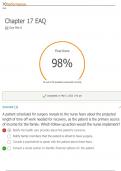
Final Score
49 out of 50 questions answered correctly
Incorrect (1)
A patient scheduled for surgery reveals to the nurse fears about the projected
length of time off work needed for recovery, as the patient is the primary source
of income for the family. Which follow-up action would the nurse implement?
Notify the health care provider about the patient’s concerns.
Notify family members that the patient is afraid to have surgery.
Consult a psychiatrist to speak with the patient about these fears.
Consult a social worker to identify financial options for the patient.
,Rationale
The nurse should consult a social worker. Social services can identify financial assistance for the
patient and the family during recovery. The social worker can also help identify financial
assistance for hospital charges. The health care provider can explain the procedure and possible
physical consequences of the surgical procedure. Notifying a family member that the patient is
afraid to have surgery would not communicate an accurate account of the situation and could
betray the patient’s confidence. Consulting a psychiatrist is not necessary, as fear is a normal
part of the presurgical and postsurgical phases.
p. 302
Correct (49)
A patient with diabetes is waiting in the preoperative holding area and asks the
nurse if the daily insulin dose should be taken. Which response is the most
appropriate?
"Replace the insulin with an oral drug."
"I will check with the surgeon and let you know."
"Take half of the dose of insulin because you are fasting."
"Avoid taking insulin because it may cause hypoglycemia."
Rationale
If a diabetic patient on insulin is due for surgery, it is important to get clear instructions from
the surgeon regarding the insulin administration. The surgeon may choose to avoid the dose or
give an adjusted dose based on the blood sugar levels. The nurse should not suggest taking a
reduced dose, because it may cause a fluctuation in blood sugar levels. The insulin should not
be replaced with oral drugs unless advised by the surgeon. The insulin dose may be skipped if
this is what the surgeon advises.
p. 304
During a preoperative assessment, which explanation by the nurse is the correct
reason for obtaining accurate documentation of the current medications being
,taken?
"Some medications may alter the patient's perceptions about surgery."
"Some anesthetics alter renal and hepatic function, causing toxicity of other drugs."
"Some medications may interact with anesthetics, altering the potency and effect of the
drugs."
"Routine medications are withheld the day of surgery, requiring dosage and schedule
adjustments after surgery."
Rationale
Drug interactions may occur between prescribed medications and anesthetic agents used
during surgery. For this reason, it is important to take a careful medication history and check
that they have been communicated to the anesthesia care provider. Medications generally do
not alter the patient's perceptions about surgery. The anesthetics may interact with the other
medications, but they are not likely to alter renal and hepatic function. Routine medications are
not always held during surgery, and dosage and schedule adjustments are not always necessary.
Routine medications may or may not be prescribed for use the day of surgery.
Test-Taking Tip: Be aware that information from previously asked questions may help you
respond to other examination questions.
p. 302
The nurse is preparing to give a dose of cefazolin 1.5 g IV piggyback (IVPB) to a
patient before surgery. The vials available on the unit contain 500 mg in powder
form. The instructions state to "dilute each 500 mg with 5 mL of sterile water."
After reconstituting the medication, the nurse would draw up how many total
milliliters of solution for dosage preparation? Record your answer using a
whole number. 15 mL
, Rationale
Because the dose is 1.5 g and each vial contains 500 mg, the nurse needs to first convert grams
to milligrams. 1.5 grams is equal to 1500 mg. By dividing 1500 by 500, the nurse recognizes the
need to use a total of three vials. The nurse then adds 5 mL of sterile water to each vial of
powder on the basis of the direction to "add 5 mL of sterile water per 500 mg of medication."
Once all vials are reconstituted, the concentration of each solution is 500 mg/5 mL. The nurse
then needs to draw up the contents of all three vials, making the total volume 15 mL.
p. 327
Which factor must the nurse be aware of regarding a patient’s medication
regimen and preparation for surgery?
All medications are held on the day of surgery.
Some medications are contraindicated for use with anesthetics.
Medications may cause the patient to be unable to make informed decisions.
The patient's healing may be delayed if medications are taken before surgery.
Rationale
Drug interactions may occur between prescribed medications and anesthetic agents used
during surgery. For this reason, it is important to take a careful medication history and check
that it has been communicated to the anesthesiologist. Although most medications are not
administered on the day of surgery, and some medications (mainly steroids) may delay healing
or cause the patient to be unable to make informed decisions, these are not absolutes and don’t
apply to all medications.
Test-Taking Tip: Avoid looking for an answer pattern or code. There may be times when four or
five consecutive questions have the same letter or number for the correct answer.
p. 302
Which action would the nurse take when administering a preoperative
medication orally?
Give the medicine with a glass of milk.
Exit
Chapter 17 EAQ
Due Mar 6
Final Score
49 out of 50 questions answered correctly
Incorrect (1)
A patient scheduled for surgery reveals to the nurse fears about the projected
length of time off work needed for recovery, as the patient is the primary source
of income for the family. Which follow-up action would the nurse implement?
Notify the health care provider about the patient’s concerns.
Notify family members that the patient is afraid to have surgery.
Consult a psychiatrist to speak with the patient about these fears.
Consult a social worker to identify financial options for the patient.
,Rationale
The nurse should consult a social worker. Social services can identify financial assistance for the
patient and the family during recovery. The social worker can also help identify financial
assistance for hospital charges. The health care provider can explain the procedure and possible
physical consequences of the surgical procedure. Notifying a family member that the patient is
afraid to have surgery would not communicate an accurate account of the situation and could
betray the patient’s confidence. Consulting a psychiatrist is not necessary, as fear is a normal
part of the presurgical and postsurgical phases.
p. 302
Correct (49)
A patient with diabetes is waiting in the preoperative holding area and asks the
nurse if the daily insulin dose should be taken. Which response is the most
appropriate?
"Replace the insulin with an oral drug."
"I will check with the surgeon and let you know."
"Take half of the dose of insulin because you are fasting."
"Avoid taking insulin because it may cause hypoglycemia."
Rationale
If a diabetic patient on insulin is due for surgery, it is important to get clear instructions from
the surgeon regarding the insulin administration. The surgeon may choose to avoid the dose or
give an adjusted dose based on the blood sugar levels. The nurse should not suggest taking a
reduced dose, because it may cause a fluctuation in blood sugar levels. The insulin should not
be replaced with oral drugs unless advised by the surgeon. The insulin dose may be skipped if
this is what the surgeon advises.
p. 304
During a preoperative assessment, which explanation by the nurse is the correct
reason for obtaining accurate documentation of the current medications being
,taken?
"Some medications may alter the patient's perceptions about surgery."
"Some anesthetics alter renal and hepatic function, causing toxicity of other drugs."
"Some medications may interact with anesthetics, altering the potency and effect of the
drugs."
"Routine medications are withheld the day of surgery, requiring dosage and schedule
adjustments after surgery."
Rationale
Drug interactions may occur between prescribed medications and anesthetic agents used
during surgery. For this reason, it is important to take a careful medication history and check
that they have been communicated to the anesthesia care provider. Medications generally do
not alter the patient's perceptions about surgery. The anesthetics may interact with the other
medications, but they are not likely to alter renal and hepatic function. Routine medications are
not always held during surgery, and dosage and schedule adjustments are not always necessary.
Routine medications may or may not be prescribed for use the day of surgery.
Test-Taking Tip: Be aware that information from previously asked questions may help you
respond to other examination questions.
p. 302
The nurse is preparing to give a dose of cefazolin 1.5 g IV piggyback (IVPB) to a
patient before surgery. The vials available on the unit contain 500 mg in powder
form. The instructions state to "dilute each 500 mg with 5 mL of sterile water."
After reconstituting the medication, the nurse would draw up how many total
milliliters of solution for dosage preparation? Record your answer using a
whole number. 15 mL
, Rationale
Because the dose is 1.5 g and each vial contains 500 mg, the nurse needs to first convert grams
to milligrams. 1.5 grams is equal to 1500 mg. By dividing 1500 by 500, the nurse recognizes the
need to use a total of three vials. The nurse then adds 5 mL of sterile water to each vial of
powder on the basis of the direction to "add 5 mL of sterile water per 500 mg of medication."
Once all vials are reconstituted, the concentration of each solution is 500 mg/5 mL. The nurse
then needs to draw up the contents of all three vials, making the total volume 15 mL.
p. 327
Which factor must the nurse be aware of regarding a patient’s medication
regimen and preparation for surgery?
All medications are held on the day of surgery.
Some medications are contraindicated for use with anesthetics.
Medications may cause the patient to be unable to make informed decisions.
The patient's healing may be delayed if medications are taken before surgery.
Rationale
Drug interactions may occur between prescribed medications and anesthetic agents used
during surgery. For this reason, it is important to take a careful medication history and check
that it has been communicated to the anesthesiologist. Although most medications are not
administered on the day of surgery, and some medications (mainly steroids) may delay healing
or cause the patient to be unable to make informed decisions, these are not absolutes and don’t
apply to all medications.
Test-Taking Tip: Avoid looking for an answer pattern or code. There may be times when four or
five consecutive questions have the same letter or number for the correct answer.
p. 302
Which action would the nurse take when administering a preoperative
medication orally?
Give the medicine with a glass of milk.