

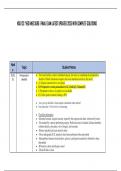
NSG 123 “HESI MED SURG 1 FINAL EXAM LATEST UPDATED 2025 WITH COMPLETE SOLUTIONS
Nod
Topic Student Notes
e
02.01. Preop assess- ● Two hours before a client's scheduled surgery, the nurse is completing the preoperative
01 checklist checklist. Which information requires the most immediate action by the nurse?
● A. Surgical consent form is not signed
● B. Preoperative serum potassium level is 2.8 mEq/L (2.8mmol/L)
● C.Preoperative chest x-ray report is not available
● D. Client's pulse oximeter reading is 96%
● for a pre op checklist, what requires immediate intervention?
● low potassium *A low level is concerning.
● Checklist information
● -Informed consent, surgical consent, signed by the surgeon and client, witnessed by nurse
● -Site marked by a person performing surgery. Before incision is initiated, all team members
confirm identity, procedure, site of surgery, and consents.
● -History and physical exam noted in chart
● -Chest radiograph, ECG, urinalysis have been performed when prescribed
● -Hemoglobin, hematocrit,electrolytes, glucose, and type/crossmatch for blood have been
determined
● -ID band on client and allergies noted
● -Client ID info is clear
, ● -Contact lenses, glasses, dentures, partial plates, wigs, jewelry, artificial eyes, makeup, nail
polish have been removed
● -Client has voided
● -Hospital gown
● -Vital signs
● -Premeds have been given
● -Skin prep has been performed
● -Signature of nurse certifies completion
Pre-op phase
1. preadmission testing- education, family involved, understanding of surgery
2. Admission to surgical center- completes pre op assessment, assess risks/complications
a. verifies consent, reinforces education
3. In the holding area- identify pt, assess their status, review med records, verifies surgical site, IV
lin, give meds, make pt comfortable, and communicate pt emotions
*tell lady who has a lot of meds to get organized or something like that
02.01. Post op vital sign- goal is for the pt be be as healthy as possible
03 drug use ● Before any surgical treatment is initiated, a health history is obtained, a physical examination is
performed during which vital signs are noted, and a baseline is established for future
comparisons
● Asking the patient about use of prescription and over-the-counter (OTC) medications, including
herbal and other supplements provides useful information
● ingesting alcohol before surgery can WEAKEN the pt immune system and increase
complications
○ drugs or alcohol can impede effectiveness of some medications
● surgery will normally be postponed if consumed BUT if emergent- local/spinal/block
anesthesia can be used instead
The nurse discusses postoperative pain management with Ms. Jackson and explains the use
of a patient-controlled analgesia (PCA) pump. Ms. Jackson expresses fear that she might
accidentally overdose herself, since she will be sleepy after surgery. How should the nurse
respond?
,A. "You will only use the PCA pump for the first 24 hours after surgery."
B. "The surgeon will prescribe the dose of medication that is correct for you."
C. "I will tell the surgeon that you prefer the nurses administer your pain medicine."
D. "The pump has a controlled device that prevents you from taking too much
medicine."
In caring for a patient with a PCA infusion of morphine sulfate through the right cephalic
vein, the nurse assess that client is lethargic, with a blood pressure of 90/60, pulse rate of
118 beats/minute, and a respiratory rate of 8 breaths/minute. What assessment should the
nurse perform next?
A. Observe the amount and dose of morphine in the PCA pump syringe
Check with anesthesiologist about intraoperative drug use before administering pain meds
Assess pain level using OPQRST
Monitor for objective data related to pain;
● facial expressions
● body gestures
● increased pulse rate, BP, RR
Ask about the effectiveness of the last pain medication received.
Assess RR, BP, HR, O2, LOC and note when the last pain medication was administered.
● Administer medications as prescribed.
Make sure the patient knows how to use the PCA pump if prescribed one
If opioid has been prescribed, assess the client EVERY 30 MINUTES for RR and pain relief.
Use noninvasive measures to relieve post op pain
● Relaxation techniques
● Guided imagery
● Heat/cold therapy
● Quiet and restful environment
● Provision of distraction- activities, TV, and music
● Comfort measures
, ● Positioning
●
● Backrubs
02.03. Post op priority Assess the pt
01 ● Administration of the patient's postoperative analgesic medications is a top priority in order to
provide pain relief before it becomes severe
● Maintaining the Airway, cardiovascular stability, shock, hemorrhages, hypertension, relieving
pain and anxiety
From admission to PACU, until client has recovered
-ABCs
-Can they protect own airway? breathing right?
-Circulation, are we bleeding?
-Pain; give narcotics
-LOC
-Has bowel woken up?
-DVT prevention
-IS, deep breathing, mobility
-PCA
-Assess for respiratory rate, HR, BP, pain level
-ABCs switch to BAC (breathing, airway, circulation). Because we are paralyzing their
diaphragm, we need to make sure breathing pattern is regular, then we want to make sure
they are clearing secretions or having any airway issues and then circulatory issues.
Immediate post-op nursing care
-Monitor for signs of shock and hemorrhage: hypotension, narrow pulse pressure, rapid weak
pulse, cold moist skin, increased capillary filling time, and decreased urine output
-Positioning client on side to prevent aspiration and to allow client to cough out airway; side
rails up at all times
-Provide warmth with blanket
-Manage N/V with antiemetic and NG suctioning
Nod
Topic Student Notes
e
02.01. Preop assess- ● Two hours before a client's scheduled surgery, the nurse is completing the preoperative
01 checklist checklist. Which information requires the most immediate action by the nurse?
● A. Surgical consent form is not signed
● B. Preoperative serum potassium level is 2.8 mEq/L (2.8mmol/L)
● C.Preoperative chest x-ray report is not available
● D. Client's pulse oximeter reading is 96%
● for a pre op checklist, what requires immediate intervention?
● low potassium *A low level is concerning.
● Checklist information
● -Informed consent, surgical consent, signed by the surgeon and client, witnessed by nurse
● -Site marked by a person performing surgery. Before incision is initiated, all team members
confirm identity, procedure, site of surgery, and consents.
● -History and physical exam noted in chart
● -Chest radiograph, ECG, urinalysis have been performed when prescribed
● -Hemoglobin, hematocrit,electrolytes, glucose, and type/crossmatch for blood have been
determined
● -ID band on client and allergies noted
● -Client ID info is clear
, ● -Contact lenses, glasses, dentures, partial plates, wigs, jewelry, artificial eyes, makeup, nail
polish have been removed
● -Client has voided
● -Hospital gown
● -Vital signs
● -Premeds have been given
● -Skin prep has been performed
● -Signature of nurse certifies completion
Pre-op phase
1. preadmission testing- education, family involved, understanding of surgery
2. Admission to surgical center- completes pre op assessment, assess risks/complications
a. verifies consent, reinforces education
3. In the holding area- identify pt, assess their status, review med records, verifies surgical site, IV
lin, give meds, make pt comfortable, and communicate pt emotions
*tell lady who has a lot of meds to get organized or something like that
02.01. Post op vital sign- goal is for the pt be be as healthy as possible
03 drug use ● Before any surgical treatment is initiated, a health history is obtained, a physical examination is
performed during which vital signs are noted, and a baseline is established for future
comparisons
● Asking the patient about use of prescription and over-the-counter (OTC) medications, including
herbal and other supplements provides useful information
● ingesting alcohol before surgery can WEAKEN the pt immune system and increase
complications
○ drugs or alcohol can impede effectiveness of some medications
● surgery will normally be postponed if consumed BUT if emergent- local/spinal/block
anesthesia can be used instead
The nurse discusses postoperative pain management with Ms. Jackson and explains the use
of a patient-controlled analgesia (PCA) pump. Ms. Jackson expresses fear that she might
accidentally overdose herself, since she will be sleepy after surgery. How should the nurse
respond?
,A. "You will only use the PCA pump for the first 24 hours after surgery."
B. "The surgeon will prescribe the dose of medication that is correct for you."
C. "I will tell the surgeon that you prefer the nurses administer your pain medicine."
D. "The pump has a controlled device that prevents you from taking too much
medicine."
In caring for a patient with a PCA infusion of morphine sulfate through the right cephalic
vein, the nurse assess that client is lethargic, with a blood pressure of 90/60, pulse rate of
118 beats/minute, and a respiratory rate of 8 breaths/minute. What assessment should the
nurse perform next?
A. Observe the amount and dose of morphine in the PCA pump syringe
Check with anesthesiologist about intraoperative drug use before administering pain meds
Assess pain level using OPQRST
Monitor for objective data related to pain;
● facial expressions
● body gestures
● increased pulse rate, BP, RR
Ask about the effectiveness of the last pain medication received.
Assess RR, BP, HR, O2, LOC and note when the last pain medication was administered.
● Administer medications as prescribed.
Make sure the patient knows how to use the PCA pump if prescribed one
If opioid has been prescribed, assess the client EVERY 30 MINUTES for RR and pain relief.
Use noninvasive measures to relieve post op pain
● Relaxation techniques
● Guided imagery
● Heat/cold therapy
● Quiet and restful environment
● Provision of distraction- activities, TV, and music
● Comfort measures
, ● Positioning
●
● Backrubs
02.03. Post op priority Assess the pt
01 ● Administration of the patient's postoperative analgesic medications is a top priority in order to
provide pain relief before it becomes severe
● Maintaining the Airway, cardiovascular stability, shock, hemorrhages, hypertension, relieving
pain and anxiety
From admission to PACU, until client has recovered
-ABCs
-Can they protect own airway? breathing right?
-Circulation, are we bleeding?
-Pain; give narcotics
-LOC
-Has bowel woken up?
-DVT prevention
-IS, deep breathing, mobility
-PCA
-Assess for respiratory rate, HR, BP, pain level
-ABCs switch to BAC (breathing, airway, circulation). Because we are paralyzing their
diaphragm, we need to make sure breathing pattern is regular, then we want to make sure
they are clearing secretions or having any airway issues and then circulatory issues.
Immediate post-op nursing care
-Monitor for signs of shock and hemorrhage: hypotension, narrow pulse pressure, rapid weak
pulse, cold moist skin, increased capillary filling time, and decreased urine output
-Positioning client on side to prevent aspiration and to allow client to cough out airway; side
rails up at all times
-Provide warmth with blanket
-Manage N/V with antiemetic and NG suctioning


