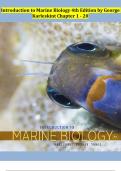
Introduction to Marine Biology 4th Edition by George
Karleskint Chapter 1 - 20
,Introduction to Marine Biology 4th Edition by George
Karleskint Chapter 1 - 20
Contents Overview. Preface.
J J
PART I: THE OCEAN ENVIRONMENT.
1. Science and Marine Biology.
2. Fundamentals of Ecology.
3. Geology of the Ocean.
4. 4. Water, Waves, and
Tides. PART II:
MARINEORGANISMS.
5. Biological Concepts.
6. Marine Microbes.
7. Multicellular Primary Producers.
8. Lower Invertebrates.
9. Higher Invertebrates.
10. Marine Fishes.
11. Marine Reptiles and Birds.
12. Marine Mammals.
PART III: MARINE ECOSYSTEMS.
13. Intertidal Communities.
14. Estuaries.
15. Coral Reef Communities.
,Introduction to Marine Biology 4th Edition by George
Karleskint Chapter 1 - 20
16. Continental Shelves and Neritic Zone.
17. The Open Sea.
18. Life in the Ocean's Depths.
PART IV: HUMANS AND THE
SEA.
19. Harvesting the Ocean's Resources.
20. Oceans in Jeopardy.
, Introduction to Marine Biology 4th Edition by George
Karleskint Chapter 1 - 20
Chapter1—Science and Marine Biology
MULTIPLEJCHOICE
1. What percentage of the surface of the earth is covered by seawater?
a. 46%
b. 55%
c. 64%
d. 71%
e. 83%
ANS: J D PTS: 1 DIF: Recall REF: 1
2. OceansJareimportant in all but the following ways:
a. Solar-powered engines that drive weather patterns.
b. Provide substantial amount of the world’s food supply.
c. Marine organisms are important for scientific research.
d. A direct source of fresh water for arid lands.
e. A source of industrial and medicinal materials.
ANS: J D PTS: 1 DIF: Synthesis REF: 1-2
3. Oceanography is the study of:
a. The living organisms that inhabit the sea.
b. The oceans and their phenomena.
c. The oceans and living organisms.
d. The chemical makeup of the oceans.
e. The interactions of marine organisms with their
environment. ANS:J B PTS: 1 DIF:
Recall REF: 2
4. Marine biology is the study of:
a. The living Organisms that inhabit the sea.
b. The oceans and their phenomena.
Karleskint Chapter 1 - 20
,Introduction to Marine Biology 4th Edition by George
Karleskint Chapter 1 - 20
Contents Overview. Preface.
J J
PART I: THE OCEAN ENVIRONMENT.
1. Science and Marine Biology.
2. Fundamentals of Ecology.
3. Geology of the Ocean.
4. 4. Water, Waves, and
Tides. PART II:
MARINEORGANISMS.
5. Biological Concepts.
6. Marine Microbes.
7. Multicellular Primary Producers.
8. Lower Invertebrates.
9. Higher Invertebrates.
10. Marine Fishes.
11. Marine Reptiles and Birds.
12. Marine Mammals.
PART III: MARINE ECOSYSTEMS.
13. Intertidal Communities.
14. Estuaries.
15. Coral Reef Communities.
,Introduction to Marine Biology 4th Edition by George
Karleskint Chapter 1 - 20
16. Continental Shelves and Neritic Zone.
17. The Open Sea.
18. Life in the Ocean's Depths.
PART IV: HUMANS AND THE
SEA.
19. Harvesting the Ocean's Resources.
20. Oceans in Jeopardy.
, Introduction to Marine Biology 4th Edition by George
Karleskint Chapter 1 - 20
Chapter1—Science and Marine Biology
MULTIPLEJCHOICE
1. What percentage of the surface of the earth is covered by seawater?
a. 46%
b. 55%
c. 64%
d. 71%
e. 83%
ANS: J D PTS: 1 DIF: Recall REF: 1
2. OceansJareimportant in all but the following ways:
a. Solar-powered engines that drive weather patterns.
b. Provide substantial amount of the world’s food supply.
c. Marine organisms are important for scientific research.
d. A direct source of fresh water for arid lands.
e. A source of industrial and medicinal materials.
ANS: J D PTS: 1 DIF: Synthesis REF: 1-2
3. Oceanography is the study of:
a. The living organisms that inhabit the sea.
b. The oceans and their phenomena.
c. The oceans and living organisms.
d. The chemical makeup of the oceans.
e. The interactions of marine organisms with their
environment. ANS:J B PTS: 1 DIF:
Recall REF: 2
4. Marine biology is the study of:
a. The living Organisms that inhabit the sea.
b. The oceans and their phenomena.