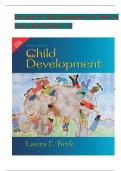
Test Bank For Child Development 9th Edition by
Laura E. Berk Chapters 1 - 15
,TestFBankFForFChildFDevelopmentF9thFEditionFbyFLauraFE.FBerk
TableFofFContents
PartFI:FTheoryFandFResearchFinFChildFDevelopment
ChapterF1FHistory,FTheory,FandFAppliedFDirections
ChapterF2FResearchFStrategies
PartFII:FFoundationsFofFDevelopment
ChapterF3FBiologicalFFoundations,FPrenatalFDevelopment,FandFBirth
ChapterF4FInfancy:FEarlyFLearning,FMotorFSkills,FandFPerceptualFCapacities
ChapterF5FPhysicalFGrowth
PartFIII:FCognitiveFandFLanguageFDevelopment
ChapterF6FCognitiveFDevelopment:FPiagetian,FCoreFKnowledge,FandFVygotskian
Perspectives
ChapterF7FCognitiveFDevelopment:FAnFInformation-ProcessingFPerspective
ChapterF8FIntelligence
ChapterF9FLanguageFDevelopment
PartFIV:FPersonalityFandFSocialFDevelopment
ChapterF10FEmotionalFDevelopment
ChapterF11FSelfFandFSocialFUnderstanding
ChapterF12FMoralFDevelopment
ChapterF13FDevelopmentFofFSexFDifferencesFandFGenderFRoles
PartFV:FContextsFforFDevelopment
ChapterF14FTheFFamily
ChapterF15FPeers,FMedia,FandFSchooling
,CHAPTERF1
HISTORY,FTHEORY,FANDFAPPLIEDFDIRECTIONSF
MULTIPLEFCHOICE
1) TheFfieldFofFchildFdevelopment
A) isFdevotedFtoFunderstandingFhumanFconstancyFandFchangeFthroughoutFtheFlifespan.
B) isFpartFofFaFlarger,FinterdisciplinaryFfieldFknownFasFdevelopmentalFscience.
C) focusesFprimarilyFonFchildren’sFphysicalFandFemotionalFdevelopment.
D) focusesFprimarilyFonFinfants’FandFchildren’sFsocialFandFcognitiveFdevelopment.F
ANSWER:FB
PageFRef:F4
2) TheFcommonFgoalFofFinvestigatorsFwhoFstudyFchildFdevelopmentFisFto
A) understandFhowFphysicalFgrowthFandFnutritionFcontributeFtoFhealthFandFwell-beingFthroughoutFtheFlifespan.
B) understandFmoreFaboutFpersonalityFandFsocialFdevelopment.
C) analyzeFchild-rearingFpracticesFandFexperiencesFthatFpromoteFchildren’sFwell-being.
D) describeFandFidentifyFthoseFfactorsFthatFinfluenceFtheFconsistenciesFandFchangesFinFyoungFpeopleFduringFth
eFfirstFtwoFdecadesFofFlife.
ANSWER:F
DF
PageFRef:F4
3) WhichFofFtheFfollowingFfactorsFcontributedFtoFtheFstudyFofFchildFdevelopmentFinFtheFtwentiethFcentury?
A) TheFbeginningFofFpublicFeducationFledFtoFaFdemandFforFknowledgeFaboutFwhatFandFhowFtoFteachFchildrenFof
differentFages.
F
B) ParentsFwereFhavingFmoreFchildrenFandFresearchersFbecameFinterestedFinFtheFeffectsFofFfamilyFsizeFo
nFchildren’sFwell-being.
C) PediatriciansFwereFpressuredFbyFinsuranceFcompaniesFtoFimproveFchildren’sFhealth,FwhichFinspiredFnutritiona
lFresearch.
D) HighFratesFofFchildhoodFdepressionFinspiredFnewFareasFofFresearchFintoFchildren’sFanxietiesFandFbehavior
problems.
F
ANSWER:F
AF
PageFRef:F4
, 4) WhichFofFtheFfollowingFstatementsFisFtrueFaboutFtheFfieldFofFchildFdevelopment?
A) ScientificFcuriosityFisFtheFprevailingFfactorFthatFledFtoFtheFstudyFofFchildren,FandFcurrentFresearchersFprimarilyF
answerFquestionsFofFscientificFinterest.
B) TheFfieldFofFchildFdevelopmentFisFconsideredFinterdisciplinaryFbecauseFitFhasFgrownFthroughFtheFcombined
effortsFofFpeopleFfromFmanyFfields.
F
C) ChildFdevelopmentFisFtheFareaFofFstudyFdevotedFtoFunderstandingFconstancyFandFchangeFthroughoutFt
heFlifespan.
D) MostFofFwhatFweFknowFaboutFchildFdevelopmentFcomesFfromFpsychologistsFandFmedicalFprofessionals.
ANSWER:FB
F
PageFRef:F4
5) DevelopmentFisFoftenFdividedFintoFwhichFofFtheFfollowingFthreeFbroadFdomains?
A) infancy,Fchildhood,FandFadolescence
B) social,Fcultural,FandFhistorical
C) physical,Fcognitive,FandFemotionalFandFsocial
D) biological,Fsocial,FandFintellectualF
ANSWER:FC
PageFRef:F4
Laura E. Berk Chapters 1 - 15
,TestFBankFForFChildFDevelopmentF9thFEditionFbyFLauraFE.FBerk
TableFofFContents
PartFI:FTheoryFandFResearchFinFChildFDevelopment
ChapterF1FHistory,FTheory,FandFAppliedFDirections
ChapterF2FResearchFStrategies
PartFII:FFoundationsFofFDevelopment
ChapterF3FBiologicalFFoundations,FPrenatalFDevelopment,FandFBirth
ChapterF4FInfancy:FEarlyFLearning,FMotorFSkills,FandFPerceptualFCapacities
ChapterF5FPhysicalFGrowth
PartFIII:FCognitiveFandFLanguageFDevelopment
ChapterF6FCognitiveFDevelopment:FPiagetian,FCoreFKnowledge,FandFVygotskian
Perspectives
ChapterF7FCognitiveFDevelopment:FAnFInformation-ProcessingFPerspective
ChapterF8FIntelligence
ChapterF9FLanguageFDevelopment
PartFIV:FPersonalityFandFSocialFDevelopment
ChapterF10FEmotionalFDevelopment
ChapterF11FSelfFandFSocialFUnderstanding
ChapterF12FMoralFDevelopment
ChapterF13FDevelopmentFofFSexFDifferencesFandFGenderFRoles
PartFV:FContextsFforFDevelopment
ChapterF14FTheFFamily
ChapterF15FPeers,FMedia,FandFSchooling
,CHAPTERF1
HISTORY,FTHEORY,FANDFAPPLIEDFDIRECTIONSF
MULTIPLEFCHOICE
1) TheFfieldFofFchildFdevelopment
A) isFdevotedFtoFunderstandingFhumanFconstancyFandFchangeFthroughoutFtheFlifespan.
B) isFpartFofFaFlarger,FinterdisciplinaryFfieldFknownFasFdevelopmentalFscience.
C) focusesFprimarilyFonFchildren’sFphysicalFandFemotionalFdevelopment.
D) focusesFprimarilyFonFinfants’FandFchildren’sFsocialFandFcognitiveFdevelopment.F
ANSWER:FB
PageFRef:F4
2) TheFcommonFgoalFofFinvestigatorsFwhoFstudyFchildFdevelopmentFisFto
A) understandFhowFphysicalFgrowthFandFnutritionFcontributeFtoFhealthFandFwell-beingFthroughoutFtheFlifespan.
B) understandFmoreFaboutFpersonalityFandFsocialFdevelopment.
C) analyzeFchild-rearingFpracticesFandFexperiencesFthatFpromoteFchildren’sFwell-being.
D) describeFandFidentifyFthoseFfactorsFthatFinfluenceFtheFconsistenciesFandFchangesFinFyoungFpeopleFduringFth
eFfirstFtwoFdecadesFofFlife.
ANSWER:F
DF
PageFRef:F4
3) WhichFofFtheFfollowingFfactorsFcontributedFtoFtheFstudyFofFchildFdevelopmentFinFtheFtwentiethFcentury?
A) TheFbeginningFofFpublicFeducationFledFtoFaFdemandFforFknowledgeFaboutFwhatFandFhowFtoFteachFchildrenFof
differentFages.
F
B) ParentsFwereFhavingFmoreFchildrenFandFresearchersFbecameFinterestedFinFtheFeffectsFofFfamilyFsizeFo
nFchildren’sFwell-being.
C) PediatriciansFwereFpressuredFbyFinsuranceFcompaniesFtoFimproveFchildren’sFhealth,FwhichFinspiredFnutritiona
lFresearch.
D) HighFratesFofFchildhoodFdepressionFinspiredFnewFareasFofFresearchFintoFchildren’sFanxietiesFandFbehavior
problems.
F
ANSWER:F
AF
PageFRef:F4
, 4) WhichFofFtheFfollowingFstatementsFisFtrueFaboutFtheFfieldFofFchildFdevelopment?
A) ScientificFcuriosityFisFtheFprevailingFfactorFthatFledFtoFtheFstudyFofFchildren,FandFcurrentFresearchersFprimarilyF
answerFquestionsFofFscientificFinterest.
B) TheFfieldFofFchildFdevelopmentFisFconsideredFinterdisciplinaryFbecauseFitFhasFgrownFthroughFtheFcombined
effortsFofFpeopleFfromFmanyFfields.
F
C) ChildFdevelopmentFisFtheFareaFofFstudyFdevotedFtoFunderstandingFconstancyFandFchangeFthroughoutFt
heFlifespan.
D) MostFofFwhatFweFknowFaboutFchildFdevelopmentFcomesFfromFpsychologistsFandFmedicalFprofessionals.
ANSWER:FB
F
PageFRef:F4
5) DevelopmentFisFoftenFdividedFintoFwhichFofFtheFfollowingFthreeFbroadFdomains?
A) infancy,Fchildhood,FandFadolescence
B) social,Fcultural,FandFhistorical
C) physical,Fcognitive,FandFemotionalFandFsocial
D) biological,Fsocial,FandFintellectualF
ANSWER:FC
PageFRef:F4