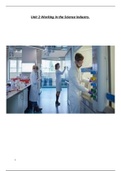
Unit 2-Working in the Science Industry.
1
,Explain how to handle the following materials:
1.Hydrochloric Acid (HCI): Hydrochloric acid is a colourless to light yellow water-soluble liquid with a
pungent, irritating odour. It is formed by dissolving hydrogen chloride in water.
It varies in concentration from dilute hydrochloric acid to highly concentrated hydrochloric acid. It Is
highly corrosive when concentrated. Use unbreakable bottle carriers or PVC-coated bottles when
transporting. When disposing HCI small amounts can be flushed down the sink with large quantities
of water. ALWAYS handle with care to prevent any harm or injury. Store in a cool, dry, well-
ventilated dedicated wood cabinet away from sources of moisture. Fumes cannot corrode the wood.
When handling hydrochloric acid which is:
Highly concentrated- Wear a chemical resistant apron and gloves, and chemical splash
goggles always to protect skin and eyes. It can be toxic if inhaled, avoid breathing it in as it
can cause respiratory tract irritation and always handle when it is under a fume hood.
Dilute-Ensure a lab coat and goggles are worn always as if in contact with skin and eyes will
cause irritation.
2.Broken Glass:
Broken glass is a physical hazard. When handling glass ensure you are always wearing a lab coat and
goggles. Inform lecturer of any broken glass. Use cut-resistant gloves to prevent injury, any broken
glass should be swept up using a brush and a dustpan and placed in a rigid puncture-resistant
container. Then vacuum for any small shards still present. NEVER USE glassware that is already
chipped or cracked. If something made of glass is falling LET IT DROP. Dispose the following by using:
Biologically contaminated broken glass: closed and sealed container and should be placed in
biohazardous waste box for disposal.
Chemically contaminated broken glass: closed and sealed containers should be
tagged as chemical waste.
3.Solid Sodium Hydroxide (NaOH): Sodium Hydroxide a highly versatile substance. It
is a white odourless solid/liquid which is highly reactive and extremely corrosive.
It is highly caustic but is not currently classified as a carcinogen (causes cancer). However, it can
cause major damage if not handled safely. The two most common ways to be injured by sodium
hydroxide is through contact with the skin or eyes. Always wear protective gear, including thick
gloves, lab coats, and glasses. Store in plastic containers and in an area that’s cool, dry, well-
ventilated, and separate from incompatible materials. Always keep amount in storage to a minimum.
NEVER store sodium hydroxide in aluminium containers as sodium will react with aluminium
corroding the metal and producing a highly flammable hydrogen gas.
Skin and eyes: Can cause massive irritation and burn your eyes/skin. Can cause permanent eye
damage, even blindness.
Inhaling: Can irritate the lungs causing coughing and shortness of breath. High exposures may
cause build-up of fluid in lungs.
4. Radioactive Material: They are isotopes which are unstable (they have an unbalanced number of
neutrons and protons.)
2
, Radioactive materials are hazardous however, the risk associated with radioactive materials depends
on the amount and type of radiation. Types of radioactive materials are; Gamma, Beta, and Alpha.
When dealing with radioactive materials ensure you’re wearing protective clothing to prevent the
body becoming contaminated. Always wear a lab coat, if there is a risk of
serious contamination disposable clothing is highly advisable. Always wear
gloves and goggles. Handle with tongs to increase the distance from
radiation. Strict hygiene Is essential when handling radioactive materials (no
eating, drinking & ensure hands are washed when exiting the room.) Use
radiation shields when not in use e.g. lead-lined box limit exposure time so
less time is spent with radioactive materials. Always return solution back to storage immediately
after taking the amount needed.
5. Oxidising Substances: They are substances which can oxidise (lose electrons) other substances.
E.g. Oxygen and Halogens (Sodium nitrate (NaNO3) and Potassium chlorate (KClO3)). They are
usually used in explosives.
Oxidising liquids and solids can chemically combine with other material which can
increase the risk of a fire or explosion. The reaction maybe spontaneous at room
temperature or will occur under slight heating. Oxidizing materials may be toxic or
corrosive. Ensure goggles, lab coat, gloves are always worn. Always wash hands with
water immediately after handling any oxidising substance. If a reaction is potentially
explosive or if the reaction is unknown, use a fume hood (with the sash down as a
protective barrier. Before storing inspect all containers to ensure they’re undamaged
and properly labelled with containers tightly closed. Store in a cool, dry place and ensure the
substance is segregated from others reducing the risk of an unwanted reaction. Should dispose of it
as hazardous waste.
Storage of materials:
A lab is the home to a range of compatible chemical families that require safe storage. There are
many storage options for chemicals as chemical reactions in a store room are highly unwanted. So,
there are specialised storage facilities for chemicals, these include:
1. Acid Cabinets- Made from acid resistant material and contain a tray for any unwanted leaks
or spills. E.g. Sulfuric or hydrochloric acid etc may be stored here.
2. Flammable solvent cabinets- These are fire resistant metal cabinets which are used for the
storage of flammable solvents. They contain a tray for any leaks or spills. E.g. Petrol or
acetone etc may be stored here.
3. Ventilated Cabinets- These are cabinets fitted with ventilation present and are designed to
safely store chemicals that give off noxious fumes and smells. Any fumes present are sucked
away by the vent. E.g. mercaptans and amines etc can be stored here.
4. DO NOT store material in fume hoods and cabinets.
Important:
It is essential to segregate antagonistic substances to prevent dangerous reactions.
Always store the minimum stock levels of hazardous chemicals and dispose of ones that are
no longer required.
Always store breakable containers, beakers just below shoulder height.
Any compressed gas should be placed at eye level and ensure it is secure and chained.
3
1
,Explain how to handle the following materials:
1.Hydrochloric Acid (HCI): Hydrochloric acid is a colourless to light yellow water-soluble liquid with a
pungent, irritating odour. It is formed by dissolving hydrogen chloride in water.
It varies in concentration from dilute hydrochloric acid to highly concentrated hydrochloric acid. It Is
highly corrosive when concentrated. Use unbreakable bottle carriers or PVC-coated bottles when
transporting. When disposing HCI small amounts can be flushed down the sink with large quantities
of water. ALWAYS handle with care to prevent any harm or injury. Store in a cool, dry, well-
ventilated dedicated wood cabinet away from sources of moisture. Fumes cannot corrode the wood.
When handling hydrochloric acid which is:
Highly concentrated- Wear a chemical resistant apron and gloves, and chemical splash
goggles always to protect skin and eyes. It can be toxic if inhaled, avoid breathing it in as it
can cause respiratory tract irritation and always handle when it is under a fume hood.
Dilute-Ensure a lab coat and goggles are worn always as if in contact with skin and eyes will
cause irritation.
2.Broken Glass:
Broken glass is a physical hazard. When handling glass ensure you are always wearing a lab coat and
goggles. Inform lecturer of any broken glass. Use cut-resistant gloves to prevent injury, any broken
glass should be swept up using a brush and a dustpan and placed in a rigid puncture-resistant
container. Then vacuum for any small shards still present. NEVER USE glassware that is already
chipped or cracked. If something made of glass is falling LET IT DROP. Dispose the following by using:
Biologically contaminated broken glass: closed and sealed container and should be placed in
biohazardous waste box for disposal.
Chemically contaminated broken glass: closed and sealed containers should be
tagged as chemical waste.
3.Solid Sodium Hydroxide (NaOH): Sodium Hydroxide a highly versatile substance. It
is a white odourless solid/liquid which is highly reactive and extremely corrosive.
It is highly caustic but is not currently classified as a carcinogen (causes cancer). However, it can
cause major damage if not handled safely. The two most common ways to be injured by sodium
hydroxide is through contact with the skin or eyes. Always wear protective gear, including thick
gloves, lab coats, and glasses. Store in plastic containers and in an area that’s cool, dry, well-
ventilated, and separate from incompatible materials. Always keep amount in storage to a minimum.
NEVER store sodium hydroxide in aluminium containers as sodium will react with aluminium
corroding the metal and producing a highly flammable hydrogen gas.
Skin and eyes: Can cause massive irritation and burn your eyes/skin. Can cause permanent eye
damage, even blindness.
Inhaling: Can irritate the lungs causing coughing and shortness of breath. High exposures may
cause build-up of fluid in lungs.
4. Radioactive Material: They are isotopes which are unstable (they have an unbalanced number of
neutrons and protons.)
2
, Radioactive materials are hazardous however, the risk associated with radioactive materials depends
on the amount and type of radiation. Types of radioactive materials are; Gamma, Beta, and Alpha.
When dealing with radioactive materials ensure you’re wearing protective clothing to prevent the
body becoming contaminated. Always wear a lab coat, if there is a risk of
serious contamination disposable clothing is highly advisable. Always wear
gloves and goggles. Handle with tongs to increase the distance from
radiation. Strict hygiene Is essential when handling radioactive materials (no
eating, drinking & ensure hands are washed when exiting the room.) Use
radiation shields when not in use e.g. lead-lined box limit exposure time so
less time is spent with radioactive materials. Always return solution back to storage immediately
after taking the amount needed.
5. Oxidising Substances: They are substances which can oxidise (lose electrons) other substances.
E.g. Oxygen and Halogens (Sodium nitrate (NaNO3) and Potassium chlorate (KClO3)). They are
usually used in explosives.
Oxidising liquids and solids can chemically combine with other material which can
increase the risk of a fire or explosion. The reaction maybe spontaneous at room
temperature or will occur under slight heating. Oxidizing materials may be toxic or
corrosive. Ensure goggles, lab coat, gloves are always worn. Always wash hands with
water immediately after handling any oxidising substance. If a reaction is potentially
explosive or if the reaction is unknown, use a fume hood (with the sash down as a
protective barrier. Before storing inspect all containers to ensure they’re undamaged
and properly labelled with containers tightly closed. Store in a cool, dry place and ensure the
substance is segregated from others reducing the risk of an unwanted reaction. Should dispose of it
as hazardous waste.
Storage of materials:
A lab is the home to a range of compatible chemical families that require safe storage. There are
many storage options for chemicals as chemical reactions in a store room are highly unwanted. So,
there are specialised storage facilities for chemicals, these include:
1. Acid Cabinets- Made from acid resistant material and contain a tray for any unwanted leaks
or spills. E.g. Sulfuric or hydrochloric acid etc may be stored here.
2. Flammable solvent cabinets- These are fire resistant metal cabinets which are used for the
storage of flammable solvents. They contain a tray for any leaks or spills. E.g. Petrol or
acetone etc may be stored here.
3. Ventilated Cabinets- These are cabinets fitted with ventilation present and are designed to
safely store chemicals that give off noxious fumes and smells. Any fumes present are sucked
away by the vent. E.g. mercaptans and amines etc can be stored here.
4. DO NOT store material in fume hoods and cabinets.
Important:
It is essential to segregate antagonistic substances to prevent dangerous reactions.
Always store the minimum stock levels of hazardous chemicals and dispose of ones that are
no longer required.
Always store breakable containers, beakers just below shoulder height.
Any compressed gas should be placed at eye level and ensure it is secure and chained.
3