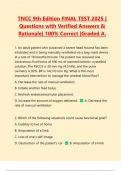
TNCC 9th Edition FINAL TEST 2025 |
Questions with Verified Answers &
Rationale| 100% Correct |Graded A.
1. An adult patient who sustained a severe head trauma has been
i,- i,- i,- i,- i,- i,- i,- i,- i,- i,- i,- i,-
intubated and is being manually ventilated via a bag-mask device
i,- i,- i,- i,- i,- i,- i,- i,- i,- i,-
at a rate of 18 breaths/minute. The patient has received one
i,- i,- i,- i,- i,- i,- i,- i,- i,- i,- i,-
intravenous fluid bolus of 500 mL of warmed isotonic crystalloid
i,- i,- i,- i,- i,- i,- i,- i,- i,- i,-
solution. The PaCO2 is 30 mm Hg (4.0 kPa), and the pulse
i,- i,- i,- i,- i,- i,- i,- i,- i,- i,- i,- i,-
oximetry is 92%. BP is 142/70 mm Hg. What is the most
i,- i,- i,- i,- i,- i,- i,- i,- i,- i,- i,- i,-
important intervention to manage the cerebral blood flow?
i,- i,- i,- i,- i,- i,- i,-
A. Decrease the rate of manual ventilation
i,- i,- i,- i,- i,- i,-
B. Initiate another fluid bolus.
i,- i,- i,- i,-
C. Recheck endotracheal tube placement.
i,- i,- i,- i,-
D. Increase the amount of oxygen delivered.
i,- i,- i,- i,- i,- i,- i,-i,- i,- A. Decrease the
i,- i,- i,-
rate of manual ventilation
i,- i,- i,-
2. Which of the following situations could cause functional grief?
i,- i,- i,- i,- i,- i,- i,- i,- i,-
A. Inability to live at home
i,- i,- i,- i,- i,-
B. Amputation of a limb
i,- i,- i,- i,-
C. Loss of one's self-image
i,- i,- i,- i,-
D. Destruction of the patient's car
i,- i,- i,- i,- i,- i,-i,- i,- B. Amputation of a limb
i,- i,- i,- i,-
, Rationale: Preparation and Ongoing Care\Psychosocial Aspects
i,- i,- i,- i,- i,-
Functional grief relates to the loss of body function or body parts
i,- i,- i,- i,- i,- i,- i,- i,- i,- i,- i,- i,-
such as amputation of a limb, paralysis, or loss of sight.
i,- i,- i,- i,- i,- i,- i,- i,- i,- i,-
3. What is the most important consideration during the initial
i,- i,- i,- i,- i,- i,- i,- i,- i,- i,-
assessment when caring for an older adult who has sustained i,- i,- i,- i,- i,- i,- i,- i,- i,- i,-
serious injuries? i,-
A. They are likely to be fearful in the emergency department
i,- i,- i,- i,- i,- i,- i,- i,- i,- i,-
B. Medical history including current medications
i,- i,- i,- i,- i,-
C. Availability of support systems after discharge
i,- i,- i,- i,- i,- i,-
D. Accessibility to a primary care physician
i,- i,- i,- i,- i,- i,- i,-i,- i,- B. Medical history
i,- i,- i,-
including current medications i,- i,-
4. You are caring for a patient who was thrown from a bike and
i,- i,- i,- i,- i,- i,- i,- i,- i,- i,- i,- i,- i,- i,-
was not wearing a helmet. While performing the head-to-toe
i,- i,- i,- i,- i,- i,- i,- i,- i,-
assessment, you note clear drainage from the right ear. Which ofi,- i,- i,- i,- i,- i,- i,- i,- i,- i,- i,-
the following is the most appropriate next step?
i,- i,- i,- i,- i,- i,- i,-
A. Clean the ear with a cotton-tipped applicator.
i,- i,- i,- i,- i,- i,- i,-
B. Pack the ear with gauze.
i,- i,- i,- i,- i,-
C. Notify the physician
i,- i,- i,-
D. Document and continue the exam.
i,- i,- i,- i,- i,- i,-i,- i,- C. Notify the physician
i,- i,- i,-
Questions with Verified Answers &
Rationale| 100% Correct |Graded A.
1. An adult patient who sustained a severe head trauma has been
i,- i,- i,- i,- i,- i,- i,- i,- i,- i,- i,- i,-
intubated and is being manually ventilated via a bag-mask device
i,- i,- i,- i,- i,- i,- i,- i,- i,- i,-
at a rate of 18 breaths/minute. The patient has received one
i,- i,- i,- i,- i,- i,- i,- i,- i,- i,- i,-
intravenous fluid bolus of 500 mL of warmed isotonic crystalloid
i,- i,- i,- i,- i,- i,- i,- i,- i,- i,-
solution. The PaCO2 is 30 mm Hg (4.0 kPa), and the pulse
i,- i,- i,- i,- i,- i,- i,- i,- i,- i,- i,- i,-
oximetry is 92%. BP is 142/70 mm Hg. What is the most
i,- i,- i,- i,- i,- i,- i,- i,- i,- i,- i,- i,-
important intervention to manage the cerebral blood flow?
i,- i,- i,- i,- i,- i,- i,-
A. Decrease the rate of manual ventilation
i,- i,- i,- i,- i,- i,-
B. Initiate another fluid bolus.
i,- i,- i,- i,-
C. Recheck endotracheal tube placement.
i,- i,- i,- i,-
D. Increase the amount of oxygen delivered.
i,- i,- i,- i,- i,- i,- i,-i,- i,- A. Decrease the
i,- i,- i,-
rate of manual ventilation
i,- i,- i,-
2. Which of the following situations could cause functional grief?
i,- i,- i,- i,- i,- i,- i,- i,- i,-
A. Inability to live at home
i,- i,- i,- i,- i,-
B. Amputation of a limb
i,- i,- i,- i,-
C. Loss of one's self-image
i,- i,- i,- i,-
D. Destruction of the patient's car
i,- i,- i,- i,- i,- i,-i,- i,- B. Amputation of a limb
i,- i,- i,- i,-
, Rationale: Preparation and Ongoing Care\Psychosocial Aspects
i,- i,- i,- i,- i,-
Functional grief relates to the loss of body function or body parts
i,- i,- i,- i,- i,- i,- i,- i,- i,- i,- i,- i,-
such as amputation of a limb, paralysis, or loss of sight.
i,- i,- i,- i,- i,- i,- i,- i,- i,- i,-
3. What is the most important consideration during the initial
i,- i,- i,- i,- i,- i,- i,- i,- i,- i,-
assessment when caring for an older adult who has sustained i,- i,- i,- i,- i,- i,- i,- i,- i,- i,-
serious injuries? i,-
A. They are likely to be fearful in the emergency department
i,- i,- i,- i,- i,- i,- i,- i,- i,- i,-
B. Medical history including current medications
i,- i,- i,- i,- i,-
C. Availability of support systems after discharge
i,- i,- i,- i,- i,- i,-
D. Accessibility to a primary care physician
i,- i,- i,- i,- i,- i,- i,-i,- i,- B. Medical history
i,- i,- i,-
including current medications i,- i,-
4. You are caring for a patient who was thrown from a bike and
i,- i,- i,- i,- i,- i,- i,- i,- i,- i,- i,- i,- i,- i,-
was not wearing a helmet. While performing the head-to-toe
i,- i,- i,- i,- i,- i,- i,- i,- i,-
assessment, you note clear drainage from the right ear. Which ofi,- i,- i,- i,- i,- i,- i,- i,- i,- i,- i,-
the following is the most appropriate next step?
i,- i,- i,- i,- i,- i,- i,-
A. Clean the ear with a cotton-tipped applicator.
i,- i,- i,- i,- i,- i,- i,-
B. Pack the ear with gauze.
i,- i,- i,- i,- i,-
C. Notify the physician
i,- i,- i,-
D. Document and continue the exam.
i,- i,- i,- i,- i,- i,-i,- i,- C. Notify the physician
i,- i,- i,-