Test bank
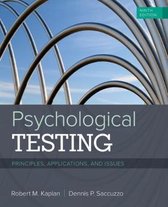
Psychological Testing Principles Applications and Issues
9th Edition by Robert Kaplan and Dennis P. Saccuzzo
Chapters 1-21 Covered
CopyrightUCengageULearning.UPoweredUbyUCogner PageU1
o.
,TABLE OF CONTENT U U
Part I: PRINCIPLES.
U U
1. Introduction.
U
2. Norms and Basic Statistics for Testing.
U U U U U U
3. Correlation and Regression.
U U U
4. Reliability.
U
5. Validity.
U
6. Writing and Evaluating Test Items.
U U U U U
7. Test Administration. Part II: APPLICATIONS.
U U U U U
8. Interviewing Techniques.
U U
9. Theories of Intelligence and the Binet Scales.
U U U U U U U
10. The Wechsler Intelligence Scales: WAIS-IV, WISC-IV, and WPPSI-III.
U U U U U U U U
11. Testing in Education: Tests of Ability in Education and Special Education.
U U U U U U U U U U U
12. Standardized Tests in Education, Civil Service, and the Military.
U U U U U U U U U
13. Applications in Clinical and Counseling Settings.
U U U U U U
14. Projective Personality Tests.
U U U
15. Computers and Basic Psychological Science in Testing.
U U U U U U U
16. Testing in Counseling Psychology.
U U U U
17. Testing in Health Psychology and Health Care.
U U U U U U U
CopyrightUCengageULearning.UPoweredUbyUCogner PageU2
o.
,18. Testing in Industrial and Business Settings. Part III: ISSUES.
U U U U U U U U U
19. Test Bias.
U U
20. Testing and the Law.
U U U U
21. The Future of Psychological Testing
U U U U U
CopyrightUCengageULearning.UPoweredUbyUCogner PageU3
o.
, Part I: PRINCIPLES.
U U
1. Introduction
U
1. AccordingUtoUrecentUresearch,UgrowingUnumbersUofUfour-
yearUcollegesUareUnotUrelyingUonUtheUSATUtestUpartlyUbecauseUof
a. budgetUconstraints.
b. diversityUconcerns.
c. reliabilityUissues.
d. qualityUcontrol.
ANSWER:U b
2. PsychologicalUtests
a. pertainUonlyUtoUovertUbehavior.
b. alwaysUhaveUrightUorUwrongUanswers.
c. doUnotUattemptUtoUmeasureUtraits.
d. measureUcharacteristicsUofUhumanUbehavior.
ANSWER:U d
3. TheUspecificUstimulusUonUaUtestUtoUwhichUaUpersonUrespondsUovertlyUisUcalledUa(n)
a. overtUevent.
b. answer.
c. item.
d. scale.
ANSWER:U c
4. AnUindividualUtest
a. involvesUaUsingleUexaminerUforUtwoUorUmoreUsubjects.
b. involvesUonlyUtestsUofUhumanUability.
c. canUbeUgivenUtoUonlyUoneUpersonUatUaUtime.
CopyrightUCengageULearning.UPoweredUbyUCogner PageU4
o.
Psychological Testing Principles Applications and Issues
9th Edition by Robert Kaplan and Dennis P. Saccuzzo
Chapters 1-21 Covered
CopyrightUCengageULearning.UPoweredUbyUCogner PageU1
o.
,TABLE OF CONTENT U U
Part I: PRINCIPLES.
U U
1. Introduction.
U
2. Norms and Basic Statistics for Testing.
U U U U U U
3. Correlation and Regression.
U U U
4. Reliability.
U
5. Validity.
U
6. Writing and Evaluating Test Items.
U U U U U
7. Test Administration. Part II: APPLICATIONS.
U U U U U
8. Interviewing Techniques.
U U
9. Theories of Intelligence and the Binet Scales.
U U U U U U U
10. The Wechsler Intelligence Scales: WAIS-IV, WISC-IV, and WPPSI-III.
U U U U U U U U
11. Testing in Education: Tests of Ability in Education and Special Education.
U U U U U U U U U U U
12. Standardized Tests in Education, Civil Service, and the Military.
U U U U U U U U U
13. Applications in Clinical and Counseling Settings.
U U U U U U
14. Projective Personality Tests.
U U U
15. Computers and Basic Psychological Science in Testing.
U U U U U U U
16. Testing in Counseling Psychology.
U U U U
17. Testing in Health Psychology and Health Care.
U U U U U U U
CopyrightUCengageULearning.UPoweredUbyUCogner PageU2
o.
,18. Testing in Industrial and Business Settings. Part III: ISSUES.
U U U U U U U U U
19. Test Bias.
U U
20. Testing and the Law.
U U U U
21. The Future of Psychological Testing
U U U U U
CopyrightUCengageULearning.UPoweredUbyUCogner PageU3
o.
, Part I: PRINCIPLES.
U U
1. Introduction
U
1. AccordingUtoUrecentUresearch,UgrowingUnumbersUofUfour-
yearUcollegesUareUnotUrelyingUonUtheUSATUtestUpartlyUbecauseUof
a. budgetUconstraints.
b. diversityUconcerns.
c. reliabilityUissues.
d. qualityUcontrol.
ANSWER:U b
2. PsychologicalUtests
a. pertainUonlyUtoUovertUbehavior.
b. alwaysUhaveUrightUorUwrongUanswers.
c. doUnotUattemptUtoUmeasureUtraits.
d. measureUcharacteristicsUofUhumanUbehavior.
ANSWER:U d
3. TheUspecificUstimulusUonUaUtestUtoUwhichUaUpersonUrespondsUovertlyUisUcalledUa(n)
a. overtUevent.
b. answer.
c. item.
d. scale.
ANSWER:U c
4. AnUindividualUtest
a. involvesUaUsingleUexaminerUforUtwoUorUmoreUsubjects.
b. involvesUonlyUtestsUofUhumanUability.
c. canUbeUgivenUtoUonlyUoneUpersonUatUaUtime.
CopyrightUCengageULearning.UPoweredUbyUCogner PageU4
o.