

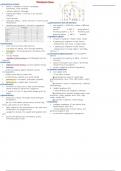
Hematopoietic System
>
- Composition of blood
• plasma - transports nutrients, messengers,
metabolites, other materials
- albumin, globulins, fibrinogen
• erythrocytes (RBCs) - functions in O2 and CO2
transport
- most abundant
• leukocytes (WBCs) - various functions in immunity and
inflammation > hematopoietic stem cell disorders
-
• thrombocytes (platelets) - involved in coagulation • pancytopenia - insufficient number of all blood
cell types
↓
anemia RBC & polychythemia
thrombocytopenia PLT↓ thrombocytosis
granulocytopenia ↓ WBC leukemia
>
- lymphatic system
• network of lymphatic vessels, nodes, tissues
• B lymphocytes originate in bone marrow
>
- erythrocytes - differentiate, then move to lymph nodes
• small, biconcave disks, high elasticity • T lymphocytes originate in bone marrow
- can bend into spaces, move through capillaries - differentiate into CD4+ helper T and CD8+
• hemoglobin - 02 carrying protein contained within cytotoxic T
each RBC > neutropenia (agranulocytosis) - low neutrophils/
-
• 120 day lifespan absence
- released by bone marrow as old/damaged ones are • neutrophils are majority of WBCs - critical in
removed immunity
> leukocytes
-
• absolute neutrophil count (ANC) - determines
• originate in bone marrow, circulate lymphoid tissues risk/severity of neutropenia
• functions • causes: congenital, acquired, drug-related
> malignant lymphomas
- immune response against diseases causing -
microorganisms • non hodgkin (NHL)
- identify and destroy cancer cells - B cell most common
- inflammatory response and wound healing -↳ manifestations: based on type/stage,
• granulocytes - neutrophils, eosinophils, basophils lymphadenopathy, fever, chills, night sweats, weight
• agranulocytes - lymphocytes, monocytes loss
> thrombocytes
- -↳ treatment: varies on characteristics, radiation,
• formation of blood clots to help control bleeding - chemotherapy
release mediators required for coagulation • hodgkin lymphoma (HL)
• if unused, PLTs last 10 days before phagocytized by - reed sternberg cells (diagnostic hallmark)
spleen - manifestations: painless enlarges nodes, chest
↳
>hematopoiesis
- discomfort, cough, dyspnea, fever, chills, night
• production of blood cells begins during embryonic sweats, weight loss
development - treatment: irradiation, chemotherapy
↳
> leukemias
-
yolk sac - liver/spleen - bone marrow - distal long
S Y >
bones -> flat bones of axial skeleton • malignant neoplasms of cells derives from
• WBCs originate from hematopoietic stem cells which hematopoietic stem cells
differentiate into progenitor cels - diffuse replacement of bone marrow with
- progenitor develop into myeloid and lymphoid stem abnormal neoplastic cells
cells • acute/chronic lymphocytic/myelogenous
• growth and reproduction controlled by colony
stimulating factors (CSF)
>
- Composition of blood
• plasma - transports nutrients, messengers,
metabolites, other materials
- albumin, globulins, fibrinogen
• erythrocytes (RBCs) - functions in O2 and CO2
transport
- most abundant
• leukocytes (WBCs) - various functions in immunity and
inflammation > hematopoietic stem cell disorders
-
• thrombocytes (platelets) - involved in coagulation • pancytopenia - insufficient number of all blood
cell types
↓
anemia RBC & polychythemia
thrombocytopenia PLT↓ thrombocytosis
granulocytopenia ↓ WBC leukemia
>
- lymphatic system
• network of lymphatic vessels, nodes, tissues
• B lymphocytes originate in bone marrow
>
- erythrocytes - differentiate, then move to lymph nodes
• small, biconcave disks, high elasticity • T lymphocytes originate in bone marrow
- can bend into spaces, move through capillaries - differentiate into CD4+ helper T and CD8+
• hemoglobin - 02 carrying protein contained within cytotoxic T
each RBC > neutropenia (agranulocytosis) - low neutrophils/
-
• 120 day lifespan absence
- released by bone marrow as old/damaged ones are • neutrophils are majority of WBCs - critical in
removed immunity
> leukocytes
-
• absolute neutrophil count (ANC) - determines
• originate in bone marrow, circulate lymphoid tissues risk/severity of neutropenia
• functions • causes: congenital, acquired, drug-related
> malignant lymphomas
- immune response against diseases causing -
microorganisms • non hodgkin (NHL)
- identify and destroy cancer cells - B cell most common
- inflammatory response and wound healing -↳ manifestations: based on type/stage,
• granulocytes - neutrophils, eosinophils, basophils lymphadenopathy, fever, chills, night sweats, weight
• agranulocytes - lymphocytes, monocytes loss
> thrombocytes
- -↳ treatment: varies on characteristics, radiation,
• formation of blood clots to help control bleeding - chemotherapy
release mediators required for coagulation • hodgkin lymphoma (HL)
• if unused, PLTs last 10 days before phagocytized by - reed sternberg cells (diagnostic hallmark)
spleen - manifestations: painless enlarges nodes, chest
↳
>hematopoiesis
- discomfort, cough, dyspnea, fever, chills, night
• production of blood cells begins during embryonic sweats, weight loss
development - treatment: irradiation, chemotherapy
↳
> leukemias
-
yolk sac - liver/spleen - bone marrow - distal long
S Y >
bones -> flat bones of axial skeleton • malignant neoplasms of cells derives from
• WBCs originate from hematopoietic stem cells which hematopoietic stem cells
differentiate into progenitor cels - diffuse replacement of bone marrow with
- progenitor develop into myeloid and lymphoid stem abnormal neoplastic cells
cells • acute/chronic lymphocytic/myelogenous
• growth and reproduction controlled by colony
stimulating factors (CSF)


