

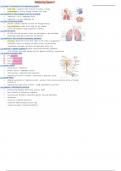
Respiratory System 1
>
- alveoli - functional unit of respiratory system
• brush cells - receptors that monitor air quality of lungs
• macrophages - remove foreign invaders from lungs
> ventilation - flow of gases in and out of alveoli
• inspiration - air in, diaphragm down
• expiration - air out, diaphragm up
>
- work of breathing (WOB)
• amount of effort required to move air through airways
• lung compliance - ease which lungs can be inflated
- stiff, noncompliant lungs: expansion is difficult
>
- dead air space
• air that must be moved but does not participate in gas exchange
• physiologic dead space: anatomic and alveolar
>
- perfusion - flow of blood in pulmonary capillaries
• shunting - blood that moved from right to left without oxygenation
- anatomic: venous to arterial circulation without entering lungs
- physiologic: decrease ventilation and perfusion within lung
> diffusion - transfer of gases between alveoli and pulmonary capillaries
- CO2 diffuses 20x more rapidly than O2; greater solubility in membranes
> arterial blood gas (ABG)
• pH: 7.35-7.45
• PCO2: 35-45mm HG
• HCO3; 22-26mEq/L
• PO2: 80-100mm HG
>
- neural control
• dorsal group - inspiration
• phrenic nerves - diaphragm contorl
• ventral group - inspiration and expiration
• respiratory function in medulla - pneumotaxic, apneustic center
> cough reflex
-
• defense mechanism of respiratory tract - protects from excess secretions, entry of foreign
substances
• regulated by cough center of brain - cough suppressants work here
> dyspnea - SOB/labored breathing
-
• primary lung diseases: pneumonia, asthma, COPD
• heart disease w/ pulmonary congestion
• neuromuscular disorders: myasthenia graves, muscular dystrophy
• assessment
- ability for complete sentences
- observed WOB (accessory muscle use)
- subjective report of labored breathing
, Respiratory System 2
>
- Common cold
• infectious causes >
- Non-opioid antitussive - dextromethorphan
- rhinovirus, parainfluenza virus, respiratory • therapeutic use
syncytial virus (RSV), coronavirus, adenovirus - cough suppression
• manifestations
↳
• complications
- dryness/congestion to nasopharynx - mild nausea, dizziness, sedation, misuse
- HA, general malaise, postnasal drip, sore throat • contraindications
- rhinitis: nasal secretions, tearing of eyes - generally safe
- severe: fever, chills, exhaustion • interactions
•↳ treatment - MAOI: fever
- often acute, self limited in healthy people > expectorants - guaifenesin
-
- antipyretics, antihistamines, decongestants • therapeutic use
> rhinosinusitis - inflammation to nasal sinuses
-
- cough r/t cold, rhinitis, lower respiratory
• commonly caused by viral upper respiratory disorders
infection • complications
• acute: viral, bacterial (less than 4 weeks) - GI upset, drowsiness, dizziness, allergic rash
- haemophilus influenzae, steptococcus • contraindications
pneumoniae
- caution: asthma
• chronic: bacterial or fungal origin (greater than 12
weeks) • interactions
- streptococcus, staphylococcus aureus - generally safe
•↳ manifestations => mucolytics - acetylcysteine
- facial pain/pressure, HA, prurient nasal discharge • therapeutic use
- decrease sense of smell, fever - large secretions d/t acute/chronic respiratory
dx, cystic fibrosis, acetaminophen antidote
• treatment
↳
• complications
- antimicrobial agents, nasal irrigation,
decongestants - aspiration, bronchospasm, dizziness, drowsiness
- intranasal glucocorticoids, mucolytics - hypotension, tachycardia, hepatotoxicity
•↳ complications • contraindications
- facial edema, periorbital edema/cellulitus - caution: hypothyroidism, CNS depression, renal/
liver dx, seizure dx, asthma
> opioid antitussives - hydrocodone
-
• interactions
• therapeutic use
- aacetaminophen
- chronic, nonproductive cough > decongestants - phenylephrine
-
• complications
• therapeutic use
- CNS: dizziness, drowsiness, respiratory rhinitis, sinusitis, common cold
depression
• complications
- GI: NV, constipation
- rebound congestion, CNS stimulation,
- dependence vasoconstriction, misuse
• contraindications • contraindications
- respiratory depression, acute asthma, acute - caution: HTN, CAD, stroke, dysrhythmias
EtOH use, liver/renal dx
• interactions
- caution: children/older adults, hx substance use
- CNS stimulators
• interactions
- CNS depressants
>
- alveoli - functional unit of respiratory system
• brush cells - receptors that monitor air quality of lungs
• macrophages - remove foreign invaders from lungs
> ventilation - flow of gases in and out of alveoli
• inspiration - air in, diaphragm down
• expiration - air out, diaphragm up
>
- work of breathing (WOB)
• amount of effort required to move air through airways
• lung compliance - ease which lungs can be inflated
- stiff, noncompliant lungs: expansion is difficult
>
- dead air space
• air that must be moved but does not participate in gas exchange
• physiologic dead space: anatomic and alveolar
>
- perfusion - flow of blood in pulmonary capillaries
• shunting - blood that moved from right to left without oxygenation
- anatomic: venous to arterial circulation without entering lungs
- physiologic: decrease ventilation and perfusion within lung
> diffusion - transfer of gases between alveoli and pulmonary capillaries
- CO2 diffuses 20x more rapidly than O2; greater solubility in membranes
> arterial blood gas (ABG)
• pH: 7.35-7.45
• PCO2: 35-45mm HG
• HCO3; 22-26mEq/L
• PO2: 80-100mm HG
>
- neural control
• dorsal group - inspiration
• phrenic nerves - diaphragm contorl
• ventral group - inspiration and expiration
• respiratory function in medulla - pneumotaxic, apneustic center
> cough reflex
-
• defense mechanism of respiratory tract - protects from excess secretions, entry of foreign
substances
• regulated by cough center of brain - cough suppressants work here
> dyspnea - SOB/labored breathing
-
• primary lung diseases: pneumonia, asthma, COPD
• heart disease w/ pulmonary congestion
• neuromuscular disorders: myasthenia graves, muscular dystrophy
• assessment
- ability for complete sentences
- observed WOB (accessory muscle use)
- subjective report of labored breathing
, Respiratory System 2
>
- Common cold
• infectious causes >
- Non-opioid antitussive - dextromethorphan
- rhinovirus, parainfluenza virus, respiratory • therapeutic use
syncytial virus (RSV), coronavirus, adenovirus - cough suppression
• manifestations
↳
• complications
- dryness/congestion to nasopharynx - mild nausea, dizziness, sedation, misuse
- HA, general malaise, postnasal drip, sore throat • contraindications
- rhinitis: nasal secretions, tearing of eyes - generally safe
- severe: fever, chills, exhaustion • interactions
•↳ treatment - MAOI: fever
- often acute, self limited in healthy people > expectorants - guaifenesin
-
- antipyretics, antihistamines, decongestants • therapeutic use
> rhinosinusitis - inflammation to nasal sinuses
-
- cough r/t cold, rhinitis, lower respiratory
• commonly caused by viral upper respiratory disorders
infection • complications
• acute: viral, bacterial (less than 4 weeks) - GI upset, drowsiness, dizziness, allergic rash
- haemophilus influenzae, steptococcus • contraindications
pneumoniae
- caution: asthma
• chronic: bacterial or fungal origin (greater than 12
weeks) • interactions
- streptococcus, staphylococcus aureus - generally safe
•↳ manifestations => mucolytics - acetylcysteine
- facial pain/pressure, HA, prurient nasal discharge • therapeutic use
- decrease sense of smell, fever - large secretions d/t acute/chronic respiratory
dx, cystic fibrosis, acetaminophen antidote
• treatment
↳
• complications
- antimicrobial agents, nasal irrigation,
decongestants - aspiration, bronchospasm, dizziness, drowsiness
- intranasal glucocorticoids, mucolytics - hypotension, tachycardia, hepatotoxicity
•↳ complications • contraindications
- facial edema, periorbital edema/cellulitus - caution: hypothyroidism, CNS depression, renal/
liver dx, seizure dx, asthma
> opioid antitussives - hydrocodone
-
• interactions
• therapeutic use
- aacetaminophen
- chronic, nonproductive cough > decongestants - phenylephrine
-
• complications
• therapeutic use
- CNS: dizziness, drowsiness, respiratory rhinitis, sinusitis, common cold
depression
• complications
- GI: NV, constipation
- rebound congestion, CNS stimulation,
- dependence vasoconstriction, misuse
• contraindications • contraindications
- respiratory depression, acute asthma, acute - caution: HTN, CAD, stroke, dysrhythmias
EtOH use, liver/renal dx
• interactions
- caution: children/older adults, hx substance use
- CNS stimulators
• interactions
- CNS depressants


