Medical and Surgical
Asepsis
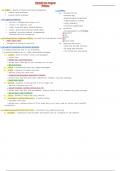
asepsis - absense of illness producing microorganisms
:
safety
• medical (clean technique) • increased fall risk
• surgical (sterile technique) - advanced age
- physical/cognitive impairment
agents of infection - impaired balance, mobility
• bacteria - stahpyloccocus aureus, e.coli - urinary frequency
• viruses - HIV, hepatitis, covid - orthostatic hypertension
• fungi - molds and yeasts (candida albicans) • prevention
• prions - protein particles (Creutzfeldt-Jakob) - hourly/purposeful rounding (5Ps)
• parasites - protozoa (malaria, toxoplasmosis) possessions
helminths (flat and roundworms) potty
position
Multidrug-Resistant Organisms (MDROs) - mutated into drug resistant strains pain
• MRSA, VRSA, CDIFF personal needs
• incomplete or overuse of antibiotics • aspiration precautions
- small bites and sips, alternate
mode of transmission and isolation guidelines
- 90 during meal and after
standard precautions (tier 1) - for all patients
- limit distractions when eating
transmission-based (tier 2) - highly transmissible pathogens
• contact - direct or indirect contact with pathogens
- within 3 feet
- MDROs, RSV, wound infections
- private room, cohorting ok, limit movement out of room
- gloves and gown
• vehicle - contaminated items that transmit pathogens
• droplet - exposure to droplet secretions
- particles 5mcg that travel 3-6ft
- streptococcal pharyngitis, pneumonia, influenza
- private room, may leave door open, cohorting ok, transport only when necessary
- mask, gown, gloves
• airborne - exposure to fine particles in air for longer time
- particles 5mcg and stay in air
- rubeola (measles), varicella (chicken pox), TB
- private room, door shut with antechamber, pressure airflow of 12 /hr, transport only when necessary
- gloves, gown, mask, faceshield
• vector - animals or insects that carry infection
• neutropenic (reverse) precautions - to protect patient
- neutrophil count 500
- private room, pressure airflow of 12 /hr, mask when out of room, mask on visitors, watch food/h20
contaminants
healthcare-associated infections (HAIs) - contracted in any healthcare setting
• iatrogenic - complication from procedure while patient was not at hospital (ie. self catheter)
Asepsis
asepsis - absense of illness producing microorganisms
:
safety
• medical (clean technique) • increased fall risk
• surgical (sterile technique) - advanced age
- physical/cognitive impairment
agents of infection - impaired balance, mobility
• bacteria - stahpyloccocus aureus, e.coli - urinary frequency
• viruses - HIV, hepatitis, covid - orthostatic hypertension
• fungi - molds and yeasts (candida albicans) • prevention
• prions - protein particles (Creutzfeldt-Jakob) - hourly/purposeful rounding (5Ps)
• parasites - protozoa (malaria, toxoplasmosis) possessions
helminths (flat and roundworms) potty
position
Multidrug-Resistant Organisms (MDROs) - mutated into drug resistant strains pain
• MRSA, VRSA, CDIFF personal needs
• incomplete or overuse of antibiotics • aspiration precautions
- small bites and sips, alternate
mode of transmission and isolation guidelines
- 90 during meal and after
standard precautions (tier 1) - for all patients
- limit distractions when eating
transmission-based (tier 2) - highly transmissible pathogens
• contact - direct or indirect contact with pathogens
- within 3 feet
- MDROs, RSV, wound infections
- private room, cohorting ok, limit movement out of room
- gloves and gown
• vehicle - contaminated items that transmit pathogens
• droplet - exposure to droplet secretions
- particles 5mcg that travel 3-6ft
- streptococcal pharyngitis, pneumonia, influenza
- private room, may leave door open, cohorting ok, transport only when necessary
- mask, gown, gloves
• airborne - exposure to fine particles in air for longer time
- particles 5mcg and stay in air
- rubeola (measles), varicella (chicken pox), TB
- private room, door shut with antechamber, pressure airflow of 12 /hr, transport only when necessary
- gloves, gown, mask, faceshield
• vector - animals or insects that carry infection
• neutropenic (reverse) precautions - to protect patient
- neutrophil count 500
- private room, pressure airflow of 12 /hr, mask when out of room, mask on visitors, watch food/h20
contaminants
healthcare-associated infections (HAIs) - contracted in any healthcare setting
• iatrogenic - complication from procedure while patient was not at hospital (ie. self catheter)