
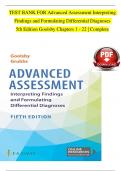
TEST BANK FOR Advanced Assessment Interpreting
Findings and Formulating Differential Diagnoses
5th Edition Goolsby Chapters 1 - 22 | Complete
, TABLE OF CONTENTS vf vf
Chapter vf1. vfAssessment vfand vfClinical vfDecision vfMaking: vfAn vfOverview
Chapter vf2. vfGenomic vfAssessment: vfInterpreting vfFindings vfand vfFormulating vfDifferential vfDiagnoses
Chapter vf3. vfSkin
Chapter vf4. vfHead, vfFace, vfand vfNeck
Chapter vf5. vfThe vfEye
Chapter vf6. vfEar, vfNose, vfMouth, vfand vfThroat
Chapter vf7. vfCardiac vfand vfPeripheral vfVascular vfSystems
Chapter vf8. vfRespiratory vfSystem
Chapter vf9. vfBreasts
Chapter vf10. vfAbdomen
Chapter vf11. vfGenitourinary vfSystem
Chapter vf12. vfMale vfReproductive vfSystem
Chapter vf13. vfFemale vfReproductive vfSystem
Chapter vf14. vfMusculoskeletal vfSystem
Chapter vf15. vfNeurological vfSystem
Chapter vf16. vfNonspecific vfComplaints
Chapter vf17. vfPsychiatric vfMental vfHealth
Chapter vf18. vfPediatric vfPatients
Chapter vf19. vfPregnant vfPatients
Chapter vf20. vfAssessment vfof vfthe vfTransgender vfor vfGender vfDiverse vfAdult
Chapter vf21. vfOlder vfPatients
Chapter vf22. vfPersons vfWith vfDisabilities
, Chapter 1. Assessment and Clinical Decision Making: An Overview
vf vf vf vf vf vf vf vf
Multiple vf Choice
Identify vfthe vfchoice vfthat vfbest vfcompletes vfthe vfstatement vfor vfanswers vfthe vfquestion.
vf 1. Which vftype vfof vfclinical vfdecision-making vfis vfmost vfreliable?
A. Intuitive
B. Analytical
C. Experiential
D. Augenblick
vf 2. Which vfof vfthe vffollowing vfis vffalse? vfTo vfobtain vfadequate vfhistory, vfhealth-care vfproviders vfmust vfbe:
A. Methodical vfand vfsystematic
B. Attentive vfto vfthe vfpatient’s vfverbal vfand vfnonverbal
vflanguage
C. Able vfto vfaccurately vfinterpret vfthe vfpatient’s vfresponses
D. Adept vfat vfreading vfinto vfthe vfpatient’s vfstatements
vf 3. Essential vfparts vfof vfa vfhealth vfhistory vfinclude vfall vfof vfthe vffollowing vfexcept:
A. Chief vfcomplaint
B. History vfof vfthe vfpresent vfillness
C. Current vfvital vfsigns
D. All vfof vfthe vfabove vfare vfessential vfhistory
vfcomponents
vf 4. Which vfof vfthe vffollowing vfis vffalse? vfWhile vfperforming vfthe vfphysical vfexamination, vfthe vfexaminer vfmust vfbe vfable vfto:
A. Differentiate vfbetween vfnormal vfand vfabnormal vffindings
B. Recall vfknowledge vfof vfa vfrange vfof vfconditions vfand vftheir vfassociated vfsigns vfand
vfsymptoms
C. Recognize vfhow vfcertain vfconditions vfaffect vfthe vfresponse vfto vfother vfconditions
D. Foresee vfunpredictable vffindings
vf 5. The vffollowing vfis vfthe vfleast vfreliable vfsource vfof vfinformation vffor vfdiagnostic vfstatistics:
A. Evidence-based vfinvestigations
B. Primary vfreports vfof vfresearch
C. Estimation vfbased vfon vfa vfprovider’s
vfexperience
, D. Published vfmeta-analyses
vf 6. The vffollowing vfcan vfbe vfused vfto vfassist vfin vfsound vfclinical vfdecision-making:
A. Algorithm vfpublished vfin vfa vfpeer-reviewed vfjournal
vfarticle
B. Clinical vfpractice vfguidelines
C. Evidence-based vfresearch
D. All vfof vfthe vfabove
vf 7. If vfa vfdiagnostic vfstudy vfhas vfhigh vfsensitivity, vfthis vfindicates vfa:
A. High vfpercentage vfof vfpersons vfwith vfthe vfgiven vfcondition vfwill vfhave vfan
vfabnormal vfresult
B. Low vfpercentage vfof vfpersons vfwith vfthe vfgiven vfcondition vfwill vfhave vfan
vfabnormal vfresult
C. Low vflikelihood vfof vfnormal vfresult vfin vfpersons vfwithout vfa vfgiven vfcondition
D. None vfof vfthe vfabove
vf 8. If vfa vfdiagnostic vfstudy vfhas vfhigh vfspecificity, vf this vfindicates vfa:
A. Low vfpercentage vfof vfhealthy vfindividuals vfwill vfshow vfa vfnormal vfresult
B. High vfpercentage vfof vfhealthy vfindividuals vfwill vfshow vfa vfnormal vfresult
C. High vfpercentage vfof vfindividuals vfwith vfa vfdisorder vfwill vfshow vfa vfnormal
vfresult
D. Low vfpercentage vfof vfindividuals vfwith vfa vfdisorder vfwill vfshow vfan
vfabnormal vfresult
vf 9. A vflikelihood vfratio vfabove vf1 vfindicates vfthat vfa vfdiagnostic vftest vfshowing vfa:
A. Positive vfresult vfis vfstrongly vfassociated vfwith vfthe vfdisease
B. Negative vfresult vfis vfstrongly vfassociated vfwith vfabsence vfof vfthe
vfdisease
C. Positive vfresult vfis vfweakly vfassociated vfwith vfthe vfdisease
D. Negative vfresult vfis vfweakly vfassociated vfwith vfabsence vfof vfthe
vfdisease
Findings and Formulating Differential Diagnoses
5th Edition Goolsby Chapters 1 - 22 | Complete
, TABLE OF CONTENTS vf vf
Chapter vf1. vfAssessment vfand vfClinical vfDecision vfMaking: vfAn vfOverview
Chapter vf2. vfGenomic vfAssessment: vfInterpreting vfFindings vfand vfFormulating vfDifferential vfDiagnoses
Chapter vf3. vfSkin
Chapter vf4. vfHead, vfFace, vfand vfNeck
Chapter vf5. vfThe vfEye
Chapter vf6. vfEar, vfNose, vfMouth, vfand vfThroat
Chapter vf7. vfCardiac vfand vfPeripheral vfVascular vfSystems
Chapter vf8. vfRespiratory vfSystem
Chapter vf9. vfBreasts
Chapter vf10. vfAbdomen
Chapter vf11. vfGenitourinary vfSystem
Chapter vf12. vfMale vfReproductive vfSystem
Chapter vf13. vfFemale vfReproductive vfSystem
Chapter vf14. vfMusculoskeletal vfSystem
Chapter vf15. vfNeurological vfSystem
Chapter vf16. vfNonspecific vfComplaints
Chapter vf17. vfPsychiatric vfMental vfHealth
Chapter vf18. vfPediatric vfPatients
Chapter vf19. vfPregnant vfPatients
Chapter vf20. vfAssessment vfof vfthe vfTransgender vfor vfGender vfDiverse vfAdult
Chapter vf21. vfOlder vfPatients
Chapter vf22. vfPersons vfWith vfDisabilities
, Chapter 1. Assessment and Clinical Decision Making: An Overview
vf vf vf vf vf vf vf vf
Multiple vf Choice
Identify vfthe vfchoice vfthat vfbest vfcompletes vfthe vfstatement vfor vfanswers vfthe vfquestion.
vf 1. Which vftype vfof vfclinical vfdecision-making vfis vfmost vfreliable?
A. Intuitive
B. Analytical
C. Experiential
D. Augenblick
vf 2. Which vfof vfthe vffollowing vfis vffalse? vfTo vfobtain vfadequate vfhistory, vfhealth-care vfproviders vfmust vfbe:
A. Methodical vfand vfsystematic
B. Attentive vfto vfthe vfpatient’s vfverbal vfand vfnonverbal
vflanguage
C. Able vfto vfaccurately vfinterpret vfthe vfpatient’s vfresponses
D. Adept vfat vfreading vfinto vfthe vfpatient’s vfstatements
vf 3. Essential vfparts vfof vfa vfhealth vfhistory vfinclude vfall vfof vfthe vffollowing vfexcept:
A. Chief vfcomplaint
B. History vfof vfthe vfpresent vfillness
C. Current vfvital vfsigns
D. All vfof vfthe vfabove vfare vfessential vfhistory
vfcomponents
vf 4. Which vfof vfthe vffollowing vfis vffalse? vfWhile vfperforming vfthe vfphysical vfexamination, vfthe vfexaminer vfmust vfbe vfable vfto:
A. Differentiate vfbetween vfnormal vfand vfabnormal vffindings
B. Recall vfknowledge vfof vfa vfrange vfof vfconditions vfand vftheir vfassociated vfsigns vfand
vfsymptoms
C. Recognize vfhow vfcertain vfconditions vfaffect vfthe vfresponse vfto vfother vfconditions
D. Foresee vfunpredictable vffindings
vf 5. The vffollowing vfis vfthe vfleast vfreliable vfsource vfof vfinformation vffor vfdiagnostic vfstatistics:
A. Evidence-based vfinvestigations
B. Primary vfreports vfof vfresearch
C. Estimation vfbased vfon vfa vfprovider’s
vfexperience
, D. Published vfmeta-analyses
vf 6. The vffollowing vfcan vfbe vfused vfto vfassist vfin vfsound vfclinical vfdecision-making:
A. Algorithm vfpublished vfin vfa vfpeer-reviewed vfjournal
vfarticle
B. Clinical vfpractice vfguidelines
C. Evidence-based vfresearch
D. All vfof vfthe vfabove
vf 7. If vfa vfdiagnostic vfstudy vfhas vfhigh vfsensitivity, vfthis vfindicates vfa:
A. High vfpercentage vfof vfpersons vfwith vfthe vfgiven vfcondition vfwill vfhave vfan
vfabnormal vfresult
B. Low vfpercentage vfof vfpersons vfwith vfthe vfgiven vfcondition vfwill vfhave vfan
vfabnormal vfresult
C. Low vflikelihood vfof vfnormal vfresult vfin vfpersons vfwithout vfa vfgiven vfcondition
D. None vfof vfthe vfabove
vf 8. If vfa vfdiagnostic vfstudy vfhas vfhigh vfspecificity, vf this vfindicates vfa:
A. Low vfpercentage vfof vfhealthy vfindividuals vfwill vfshow vfa vfnormal vfresult
B. High vfpercentage vfof vfhealthy vfindividuals vfwill vfshow vfa vfnormal vfresult
C. High vfpercentage vfof vfindividuals vfwith vfa vfdisorder vfwill vfshow vfa vfnormal
vfresult
D. Low vfpercentage vfof vfindividuals vfwith vfa vfdisorder vfwill vfshow vfan
vfabnormal vfresult
vf 9. A vflikelihood vfratio vfabove vf1 vfindicates vfthat vfa vfdiagnostic vftest vfshowing vfa:
A. Positive vfresult vfis vfstrongly vfassociated vfwith vfthe vfdisease
B. Negative vfresult vfis vfstrongly vfassociated vfwith vfabsence vfof vfthe
vfdisease
C. Positive vfresult vfis vfweakly vfassociated vfwith vfthe vfdisease
D. Negative vfresult vfis vfweakly vfassociated vfwith vfabsence vfof vfthe
vfdisease


