

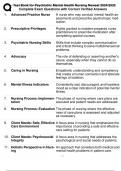
Test Bank for Psychiatric Mental Health Nursing Newest 2024/2025
Complete Exam Questions with Correct Verified Answers
1. Advanced Practice Nurse A nurse who may conduct mental health as-
sessments and prescribe psychotropic med-
ication.
2. Prescriptive Privileges Rights granted to masters-prepared nurse
practitioners to prescribe medication after
completing special courses.
3. Psychiatric Nursing Skills Skills that include complex communication
and critical thinking to solve multidimensional
problems.
4. Advocacy The role of defending or asserting another's
cause, especially when they cannot do so
themselves.
5. Caring in Nursing Empathetic understanding and competency
that create a human connection and alleviate
feelings of isolation.
6. Mental Illness Indicators Consistently sad, discouraged, and hopeless
mood as a clear indication of potential mental
illness.
7. Nursing Process: Implemen- The phase of nursing where care plans are
tation executed and patient needs are addressed.
8. Nursing Process: Evaluation The phase of nursing where the effective-
ness of care plans is assessed and adjusted
as necessary.
9. Client Needs: Safe, Effective A focus area in nursing that emphasizes the
Care Environment importance of providing a safe and effective
care setting for patients.
10. Client Needs: Psychosocial A focus area in nursing that addresses the
Integrity psychological and social needs of patients.
11. Holistic Perspective in Nurs- An approach that considers both medical and
ing mental health problems in patient care.
, Test Bank for Psychiatric Mental Health Nursing
12. Nurse-Patient Ratios The number of nurses to patients, which can
affect the quality of care provided.
13. Psychosocial Pain The emotional suffering experienced by pa-
tients, which is as real as physical pain.
14. Legislative Advocacy The act of nurses writing letters to elected
representatives to oppose legislation affect-
ing mental health care.
15. Complex Communication Skills required by psychiatric nurses to effec-
Skills tively interact with patients and address their
needs.
16. Individual Advocacy Helping patients understand their rights or
make decisions regarding their care.
17. Community Advocacy Political activity and public speaking aimed at
improving the human condition.
18. Treatment Plan A plan that outlines the care and interven-
tions for a patient, which should include pa-
tient input.
19. Mental Health Assessments Evaluations conducted by nurses to deter-
mine a patient's mental health status.
20. Therapeutic Relationships Relationships established between nurses
and patients that promote healing and sup-
port.
21. Individualized Care Plans Care plans tailored to meet the specific
needs of each patient.
22. High Technology Monitoring Use of advanced equipment by psychiatric
nurses to monitor patients' conditions.
23. Nursing Skills in Psychiatric Skills that differ from medical-surgical nurs-
Settings ing, focusing on mental health challenges.
, Test Bank for Psychiatric Mental Health Nursing
24. Misconceptions about Psy- The false belief that psychiatric nurses lose
chiatric Nursing their nursing skills compared to other special-
ties.
25. Psychiatric Nursing Work- The increasing demands placed on psychi-
loads atric nurses, similar to other nursing special-
ties.
26. Cognitive Level: Understand A level of cognitive processing that involves
comprehending information.
27. Cognitive Level: Apply A level of cognitive processing that involves
using knowledge in practical situations.
28. As If A hypothetical scenario, not grounded in re-
ality.
29. For Real A genuine situation or occurrence, grounded
in reality.
30. Mood Alteration Change in emotional state reflecting mental
illness.
31. Mentally Healthy Behavior Adaptive actions reflecting self-efficacy and
responsibility.
32. Maladaptive Behaviors Actions that hinder personal growth or
well-being.
33. DSM-5 Manual providing diagnostic criteria for men-
tal disorders.
34. ICD-10 International classification for diseases and
health problems.
35. Resilience Ability to adapt and recover from adversity.
36. NANDA North American Nursing Diagnosis Associa-
tion for diagnoses.
Complete Exam Questions with Correct Verified Answers
1. Advanced Practice Nurse A nurse who may conduct mental health as-
sessments and prescribe psychotropic med-
ication.
2. Prescriptive Privileges Rights granted to masters-prepared nurse
practitioners to prescribe medication after
completing special courses.
3. Psychiatric Nursing Skills Skills that include complex communication
and critical thinking to solve multidimensional
problems.
4. Advocacy The role of defending or asserting another's
cause, especially when they cannot do so
themselves.
5. Caring in Nursing Empathetic understanding and competency
that create a human connection and alleviate
feelings of isolation.
6. Mental Illness Indicators Consistently sad, discouraged, and hopeless
mood as a clear indication of potential mental
illness.
7. Nursing Process: Implemen- The phase of nursing where care plans are
tation executed and patient needs are addressed.
8. Nursing Process: Evaluation The phase of nursing where the effective-
ness of care plans is assessed and adjusted
as necessary.
9. Client Needs: Safe, Effective A focus area in nursing that emphasizes the
Care Environment importance of providing a safe and effective
care setting for patients.
10. Client Needs: Psychosocial A focus area in nursing that addresses the
Integrity psychological and social needs of patients.
11. Holistic Perspective in Nurs- An approach that considers both medical and
ing mental health problems in patient care.
, Test Bank for Psychiatric Mental Health Nursing
12. Nurse-Patient Ratios The number of nurses to patients, which can
affect the quality of care provided.
13. Psychosocial Pain The emotional suffering experienced by pa-
tients, which is as real as physical pain.
14. Legislative Advocacy The act of nurses writing letters to elected
representatives to oppose legislation affect-
ing mental health care.
15. Complex Communication Skills required by psychiatric nurses to effec-
Skills tively interact with patients and address their
needs.
16. Individual Advocacy Helping patients understand their rights or
make decisions regarding their care.
17. Community Advocacy Political activity and public speaking aimed at
improving the human condition.
18. Treatment Plan A plan that outlines the care and interven-
tions for a patient, which should include pa-
tient input.
19. Mental Health Assessments Evaluations conducted by nurses to deter-
mine a patient's mental health status.
20. Therapeutic Relationships Relationships established between nurses
and patients that promote healing and sup-
port.
21. Individualized Care Plans Care plans tailored to meet the specific
needs of each patient.
22. High Technology Monitoring Use of advanced equipment by psychiatric
nurses to monitor patients' conditions.
23. Nursing Skills in Psychiatric Skills that differ from medical-surgical nurs-
Settings ing, focusing on mental health challenges.
, Test Bank for Psychiatric Mental Health Nursing
24. Misconceptions about Psy- The false belief that psychiatric nurses lose
chiatric Nursing their nursing skills compared to other special-
ties.
25. Psychiatric Nursing Work- The increasing demands placed on psychi-
loads atric nurses, similar to other nursing special-
ties.
26. Cognitive Level: Understand A level of cognitive processing that involves
comprehending information.
27. Cognitive Level: Apply A level of cognitive processing that involves
using knowledge in practical situations.
28. As If A hypothetical scenario, not grounded in re-
ality.
29. For Real A genuine situation or occurrence, grounded
in reality.
30. Mood Alteration Change in emotional state reflecting mental
illness.
31. Mentally Healthy Behavior Adaptive actions reflecting self-efficacy and
responsibility.
32. Maladaptive Behaviors Actions that hinder personal growth or
well-being.
33. DSM-5 Manual providing diagnostic criteria for men-
tal disorders.
34. ICD-10 International classification for diseases and
health problems.
35. Resilience Ability to adapt and recover from adversity.
36. NANDA North American Nursing Diagnosis Associa-
tion for diagnoses.


