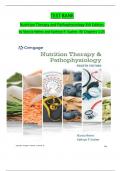
TEST BANK
c
Nutrition Therapy and Pathophysiology 4th Edition,
c c c c c
by Marcia Nelms and Kathryn P. Sucher. All Chapters 1-25
c c c c c c c c c c
Copyright cCengage cLearning. cPowered cby Page c
cCognero.
1
,Chapter 1 - Role of the Registered Dietitian Nutritionist in the Health Care
c c c c c c c c c c c c
True c/ cFalse
1. The cScope cof cPractice cencompasses cthe crange cof croles, cactivities, cand cregulations cwithin cwhich
cnutrition c and cdietetics cpractitioners cperform.
a. True
b. False
ANSWER: True
DIFFICULTY: Bloom's: cUnderstand
REFERENCES: c The cRegistered cDietitian cin cClinical cPractice
2. Hospice cfacilities cfocus con cintegrated, cmultidisciplinary cassistance cfor crecovery cfrom cacute cor
cchronic c illness cand/or csurgical cprocedures.
a. True
b. False
ANSWER: False
DIFFICULTY: Bloom's: cRemember
REFERENCES: c The cRegistered cDietitian cin cClinical cPractice
3. With ca cminimum cof c1,000 chours cof crelated cpractice cand cat cleast c90 ccontinuing ceducation
ccredits, ca c registered cdietitian cmay cbecome ca clactation cconsultant.
a. True
b. False
ANSWER: True
DIFFICULTY: Bloom's: cUnderstand
REFERENCES: c Other cHealth cProfessionals—Interdisciplinary cTeams
4. Medical cdoctors care ccommonly cresponsible cfor cthe cinitial cnutrition cscreening cof cpatients
cand cfor c notifying cthe cdietitian cif ca cpatient’s cintake cis cinadequate.
a. True
b. False
ANSWER: False
DIFFICULTY: Bloom's: cUnderstand
REFERENCES: c Other cHealth cProfessionals—Interdisciplinary cTeams
5. Some cstates cprovide cMedicaid cbenefits cfor cnutrition cservices, cbut cthere cis csignificant cvariability
cbetween c states.
a. True
b. False
Copyright cCengage cLearning. cPowered cby Page c
cCognero.
2
,ANSWER: True
DIFFICULTY: Bloom's: cUnderstand
REFERENCES: c cHealth cCare cServices cand cReimbursement cfor cMedical cNutrition cTherapy c(MNT)
6. To cprovide coptimal cnutritional ccare, call caspects cof ca cpatient’s clife cmust cbe cconsidered.
a. True
b. False
ANSWER: True
DIFFICULTY: Bloom's: cUnderstand
REFERENCES: c cDeveloping cCritical cThinking cSkills cand cProfessional cPerformance
7. Evidence-based cpractice ccan cbest cbe cdefined cas cpurposeful, cself-regulatory cjudgment cthat
cresults cin c interpretation, canalysis, cevaluation, cand cinference cupon cwhich cthat cjudgment cis
cbased.
a. True
b. False
ANSWER: False
DIFFICULTY: Bloom's: cRemember
REFERENCES: c cDeveloping cCritical cThinking cSkills cand cProfessional cPerformance
8. The ccognitive cprocesses cthat ca cdietitian cgoes cthrough cto cmake cclinical cjudgments care cknown cas
cpractice c standards.
a. True
b. False
ANSWER: False
DIFFICULTY: Bloom's: cRemember
REFERENCES: c cDeveloping cCritical cThinking cSkills cand cProfessional cPerformance
9. The csteps cof cthe cdecision-making cprocess cdo cnot cnecessarily ctake cplace cin ca cparticular csequence.
a. True
b. False
ANSWER: True
DIFFICULTY: Bloom's: cUnderstand
REFERENCES: c cDeveloping cCritical cThinking cSkills cand cProfessional cPerformance
10. The cAND’s cCode cof cEthics cand cStandards cof cProfessional cPerformance crequires cthat
coutcomes care c measurable cand cevidence-based.
a. True
b. False
Copyright cCengage cLearning. cPowered cby Page c
cCognero.
3
, ANSWER: True
DIFFICULTY: Bloom's: cUnderstand
REFERENCES: c cDeveloping cCritical cThinking cSkills cand cProfessional cPerformance
Copyright cCengage cLearning. cPowered cby Page c
cCognero.
4
c
Nutrition Therapy and Pathophysiology 4th Edition,
c c c c c
by Marcia Nelms and Kathryn P. Sucher. All Chapters 1-25
c c c c c c c c c c
Copyright cCengage cLearning. cPowered cby Page c
cCognero.
1
,Chapter 1 - Role of the Registered Dietitian Nutritionist in the Health Care
c c c c c c c c c c c c
True c/ cFalse
1. The cScope cof cPractice cencompasses cthe crange cof croles, cactivities, cand cregulations cwithin cwhich
cnutrition c and cdietetics cpractitioners cperform.
a. True
b. False
ANSWER: True
DIFFICULTY: Bloom's: cUnderstand
REFERENCES: c The cRegistered cDietitian cin cClinical cPractice
2. Hospice cfacilities cfocus con cintegrated, cmultidisciplinary cassistance cfor crecovery cfrom cacute cor
cchronic c illness cand/or csurgical cprocedures.
a. True
b. False
ANSWER: False
DIFFICULTY: Bloom's: cRemember
REFERENCES: c The cRegistered cDietitian cin cClinical cPractice
3. With ca cminimum cof c1,000 chours cof crelated cpractice cand cat cleast c90 ccontinuing ceducation
ccredits, ca c registered cdietitian cmay cbecome ca clactation cconsultant.
a. True
b. False
ANSWER: True
DIFFICULTY: Bloom's: cUnderstand
REFERENCES: c Other cHealth cProfessionals—Interdisciplinary cTeams
4. Medical cdoctors care ccommonly cresponsible cfor cthe cinitial cnutrition cscreening cof cpatients
cand cfor c notifying cthe cdietitian cif ca cpatient’s cintake cis cinadequate.
a. True
b. False
ANSWER: False
DIFFICULTY: Bloom's: cUnderstand
REFERENCES: c Other cHealth cProfessionals—Interdisciplinary cTeams
5. Some cstates cprovide cMedicaid cbenefits cfor cnutrition cservices, cbut cthere cis csignificant cvariability
cbetween c states.
a. True
b. False
Copyright cCengage cLearning. cPowered cby Page c
cCognero.
2
,ANSWER: True
DIFFICULTY: Bloom's: cUnderstand
REFERENCES: c cHealth cCare cServices cand cReimbursement cfor cMedical cNutrition cTherapy c(MNT)
6. To cprovide coptimal cnutritional ccare, call caspects cof ca cpatient’s clife cmust cbe cconsidered.
a. True
b. False
ANSWER: True
DIFFICULTY: Bloom's: cUnderstand
REFERENCES: c cDeveloping cCritical cThinking cSkills cand cProfessional cPerformance
7. Evidence-based cpractice ccan cbest cbe cdefined cas cpurposeful, cself-regulatory cjudgment cthat
cresults cin c interpretation, canalysis, cevaluation, cand cinference cupon cwhich cthat cjudgment cis
cbased.
a. True
b. False
ANSWER: False
DIFFICULTY: Bloom's: cRemember
REFERENCES: c cDeveloping cCritical cThinking cSkills cand cProfessional cPerformance
8. The ccognitive cprocesses cthat ca cdietitian cgoes cthrough cto cmake cclinical cjudgments care cknown cas
cpractice c standards.
a. True
b. False
ANSWER: False
DIFFICULTY: Bloom's: cRemember
REFERENCES: c cDeveloping cCritical cThinking cSkills cand cProfessional cPerformance
9. The csteps cof cthe cdecision-making cprocess cdo cnot cnecessarily ctake cplace cin ca cparticular csequence.
a. True
b. False
ANSWER: True
DIFFICULTY: Bloom's: cUnderstand
REFERENCES: c cDeveloping cCritical cThinking cSkills cand cProfessional cPerformance
10. The cAND’s cCode cof cEthics cand cStandards cof cProfessional cPerformance crequires cthat
coutcomes care c measurable cand cevidence-based.
a. True
b. False
Copyright cCengage cLearning. cPowered cby Page c
cCognero.
3
, ANSWER: True
DIFFICULTY: Bloom's: cUnderstand
REFERENCES: c cDeveloping cCritical cThinking cSkills cand cProfessional cPerformance
Copyright cCengage cLearning. cPowered cby Page c
cCognero.
4