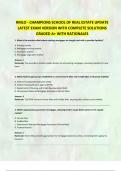
RMLO - CHAMPIONS SCHOOL OF REAL ESTATE UPDATE
LATEST EXAM VERSION WITH COMPLETE SOLUTIONS
GRADED A+ WITH RATIONALES
1. What is the market called where existing mortgages are bought and sold to provide liquidity?
A. Primary market
B. Mortgage servicing market
C. Secondary market
D. Mortgage origination market
Answer: C
Rationale: The secondary market enables lenders to sell existing mortgages, providing liquidity for new
loans.
2. Which federal agency was established to restore Fannie Mae and Freddie Mac to financial stability?
A. Federal Housing Administration (FHA)
B. Federal Housing Finance Agency (FHFA)
C. Department of Housing and Urban Development (HUD)
D. Government National Mortgage Association (Ginnie Mae)
Answer: B
Rationale: The FHFA oversees Fannie Mae and Freddie Mac, ensuring their solvency and stability.
3. Which organization guarantees mortgages, allowing lenders to get better prices in the capital
market?
A. Fannie Mae
B. Freddie Mac
C. Government National Mortgage Association (Ginnie Mae)
D. Federal Reserve
Answer: C
Rationale: Ginnie Mae provides guarantees for mortgage-backed securities, increasing their appeal to
investors.
,4. What is the name of the federally chartered corporation established in 1970 to purchase mortgages
in the secondary market?
A. Fannie Mae
B. Freddie Mac
C. HUD
D. Ginnie Mae
Answer: B
Rationale: Freddie Mac was created to provide stability and liquidity in the mortgage market.
5. What is the line of credit used by a lender to fund a loan before selling it in the secondary market
called?
A. Home equity line
B. Warehouse line
C. Mortgage line
D. Revolving credit
Answer: B
Rationale: A warehouse line of credit provides short-term funding for loans awaiting sale.
6. Who acts as an intermediary between the borrower and lender today?
A. Mortgage banker
B. Real estate agent
C. Mortgage broker
D. Title company
Answer: C
Rationale: Mortgage brokers connect borrowers with lenders to secure home financing.
7. What type of mortgage is NOT insured or guaranteed by a government agency?
A. VA loan
B. FHA loan
C. USDA loan
D. Conventional loan
Answer: D
Rationale: Conventional loans are private loans not backed by government agencies.
, 8. What does a mortgage banker primarily do?
A. Provides real estate advice
B. Sells homes
C. Originates loans and sells them to investors
D. Insures loans
Answer: C
Rationale: Mortgage bankers focus on originating and selling loans to the secondary market.
9. The Good Faith Estimate (GFE) is primarily used for what type of transaction?
A. Conventional loans
B. Reverse mortgages
C. FHA loans
D. VA loans
Answer: B
Rationale: The GFE is required for reverse mortgages to disclose estimated costs.
10. What does the mortgage servicing disclosure cover?
A. Loan origination fees
B. Transfer of mortgage servicing rights
C. Closing costs
D. Property inspections
Answer: B
Rationale: This disclosure explains the transfer of mortgage servicing rights to borrowers.
11. Which law limits the amount a lender can require for escrow accounts?
A. RESPA Section 10
B. TILA
C. Fair Housing Act
D. Equal Credit Opportunity Act
Answer: A
Rationale: RESPA Section 10 limits escrow account contributions for taxes and insurance.
LATEST EXAM VERSION WITH COMPLETE SOLUTIONS
GRADED A+ WITH RATIONALES
1. What is the market called where existing mortgages are bought and sold to provide liquidity?
A. Primary market
B. Mortgage servicing market
C. Secondary market
D. Mortgage origination market
Answer: C
Rationale: The secondary market enables lenders to sell existing mortgages, providing liquidity for new
loans.
2. Which federal agency was established to restore Fannie Mae and Freddie Mac to financial stability?
A. Federal Housing Administration (FHA)
B. Federal Housing Finance Agency (FHFA)
C. Department of Housing and Urban Development (HUD)
D. Government National Mortgage Association (Ginnie Mae)
Answer: B
Rationale: The FHFA oversees Fannie Mae and Freddie Mac, ensuring their solvency and stability.
3. Which organization guarantees mortgages, allowing lenders to get better prices in the capital
market?
A. Fannie Mae
B. Freddie Mac
C. Government National Mortgage Association (Ginnie Mae)
D. Federal Reserve
Answer: C
Rationale: Ginnie Mae provides guarantees for mortgage-backed securities, increasing their appeal to
investors.
,4. What is the name of the federally chartered corporation established in 1970 to purchase mortgages
in the secondary market?
A. Fannie Mae
B. Freddie Mac
C. HUD
D. Ginnie Mae
Answer: B
Rationale: Freddie Mac was created to provide stability and liquidity in the mortgage market.
5. What is the line of credit used by a lender to fund a loan before selling it in the secondary market
called?
A. Home equity line
B. Warehouse line
C. Mortgage line
D. Revolving credit
Answer: B
Rationale: A warehouse line of credit provides short-term funding for loans awaiting sale.
6. Who acts as an intermediary between the borrower and lender today?
A. Mortgage banker
B. Real estate agent
C. Mortgage broker
D. Title company
Answer: C
Rationale: Mortgage brokers connect borrowers with lenders to secure home financing.
7. What type of mortgage is NOT insured or guaranteed by a government agency?
A. VA loan
B. FHA loan
C. USDA loan
D. Conventional loan
Answer: D
Rationale: Conventional loans are private loans not backed by government agencies.
, 8. What does a mortgage banker primarily do?
A. Provides real estate advice
B. Sells homes
C. Originates loans and sells them to investors
D. Insures loans
Answer: C
Rationale: Mortgage bankers focus on originating and selling loans to the secondary market.
9. The Good Faith Estimate (GFE) is primarily used for what type of transaction?
A. Conventional loans
B. Reverse mortgages
C. FHA loans
D. VA loans
Answer: B
Rationale: The GFE is required for reverse mortgages to disclose estimated costs.
10. What does the mortgage servicing disclosure cover?
A. Loan origination fees
B. Transfer of mortgage servicing rights
C. Closing costs
D. Property inspections
Answer: B
Rationale: This disclosure explains the transfer of mortgage servicing rights to borrowers.
11. Which law limits the amount a lender can require for escrow accounts?
A. RESPA Section 10
B. TILA
C. Fair Housing Act
D. Equal Credit Opportunity Act
Answer: A
Rationale: RESPA Section 10 limits escrow account contributions for taxes and insurance.