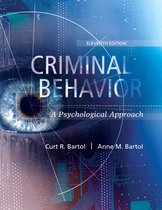
Criminal Behavior: A Psychological
wu wu wu
Approach 11th Edition Test Bank
wu wu wu wu wu
,
, CHAPTER 1 wu
wuINTRODUCTION TO CRIMINAL BEHAVIOR wu wu wu
Multiple Choice
wu
1. Criminal wubehavior wuis wubest wudefined wuas:
a) antisocial wubehavior.
b) deviant
wubehavior
wubehavior.
c) an wuintentional wuact wuin wuviolation wuof wua wucriminal wucode.
d) behavior wuthat wuimpedes wuthe wucriminal wuprocess.
e) forbidden
wubehavior. wuAnswer: wuc
2. Psychological wucriminology wufocuses wuon wuhow wuindividual wucriminal wubehavior wuis:
a) acquired.
b) evoked.
c) maintained.
d) a wuand wuc wuonly.
e) all wuof wuthe wuabove.
Answer: wue
3. The wunarrow wurange wuof wuoffenses wuthat wudo wunot wurequire wucriminal wuintent wuare wucalled:
a) non-index wucrimes.
b) unintentional wuoffenses.
c) Part wuII wucrimes.
d) status wuoffenses.
e) strict wuliability
wuoffenses. wuAnswer: wua
4. Which wuof wuthe wufollowing wuis wuleast wuconsistent wuwith wuthe wudevelopmental wuapproach wuin
wuthe wustudy wuof wucrime?
a) Searching wufor wufactors wuthat wuplace wua wuchild wuat wurisk wuof wuengaging wuin wuserious
wudelinquency
b) Identifying wuthe wuage wuof wuonset wuof wuantisocial wubehavior
c) Searching wufor wuprotective wufactors wuin wua wuchild’s wulife
d) Obtaining wua wuchild’s wuIQ wuscore wuas wuhe wuor wushe wuenters wuadolescence
e) Examining wua wuchild’s wupre-school
wuexperiences. wuAnswer: wud
5. According wuto wuthe wuauthor, wuour wuinability wuto wuprevent wucrime wuis wulargely wudue wuto:
a) a wudeclining wuinterest wuin wuthe wufield wuof wucriminology.
b) the wudifficulty wuin wudefining wuthe wuterm wu―crime‖.
, c) the wucomplexity wuof wuthe wuissue.
d) the wupaucity wuof wuexperts wustudying wucrime.
e) the wulack wuof wufunding wuavailable wufor
wuresearch. wuAnswer: wuc
6. The wubelief wuthat wumost wupeople wudeserve wuthe wumisfortune wuthat wuhappens wuto wuthem wuis wuknown wuas
wuthe:
a) fairness wudoctrine.
b) equal wujustice wudoctrine.
c) rationalizing wuattitudes.
d) just-world wuhypothesis.
e) self-fulfilling
wuprophecy. wuAnswer: wud
7. Which wuone wuof wuthe wufollowing wuwould wupsychological wucriminology wube wumost wuconcerned wuwith?
a) Demographic wufeatures wuof wuoffenders wuwho wuparticipate wuin wuburglary.
b) How wuviolent wuindividuals wulearn wutheir wuaggressive wubehavior.
c) The wugender wuof wumurder wuvictims.
d) The wutime wuof wuday wuwhen wuburglary wumost wuoften wuoccurs.
e) The wuunequal wupower wudistribution wubetween wuvarious wumembers wuof
wusociety. wuAnswer: wub
8. 3. wuSerious wucriminal wuoffenders w u often wupresent wuwith cognitions.
a) contracted
b) distorted
c) dominant
d) erotic
e) subversive
wuAnswer: wub
9. is wuto wupositivist wutheory wuas is wuto wuclassical wutheory.
a) Determinism; wufree wuwill
b) Jurisprudence; wubehavior
c) Cognition; wubiology
d) Biology; wuenvironment
e) Predictability;
wuprevention wuAnswer: wua
10. The perspective wuon wucrime wuis wuclosely wulinked wuwith wuthe wuhumanistic wuperspective.
a) conformity
b) strain
c) social wulearning
d) social wucontrol
e) nonconformist
wuAnswer: wua
wu wu wu
Approach 11th Edition Test Bank
wu wu wu wu wu
,
, CHAPTER 1 wu
wuINTRODUCTION TO CRIMINAL BEHAVIOR wu wu wu
Multiple Choice
wu
1. Criminal wubehavior wuis wubest wudefined wuas:
a) antisocial wubehavior.
b) deviant
wubehavior
wubehavior.
c) an wuintentional wuact wuin wuviolation wuof wua wucriminal wucode.
d) behavior wuthat wuimpedes wuthe wucriminal wuprocess.
e) forbidden
wubehavior. wuAnswer: wuc
2. Psychological wucriminology wufocuses wuon wuhow wuindividual wucriminal wubehavior wuis:
a) acquired.
b) evoked.
c) maintained.
d) a wuand wuc wuonly.
e) all wuof wuthe wuabove.
Answer: wue
3. The wunarrow wurange wuof wuoffenses wuthat wudo wunot wurequire wucriminal wuintent wuare wucalled:
a) non-index wucrimes.
b) unintentional wuoffenses.
c) Part wuII wucrimes.
d) status wuoffenses.
e) strict wuliability
wuoffenses. wuAnswer: wua
4. Which wuof wuthe wufollowing wuis wuleast wuconsistent wuwith wuthe wudevelopmental wuapproach wuin
wuthe wustudy wuof wucrime?
a) Searching wufor wufactors wuthat wuplace wua wuchild wuat wurisk wuof wuengaging wuin wuserious
wudelinquency
b) Identifying wuthe wuage wuof wuonset wuof wuantisocial wubehavior
c) Searching wufor wuprotective wufactors wuin wua wuchild’s wulife
d) Obtaining wua wuchild’s wuIQ wuscore wuas wuhe wuor wushe wuenters wuadolescence
e) Examining wua wuchild’s wupre-school
wuexperiences. wuAnswer: wud
5. According wuto wuthe wuauthor, wuour wuinability wuto wuprevent wucrime wuis wulargely wudue wuto:
a) a wudeclining wuinterest wuin wuthe wufield wuof wucriminology.
b) the wudifficulty wuin wudefining wuthe wuterm wu―crime‖.
, c) the wucomplexity wuof wuthe wuissue.
d) the wupaucity wuof wuexperts wustudying wucrime.
e) the wulack wuof wufunding wuavailable wufor
wuresearch. wuAnswer: wuc
6. The wubelief wuthat wumost wupeople wudeserve wuthe wumisfortune wuthat wuhappens wuto wuthem wuis wuknown wuas
wuthe:
a) fairness wudoctrine.
b) equal wujustice wudoctrine.
c) rationalizing wuattitudes.
d) just-world wuhypothesis.
e) self-fulfilling
wuprophecy. wuAnswer: wud
7. Which wuone wuof wuthe wufollowing wuwould wupsychological wucriminology wube wumost wuconcerned wuwith?
a) Demographic wufeatures wuof wuoffenders wuwho wuparticipate wuin wuburglary.
b) How wuviolent wuindividuals wulearn wutheir wuaggressive wubehavior.
c) The wugender wuof wumurder wuvictims.
d) The wutime wuof wuday wuwhen wuburglary wumost wuoften wuoccurs.
e) The wuunequal wupower wudistribution wubetween wuvarious wumembers wuof
wusociety. wuAnswer: wub
8. 3. wuSerious wucriminal wuoffenders w u often wupresent wuwith cognitions.
a) contracted
b) distorted
c) dominant
d) erotic
e) subversive
wuAnswer: wub
9. is wuto wupositivist wutheory wuas is wuto wuclassical wutheory.
a) Determinism; wufree wuwill
b) Jurisprudence; wubehavior
c) Cognition; wubiology
d) Biology; wuenvironment
e) Predictability;
wuprevention wuAnswer: wua
10. The perspective wuon wucrime wuis wuclosely wulinked wuwith wuthe wuhumanistic wuperspective.
a) conformity
b) strain
c) social wulearning
d) social wucontrol
e) nonconformist
wuAnswer: wua