
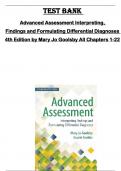
TEST BANK
Advanced Assessment Interpreting,
Findings and Formulating Differential Diagnoses
4th Edition by Mary Jo Goolsby All Chapters 1-22
, TABLE OF CONTENTS
T T
➢ ChapterT1.TAssessmentTandTClinicalTDecisionTMaking:TAnTOverview
➢ ChapterT2.TGenomicTAssessment:TInterpretingTFindingsTandTFormulatingTDifferentialTDiagnoses
➢ ChapterT3.TSkin
➢ ChapterT4.THead,TFace,TandTNeck
➢ ChapterT5.TTheTEye
➢ ChapterT6.TEar,TNose,TMouth,TandTThroat
➢ ChapterT7.TCardiacTandTPeripheralTVascularTSystems
➢ ChapterT8.TRespiratoryTSystem
➢ ChapterT9.TBreasts
➢ ChapterT10.TAbdomen
➢ ChapterT11.TGenitourinaryTSystem
➢ ChapterT12.TMaleTReproductiveTSystem
➢ ChapterT13.TFemaleTReproductiveTSystem
➢ ChapterT14.TMusculoskeletalTSystem
➢ ChapterT15.TNeurologicalTSystem
➢ ChapterT16.TNonspecificTComplaints
➢ ChapterT17.TPsychiatricTMentalTHealth
➢ ChapterT18.TPediatricTPatients
➢ ChapterT19.TPregnantTPatients
➢ ChapterT20.TAssessmentTofTtheTTransgenderTorTGenderTDiverseTAdult
➢ ChapterT21.TOlderTPatients
➢ ChapterT22.TPersonsTWithTDisabilities
, ➢ Chapter 1. Assessment and Clinical Decision Making: An Overview
T T T T T T T T
MultipleT Choice
IdentifyTtheTchoiceTthatTbestTcompletesTtheTstatementTorTanswersTtheTquestion.
T 1. WhichTtypeTofTclinicalTdecision-makingTisTmostTreliable?
A. Intuitive
B. Analytical
C. Experiential
D. Augenblick
T 2. WhichTofTtheTfollowingTisTfalse?TToTobtainTadequateThistory,Thealth-careTprovidersTmustTbe:
A. MethodicalTandTsystematic
B. AttentiveTtoTtheTpatient’sTverbalTandTnonverbalTlanguag
e
C. AbleTtoTaccuratelyTinterpretTtheTpatient’sTresponses
D. AdeptTatTreadingTintoTtheTpatient’sTstatements
T 3. EssentialTpartsTofTaThealthThistoryTincludeTallTofTtheTfollowingTexcept:
A. ChiefTcomplaint
B. HistoryTofTtheTpresentTillness
C. CurrentTvitalTsigns
D. AllTofTtheTaboveTareTessentialThistoryTcomponent
s
T 4. WhichTofTtheTfollowingTisTfalse?TWhileTperformingTtheTphysicalTexamination,TtheTexaminerTmustTbeTableTto:
A. DifferentiateTbetweenTnormalTandTabnormalTfindings
B. RecallTknowledgeTofTaTrangeTofTconditionsTandTtheirTassociatedTsignsTandTsympto
ms
C. RecognizeThowTcertainTconditionsTaffectTtheTresponseTtoTotherTconditions
D. ForeseeTunpredictableTfindings
T 5. TheTfollowingTisTtheTleastTreliableTsourceTofTinformationTforTdiagnosticTstatistics:
A. Evidence-basedTinvestigations
B. PrimaryTreportsTofTresearch
C. EstimationTbasedTonTaTprovider’sTexperienc
e
D. PublishedTmeta-analyses
T 6. TheTfollowingTcanTbeTusedTtoTassistTinTsoundTclinicalTdecision-making:
A. AlgorithmTpublishedTinTaTpeer-reviewedTjournalTarticle
B. ClinicalTpracticeTguidelines
C. Evidence-basedTresearch
D. AllTofTtheTabove
T 7. IfTaTdiagnosticTstudyThasThighTsensitivity,T thisTindicatesTa:
A. HighTpercentageTofTpersonsTwithTtheTgivenTconditionTwillThaveTanTabnormalTresul
t
B. LowTpercentageTofTpersonsTwithTtheTgivenTconditionTwillThaveTanTabnormalTresul
t
C. LowTlikelihoodTofTnormalTresultTinTpersonsTwithoutTaTgivenTcondition
D. NoneTofTtheTabove
T 8. IfTaTdiagnosticTstudyThasThighTspecificity,T thisTindicatesTa:
A. LowTpercentageTofThealthyTindividualsTwillTshowTaTnormalTresult
B. HighTpercentageTofThealthyTindividualsTwillTshowTaTnormalTresult
C. HighTpercentageTofTindividualsTwithTaTdisorderTwillTshowTaTnormalTresult
D. LowTpercentageTofTindividualsTwithTaTdisorderTwillTshowTanTabnormalTresul
t
T 9. ATlikelihoodTratioTaboveT1TindicatesTthatTaTdiagnosticTtestTshowingTa:
A. PositiveTresultTisTstronglyTassociatedTwithTtheTdisease
B. NegativeTresultTisTstronglyTassociatedTwithTabsenceTofTtheTdisea
se
C. PositiveTresultTisTweaklyTassociatedTwithTtheTdisease
D. NegativeTresultTisTweaklyTassociatedTwithTabsenceTofTtheTdiseas
e
, T 10. WhichTofTtheTfollowingTclinicalTreasoningTtoolsTisTdefinedTasTevidence-basedTresourceTbasedTonTmathematicalTmodeling
toTexpressTtheTlikelihoodTofTaTconditionTinTselectTsituations,Tsettings,Tand/orTpatients?
Advanced Assessment Interpreting,
Findings and Formulating Differential Diagnoses
4th Edition by Mary Jo Goolsby All Chapters 1-22
, TABLE OF CONTENTS
T T
➢ ChapterT1.TAssessmentTandTClinicalTDecisionTMaking:TAnTOverview
➢ ChapterT2.TGenomicTAssessment:TInterpretingTFindingsTandTFormulatingTDifferentialTDiagnoses
➢ ChapterT3.TSkin
➢ ChapterT4.THead,TFace,TandTNeck
➢ ChapterT5.TTheTEye
➢ ChapterT6.TEar,TNose,TMouth,TandTThroat
➢ ChapterT7.TCardiacTandTPeripheralTVascularTSystems
➢ ChapterT8.TRespiratoryTSystem
➢ ChapterT9.TBreasts
➢ ChapterT10.TAbdomen
➢ ChapterT11.TGenitourinaryTSystem
➢ ChapterT12.TMaleTReproductiveTSystem
➢ ChapterT13.TFemaleTReproductiveTSystem
➢ ChapterT14.TMusculoskeletalTSystem
➢ ChapterT15.TNeurologicalTSystem
➢ ChapterT16.TNonspecificTComplaints
➢ ChapterT17.TPsychiatricTMentalTHealth
➢ ChapterT18.TPediatricTPatients
➢ ChapterT19.TPregnantTPatients
➢ ChapterT20.TAssessmentTofTtheTTransgenderTorTGenderTDiverseTAdult
➢ ChapterT21.TOlderTPatients
➢ ChapterT22.TPersonsTWithTDisabilities
, ➢ Chapter 1. Assessment and Clinical Decision Making: An Overview
T T T T T T T T
MultipleT Choice
IdentifyTtheTchoiceTthatTbestTcompletesTtheTstatementTorTanswersTtheTquestion.
T 1. WhichTtypeTofTclinicalTdecision-makingTisTmostTreliable?
A. Intuitive
B. Analytical
C. Experiential
D. Augenblick
T 2. WhichTofTtheTfollowingTisTfalse?TToTobtainTadequateThistory,Thealth-careTprovidersTmustTbe:
A. MethodicalTandTsystematic
B. AttentiveTtoTtheTpatient’sTverbalTandTnonverbalTlanguag
e
C. AbleTtoTaccuratelyTinterpretTtheTpatient’sTresponses
D. AdeptTatTreadingTintoTtheTpatient’sTstatements
T 3. EssentialTpartsTofTaThealthThistoryTincludeTallTofTtheTfollowingTexcept:
A. ChiefTcomplaint
B. HistoryTofTtheTpresentTillness
C. CurrentTvitalTsigns
D. AllTofTtheTaboveTareTessentialThistoryTcomponent
s
T 4. WhichTofTtheTfollowingTisTfalse?TWhileTperformingTtheTphysicalTexamination,TtheTexaminerTmustTbeTableTto:
A. DifferentiateTbetweenTnormalTandTabnormalTfindings
B. RecallTknowledgeTofTaTrangeTofTconditionsTandTtheirTassociatedTsignsTandTsympto
ms
C. RecognizeThowTcertainTconditionsTaffectTtheTresponseTtoTotherTconditions
D. ForeseeTunpredictableTfindings
T 5. TheTfollowingTisTtheTleastTreliableTsourceTofTinformationTforTdiagnosticTstatistics:
A. Evidence-basedTinvestigations
B. PrimaryTreportsTofTresearch
C. EstimationTbasedTonTaTprovider’sTexperienc
e
D. PublishedTmeta-analyses
T 6. TheTfollowingTcanTbeTusedTtoTassistTinTsoundTclinicalTdecision-making:
A. AlgorithmTpublishedTinTaTpeer-reviewedTjournalTarticle
B. ClinicalTpracticeTguidelines
C. Evidence-basedTresearch
D. AllTofTtheTabove
T 7. IfTaTdiagnosticTstudyThasThighTsensitivity,T thisTindicatesTa:
A. HighTpercentageTofTpersonsTwithTtheTgivenTconditionTwillThaveTanTabnormalTresul
t
B. LowTpercentageTofTpersonsTwithTtheTgivenTconditionTwillThaveTanTabnormalTresul
t
C. LowTlikelihoodTofTnormalTresultTinTpersonsTwithoutTaTgivenTcondition
D. NoneTofTtheTabove
T 8. IfTaTdiagnosticTstudyThasThighTspecificity,T thisTindicatesTa:
A. LowTpercentageTofThealthyTindividualsTwillTshowTaTnormalTresult
B. HighTpercentageTofThealthyTindividualsTwillTshowTaTnormalTresult
C. HighTpercentageTofTindividualsTwithTaTdisorderTwillTshowTaTnormalTresult
D. LowTpercentageTofTindividualsTwithTaTdisorderTwillTshowTanTabnormalTresul
t
T 9. ATlikelihoodTratioTaboveT1TindicatesTthatTaTdiagnosticTtestTshowingTa:
A. PositiveTresultTisTstronglyTassociatedTwithTtheTdisease
B. NegativeTresultTisTstronglyTassociatedTwithTabsenceTofTtheTdisea
se
C. PositiveTresultTisTweaklyTassociatedTwithTtheTdisease
D. NegativeTresultTisTweaklyTassociatedTwithTabsenceTofTtheTdiseas
e
, T 10. WhichTofTtheTfollowingTclinicalTreasoningTtoolsTisTdefinedTasTevidence-basedTresourceTbasedTonTmathematicalTmodeling
toTexpressTtheTlikelihoodTofTaTconditionTinTselectTsituations,Tsettings,Tand/orTpatients?


