

NURS 6030 Exam 3 – Cardiovascular Questions With
Complete Solutions
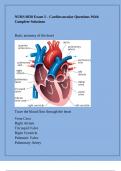
Basic anatomy of the heart
Trace the blood flow through the heart
Vena Cava
Right Atrium
Tricuspid Valve
Right Ventricle
Pulmonic Valve
Pulmonary Artery
,Pulmonary Vein
Left Atrium
Mitral Valve
Left Ventricle
Aortic Valve
Aorta
Name the cardiac valves
mitral (L side after atrium)
tricuspid (R side after atrium)
pulmonic (R side after ventricle)
aortic (L side after ventricle)
acute coronary syndrome (ACS)
sudden symptoms of insufficient blood supply to the heart
indicating unstable angina or acute MI
Contractility
ability to shorten forcibly when stimulated
Preload
volume of blood in ventricles at end of diastole
Afterload
the amount of resistance to ejection of blood from the ventricle
Cardiac Output (CO)
, measurement of the amount of blood ejected per minute from
either ventricle of the heart
echocardiogram
ultrasound of the heart
electrocardiogram
A recording of the electrical activity of the heart
Patho and s/s of Left sided heart failure.
Patho of HF -
- When the heart no longer functions as a pump.
Left sided Heart Failure -
- HOW IT SHOULD WORK - Left side of the heart receives
oxygenated blood from the lungs and delivers that blood to
the body.
- If this side LEFT side fails - no or not enough oxygenated
blood gets to the body (decrease blood to the body.)
- If blood doesn't move out into the body, it starts to back up into
the lungs. Fluid build up in the lungs - Pulmonary Edema! More
fluid in lungs and it's hard for gases to exchange.
- Brain and Kidneys try to compensate for lack of O2. RAAS
system activates (raise BP, hold onto urine/fluids to increase
fluid volume)
Complete Solutions
Basic anatomy of the heart
Trace the blood flow through the heart
Vena Cava
Right Atrium
Tricuspid Valve
Right Ventricle
Pulmonic Valve
Pulmonary Artery
,Pulmonary Vein
Left Atrium
Mitral Valve
Left Ventricle
Aortic Valve
Aorta
Name the cardiac valves
mitral (L side after atrium)
tricuspid (R side after atrium)
pulmonic (R side after ventricle)
aortic (L side after ventricle)
acute coronary syndrome (ACS)
sudden symptoms of insufficient blood supply to the heart
indicating unstable angina or acute MI
Contractility
ability to shorten forcibly when stimulated
Preload
volume of blood in ventricles at end of diastole
Afterload
the amount of resistance to ejection of blood from the ventricle
Cardiac Output (CO)
, measurement of the amount of blood ejected per minute from
either ventricle of the heart
echocardiogram
ultrasound of the heart
electrocardiogram
A recording of the electrical activity of the heart
Patho and s/s of Left sided heart failure.
Patho of HF -
- When the heart no longer functions as a pump.
Left sided Heart Failure -
- HOW IT SHOULD WORK - Left side of the heart receives
oxygenated blood from the lungs and delivers that blood to
the body.
- If this side LEFT side fails - no or not enough oxygenated
blood gets to the body (decrease blood to the body.)
- If blood doesn't move out into the body, it starts to back up into
the lungs. Fluid build up in the lungs - Pulmonary Edema! More
fluid in lungs and it's hard for gases to exchange.
- Brain and Kidneys try to compensate for lack of O2. RAAS
system activates (raise BP, hold onto urine/fluids to increase
fluid volume)


