

INFLUENCES ON BUSINESS ENVIRONMENTS
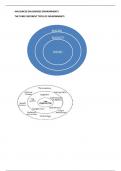
THE THREE DIFFERENT TYPES OF ENVIRONMENTS
MACRO
MARKET
MICRO
,MICRO ENVIRONMENT
The enterprise itself. Management of business controls the variables (a factor that can change
in quantity, quality and size, and must be taken into account before any decisions are made) or
factors which influence the business from within.
Variables include:
● Mission
● Objectives
● Management structure
● Resources
● Organizational culture
This environment is often referred to as the decision-making environment. Management has
complete control over how things are done.
The business mission and objectives
Vision – tries to predict what the future would look like; it reflects the dream of where the
business will find itself somewhere in the future.
Mission Statement – shows what you do best every day in the business and how you go about
doing it.
A vision is essential for the mission statement and business objective. Helps managers to think
about how they are going to lead their business into the future.
A mission statement reflects key elements such as: what type of products or services the
business wants to provide; who the customers are; what drives the business; how it will do
business and what important values it represents. Management is in control of the mission
statement and must ensure that it reflects all the above key elements and business values at all
times.
Business objectives are clearly defined targets which management can achieve with proper
planning. Management again has total control over its objectives. It has the power and
influence to diversify their objectives as follows:
● Economic objectives – includes making a profit or increasing the profit
● Social objectives – to improve the welfare of society by getting involved in community
projects
● Human objectives – includes providing employees with reasonable remuneration and a
safe working environment
● National objectives – develop and produce products locally to support South Africa’s
economy in general
,MANAGEMENT STRUCTURE (ORGANISATIONAL STRUCTURE)
Organisational structure provides a framework for managers to show division of
responsibilities. It will assist mangers to maintain control over the business as a whole. Top
management need to choose and adapt a structure that best fits business objectives and needs.
Traditional structures include:
FLAT ORGANISATIONAL STRUCTURE:
Has only a few layers or just one layer of management. It is suitable for new entrepreneurial
and small businesses as it enables management to have total control over the growth and
development of the business.
FUNCTIONAL ORGANISATION STRUCTURE (HIERARCHICAL ORGANISATIONAL STRUCTURE):
Employees are ranked at different levels within the organization. This structured focuses on
the eight business functions, namely: Marketing, Finance and Auditing, Supply Chain or
Procurement, Information Technology or Business Technology, Human Resources, Public
Relations, Management and Administration, and Operations. Each group of employees have
their own manager. Suitable for small, medium and large-sized businesses.
MATRIX ORGANISATIONAL STRUCTURE:
Is mainly used when different projects must be completed. Construction companies use
employees from different departments and allocate specific projects to them. The project
manager is the team leader and is responsible for completing the project within a specific time
and budget.
PRODUCT ORGANISATIONAL STRUCTURE:
Is organised according to different products and is suitable for department stores.
GEOGRAPHICAL STRUCTURE:
Is organised by geographic areas or regions. Each region has a manager overseeing the entire
business operation. The regional manager reports to the head office.
RESOURCES
Management has complete control over the resources needed for the day-to-day functioning of
the business. It has little or no control over the suppliers of the resources, but can influence
them. Resources can be grouped as follows:
● Physical resources: include machines, equipment and stock. The person who controls
the physical resources is known as the procurement manager. It includes stock control
and quality control as well as internal audits.
● Financial resources: include all the long-term and short-term capital needs of the
business. Management ensures there is sufficient cash at all times to pay creditors.
, Management has complete control over the cash, payments and the planning of long-
term capital needs of the business.
● Human resources: these are the people who work for an organisation. The control of
human resources involves proper selection and placement of employees, measuring
employee performance and establishing remuneration levels.
● Information resources: management can control who has access to sources of
information – both electronic and hard copy. Electronic resources are usually stored on
a network drive and certain individuals are given access to it. Only top management will
have access to strategic business decisions.
CULTURE OF THE ORGANISATION
Organisational culture: controls and influences the way in which business is conducted.
Culture can be defined as certain characteristics, attitudes and beliefs that distinguish any
group in society from another. Beliefs and value systems define the culture within an
organisation. Organisational culture controls and influences the way in which business is
conducted and answers to the question of “how we do things around here”. Is joint behaviour
of people using the business vision, mission, shared values, beliefs, habits, working language,
systems and symbols. Linked to all processes and technologies.
THE MARKET ENVIRONMENT
The business has limited direct control over these variables, it can influence the environment in
which these variables are present:
● Market
● Suppliers
● Intermediaries
● Competitors
● Trade unions
● Customers
THE THREE DIFFERENT TYPES OF ENVIRONMENTS
MACRO
MARKET
MICRO
,MICRO ENVIRONMENT
The enterprise itself. Management of business controls the variables (a factor that can change
in quantity, quality and size, and must be taken into account before any decisions are made) or
factors which influence the business from within.
Variables include:
● Mission
● Objectives
● Management structure
● Resources
● Organizational culture
This environment is often referred to as the decision-making environment. Management has
complete control over how things are done.
The business mission and objectives
Vision – tries to predict what the future would look like; it reflects the dream of where the
business will find itself somewhere in the future.
Mission Statement – shows what you do best every day in the business and how you go about
doing it.
A vision is essential for the mission statement and business objective. Helps managers to think
about how they are going to lead their business into the future.
A mission statement reflects key elements such as: what type of products or services the
business wants to provide; who the customers are; what drives the business; how it will do
business and what important values it represents. Management is in control of the mission
statement and must ensure that it reflects all the above key elements and business values at all
times.
Business objectives are clearly defined targets which management can achieve with proper
planning. Management again has total control over its objectives. It has the power and
influence to diversify their objectives as follows:
● Economic objectives – includes making a profit or increasing the profit
● Social objectives – to improve the welfare of society by getting involved in community
projects
● Human objectives – includes providing employees with reasonable remuneration and a
safe working environment
● National objectives – develop and produce products locally to support South Africa’s
economy in general
,MANAGEMENT STRUCTURE (ORGANISATIONAL STRUCTURE)
Organisational structure provides a framework for managers to show division of
responsibilities. It will assist mangers to maintain control over the business as a whole. Top
management need to choose and adapt a structure that best fits business objectives and needs.
Traditional structures include:
FLAT ORGANISATIONAL STRUCTURE:
Has only a few layers or just one layer of management. It is suitable for new entrepreneurial
and small businesses as it enables management to have total control over the growth and
development of the business.
FUNCTIONAL ORGANISATION STRUCTURE (HIERARCHICAL ORGANISATIONAL STRUCTURE):
Employees are ranked at different levels within the organization. This structured focuses on
the eight business functions, namely: Marketing, Finance and Auditing, Supply Chain or
Procurement, Information Technology or Business Technology, Human Resources, Public
Relations, Management and Administration, and Operations. Each group of employees have
their own manager. Suitable for small, medium and large-sized businesses.
MATRIX ORGANISATIONAL STRUCTURE:
Is mainly used when different projects must be completed. Construction companies use
employees from different departments and allocate specific projects to them. The project
manager is the team leader and is responsible for completing the project within a specific time
and budget.
PRODUCT ORGANISATIONAL STRUCTURE:
Is organised according to different products and is suitable for department stores.
GEOGRAPHICAL STRUCTURE:
Is organised by geographic areas or regions. Each region has a manager overseeing the entire
business operation. The regional manager reports to the head office.
RESOURCES
Management has complete control over the resources needed for the day-to-day functioning of
the business. It has little or no control over the suppliers of the resources, but can influence
them. Resources can be grouped as follows:
● Physical resources: include machines, equipment and stock. The person who controls
the physical resources is known as the procurement manager. It includes stock control
and quality control as well as internal audits.
● Financial resources: include all the long-term and short-term capital needs of the
business. Management ensures there is sufficient cash at all times to pay creditors.
, Management has complete control over the cash, payments and the planning of long-
term capital needs of the business.
● Human resources: these are the people who work for an organisation. The control of
human resources involves proper selection and placement of employees, measuring
employee performance and establishing remuneration levels.
● Information resources: management can control who has access to sources of
information – both electronic and hard copy. Electronic resources are usually stored on
a network drive and certain individuals are given access to it. Only top management will
have access to strategic business decisions.
CULTURE OF THE ORGANISATION
Organisational culture: controls and influences the way in which business is conducted.
Culture can be defined as certain characteristics, attitudes and beliefs that distinguish any
group in society from another. Beliefs and value systems define the culture within an
organisation. Organisational culture controls and influences the way in which business is
conducted and answers to the question of “how we do things around here”. Is joint behaviour
of people using the business vision, mission, shared values, beliefs, habits, working language,
systems and symbols. Linked to all processes and technologies.
THE MARKET ENVIRONMENT
The business has limited direct control over these variables, it can influence the environment in
which these variables are present:
● Market
● Suppliers
● Intermediaries
● Competitors
● Trade unions
● Customers


