1
Vector Fields on Manifolds
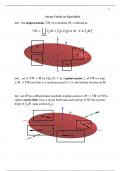
Def. The tangent bundle, 𝑇𝑀 , of a manifold, 𝑀, is defined as:
𝑇𝑀 = ⋃ 𝑇𝑝 𝑀 = {(𝑝, 𝑋)|𝑝 ∈ 𝑀 , 𝑋 ∈ 𝑇𝑝 𝑀}
𝑝∈𝑀
𝑀
𝑇𝑝 𝑀
𝑝
Def. Let 𝜋: 𝑇𝑀 → 𝑀 by 𝜋(𝑝, 𝑋) = 𝑝. A global section, 𝑠, of 𝑇𝑀 is a map
𝑠: 𝑀 → 𝑇𝑀 such that 𝑠 is continuous and 𝜋 ∘ 𝑠 is the identity function on 𝑀.
Def. Let 𝑀 be a differentiable manifold. A global section 𝑠: 𝑀 → 𝑇𝑀 of 𝑇𝑀 is
called a vector field. Thus, a vector field maps each point 𝑝 ∈ 𝑀 into a vector
𝑋(𝑝) ∈ 𝑇𝑝 𝑀 (also written 𝑋𝑝 ).
𝑀
𝑝 𝑋(𝑝)
, 2
Let ⃗Φ
⃗⃗ (𝑥 1 , … , 𝑥 𝑛 ) be a parameterization of a manifold 𝑀. Then for each point
⃗⃗⃗
𝜕Φ ⃗⃗⃗
𝜕Φ
𝑝 ∈ 𝑀, the tangent space 𝑇𝑝 𝑀 has a basis { 1| , … , | }, which we can
𝜕𝑥 𝜕𝑥 𝑛
𝑝 𝑝
𝜕 𝜕
write as {𝜕1 , … , 𝜕𝑛 } or { ,…, }. Thus we can express any vector field on
𝜕𝑥 1 𝜕𝑥 𝑛
𝑀 as:
𝑋𝑝 = 𝑎1 (𝑝)𝜕1 + ⋯ + 𝑎𝑛 (𝑝)𝜕𝑛 ; 𝑝 ∈ 𝑀
𝜕
= ∑𝑛𝑖=1 𝑎𝑖 (𝑝)
𝜕𝑥𝑖
which we can represent in Einstein notation as 𝑋 = 𝑎𝑖 𝜕𝑖 .
Thus we can think of a vector field on 𝑀 as a map, 𝑋, from the set of
continuously differentiable functions on 𝑀, 𝐶 1 (𝑀, ℝ), into 𝐶 1 (𝑀, ℝ) by:
𝜕
𝑋(𝑓)(𝑝) = ∑𝑛𝑖=1 𝑎𝑖 (𝑝) (𝑓)(𝑝).
𝜕𝑥 𝑖
Ex. Let 𝑥 1 , 𝑥 2 be local coordinates on the manifold, 𝑀, parameterized by
⃗Φ
⃗⃗ (𝑥 1 , 𝑥 2 ) = (𝑥 1 , 𝑥 2 , (𝑥 1 )2 + (𝑥 2 )2 ).
Suppose 𝑓 ∈ 𝐶 1 (𝑀, ℝ) is given by
𝑓 (𝑥 1 , 𝑥 2 , (𝑥 1 )2 + (𝑥 2 )2 ) = ((𝑥 1 )2 + (𝑥 2 )2 )2 + (𝑥 1 )(𝑥 2 ).
Let 𝑋 be a vector field on 𝑀 given by 𝑋 = (𝑥 1 + 𝑥 2 )𝜕1 − 𝑥 2 𝜕2 .
Find 𝑋(𝑓).
𝜕 𝜕
𝑋 (𝑓) = ((𝑥 1 + 𝑥 2 )𝜕1 − 𝑥 2 𝜕2 )(𝑓) = (𝑥 1 + 𝑥 2 ) (𝑓) − 𝑥 2 (𝑓)
𝜕𝑥 1 𝜕𝑥 2
= (𝑥 1 + 𝑥 2 )[2((𝑥 1 )2 + (𝑥 2 )2 )(2𝑥 1 ) + 𝑥 2 ]
−𝑥 2 [2((𝑥 1 )2 + (𝑥 2 )2 )(2𝑥 2 ) + 𝑥 1 ]
= 4((𝑥 1 )2 + (𝑥 2 )2 )(𝑥 1 (𝑥 1 + 𝑥 2 ) − (𝑥 2 )2 ) + (𝑥 2 )2 .
Vector Fields on Manifolds
Def. The tangent bundle, 𝑇𝑀 , of a manifold, 𝑀, is defined as:
𝑇𝑀 = ⋃ 𝑇𝑝 𝑀 = {(𝑝, 𝑋)|𝑝 ∈ 𝑀 , 𝑋 ∈ 𝑇𝑝 𝑀}
𝑝∈𝑀
𝑀
𝑇𝑝 𝑀
𝑝
Def. Let 𝜋: 𝑇𝑀 → 𝑀 by 𝜋(𝑝, 𝑋) = 𝑝. A global section, 𝑠, of 𝑇𝑀 is a map
𝑠: 𝑀 → 𝑇𝑀 such that 𝑠 is continuous and 𝜋 ∘ 𝑠 is the identity function on 𝑀.
Def. Let 𝑀 be a differentiable manifold. A global section 𝑠: 𝑀 → 𝑇𝑀 of 𝑇𝑀 is
called a vector field. Thus, a vector field maps each point 𝑝 ∈ 𝑀 into a vector
𝑋(𝑝) ∈ 𝑇𝑝 𝑀 (also written 𝑋𝑝 ).
𝑀
𝑝 𝑋(𝑝)
, 2
Let ⃗Φ
⃗⃗ (𝑥 1 , … , 𝑥 𝑛 ) be a parameterization of a manifold 𝑀. Then for each point
⃗⃗⃗
𝜕Φ ⃗⃗⃗
𝜕Φ
𝑝 ∈ 𝑀, the tangent space 𝑇𝑝 𝑀 has a basis { 1| , … , | }, which we can
𝜕𝑥 𝜕𝑥 𝑛
𝑝 𝑝
𝜕 𝜕
write as {𝜕1 , … , 𝜕𝑛 } or { ,…, }. Thus we can express any vector field on
𝜕𝑥 1 𝜕𝑥 𝑛
𝑀 as:
𝑋𝑝 = 𝑎1 (𝑝)𝜕1 + ⋯ + 𝑎𝑛 (𝑝)𝜕𝑛 ; 𝑝 ∈ 𝑀
𝜕
= ∑𝑛𝑖=1 𝑎𝑖 (𝑝)
𝜕𝑥𝑖
which we can represent in Einstein notation as 𝑋 = 𝑎𝑖 𝜕𝑖 .
Thus we can think of a vector field on 𝑀 as a map, 𝑋, from the set of
continuously differentiable functions on 𝑀, 𝐶 1 (𝑀, ℝ), into 𝐶 1 (𝑀, ℝ) by:
𝜕
𝑋(𝑓)(𝑝) = ∑𝑛𝑖=1 𝑎𝑖 (𝑝) (𝑓)(𝑝).
𝜕𝑥 𝑖
Ex. Let 𝑥 1 , 𝑥 2 be local coordinates on the manifold, 𝑀, parameterized by
⃗Φ
⃗⃗ (𝑥 1 , 𝑥 2 ) = (𝑥 1 , 𝑥 2 , (𝑥 1 )2 + (𝑥 2 )2 ).
Suppose 𝑓 ∈ 𝐶 1 (𝑀, ℝ) is given by
𝑓 (𝑥 1 , 𝑥 2 , (𝑥 1 )2 + (𝑥 2 )2 ) = ((𝑥 1 )2 + (𝑥 2 )2 )2 + (𝑥 1 )(𝑥 2 ).
Let 𝑋 be a vector field on 𝑀 given by 𝑋 = (𝑥 1 + 𝑥 2 )𝜕1 − 𝑥 2 𝜕2 .
Find 𝑋(𝑓).
𝜕 𝜕
𝑋 (𝑓) = ((𝑥 1 + 𝑥 2 )𝜕1 − 𝑥 2 𝜕2 )(𝑓) = (𝑥 1 + 𝑥 2 ) (𝑓) − 𝑥 2 (𝑓)
𝜕𝑥 1 𝜕𝑥 2
= (𝑥 1 + 𝑥 2 )[2((𝑥 1 )2 + (𝑥 2 )2 )(2𝑥 1 ) + 𝑥 2 ]
−𝑥 2 [2((𝑥 1 )2 + (𝑥 2 )2 )(2𝑥 2 ) + 𝑥 1 ]
= 4((𝑥 1 )2 + (𝑥 2 )2 )(𝑥 1 (𝑥 1 + 𝑥 2 ) − (𝑥 2 )2 ) + (𝑥 2 )2 .