

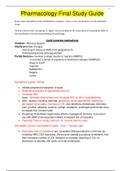
PHARMACOLOGY FINAL EXAM GUIDE (COMPLETE STUDY GUIDE) (UPDATED 2020)
Know major side effects of all classifications reviewed – focus on the classification not the individual drugs Ok that is all the hints I am giving Again I cannot emphasize the importance of knowing the MOA of the classification first and understanding the pathology. Lipid-Lowering medications Children—Nervous System Adultslifestyle changes First drug of choice HMG-CoA (pregnancy X) Child bearing bile acid sequestrant Partial Seizure- involves a single muscle or reaction-SIMPLE involves a series of reactions or emotional changes COMPLEX drugs to treat? Tegretol Gabapentin Keppra Lyrica Gemfibrozil (Lopid): Fibrate • Inhibits peripheral breakdown of lipids • Reduced production of triglycerides and LDL • Increases HDL Uses: decrease triglycerides and increased HDL by 25%, hyperlipidemia • ADE: nausea, vomiting, diarrhea, gallstones, acute appendicitis, impotence, decreased urine output, hematuria, UTI, viral infections, drowsiness, dizziness, rash, pruritus, alopecia, eczema, vertigo, headache, prolonged prothrombin time, increased liver function tests • Drug/drug: Potentiates hypotensive effects of ganglionic blockers. Concurrent use with HMG-CoA reductase inhibitor increased risk of myopathy • Teaching: Take on empty stomach, 30 minutes before meals Simvastatin (Zocor), Atorvastatin (Lipitor): Statin - *toxicity/ labs • Decreases rate of cholesterol pro, Lovastatin (Mevacor)duction in the liver by inhibiting HMG-COA reductase, the enzyme needed to produce cholesterol; liver then increases number of LDL receptors to increase recycling of LDL for production of steroids, bile acids, and cell membranes • Uses: first line for hyperlipidemia, taken with or without food, avoid grapefruit juice • ADE: Pregnancy category X. constipation, cramps, diarrhea, nausea, GI upset-mild and flatulence, headache, dizziness, blurred vision, fatigue, nightmares, insomnia, myalgia, skin rashes, pruritus elevated liver enzymes, liver dysfunction • Drug/drug: Digoxin and warfarin-increased serum levels and toxicities • Rhabdomyolysis (acute, sometimes fatal disease characterized by destruction of muscles, can lead to acute renal failure): increased risk when combined with erythromycin, cyclosporin, gemfibrozil, niacin, and antifungal medications • Labs: increased SGOT, activated clotting time, thrombocytopenia, transient eosinophilia • Teaching: take once a daybest with evening meal o Avoid grapefruit juiceincreased serum drug levels o With or without food o Child bearing women don’t take if pregnant Niacin (Nicobid, Slo-Niacin) - * side effects – how to reduce possible side effects • Vitamin B3, inhibits release of free fatty acids from adipose tissue • Increases rate of triglyceride removal from plasma • ADE: cutaneous flushing, pruritus, hyperpigmentation, abdominal discomfort, GI distress, tachycardia, hypotension, dizziness, blurred vision, glucose intolerance, hyperuricemia, hepatotoxicity • Teaching: Start with low dose, increase gradually, and take with meals. Aspirin or NSAID can decrease skin flushing. Cholestyramine (Questran): Bile acid sequestrant. Powder 1-6 times per day; dissolve in noncarbonated liquid or pureed fruit, do not stir (clumps) • Bind with bile, preventing the resorption of bile acids from intestines and increased excretion in the feces---stimulates hepatic synthesis of bile acids from cholesterol due to decreased bile acid pool---decreased cholesterol pool in liver---cholesterol biosynthesis and LDL receptors on liver surface increased---increased removal of LDL from bloodstream • Uses: Primary hyperlipidemia (with high cholesterol), relief of pruritus associated with partial biliary obstruction • ADE: Constipation, heartburn, nausea, belching, bloating (disappears with time), bleeding (decreased absorption of Vit K), headache, tinnitus, burnt odor to urine, Vit A and D deficiencies (decreased absorption), headache, anxiety, fatigue, drowsy • Teaching: Take with meals to decrease GI effects. Increase food, fiber and fluids to prevent constipation. Vitamin A and D supplements may be needed. Other drugs should be taken 1 hour before or 4-6 hours after, they interfere with absorption • Drug to drug reaction??- thyroid hormones, thiazide diuretics, digoxin, warfarin, thyroid hormones and croticosteroids Ezetimibe (Zetia): Cholesterol absorption inhibitor • Decreases absorption of dietary cholesterol in the brush border of the small intestines • Uses: adjunct to diet and exercise in lowering cholesterol; may be combined with HMG-CoA inhibitors or bile acid Sequestrant • ADE: Mild abdominal pain and diarrhea, headache, dizziness, fatigue, URI, back pain, muscle aches and pains Antiepileptic Medications (some do not have class, know type of seizure treated) Also called antiseizure or anticonvulsants • General seizures o Tonic clonic o Absence o Status epilepticus • Complex partial seizures • Complex/sensory emotional outburst, no memory • Simple partial specific seizure of one body part • Teaching: need to understand disorder and treatment, medic alert bracelet, avoid activities requiring alertness, no alcohol, do not stop abruptly • MOA unknown, several theories: alter movement of sodium, potassium, calcium, and magnesium. Raise seizure threshold in motor cortex. Decreases speed of nerve impulse conduction within neurons. Stabilizes nerve cells and prevent hyper excitability (depressed spread of seizure discharge from origin, decreased nerve conduction) • When taking a history need a good description of seizure from a witness, to include things such as loss of consciousness, aura present, precipitating factors, movement of arms, legs and entire body; eye movements; incontinence after seizure; memory of seizures. Carbamazepine (Tegretol) • First-line treatment for generalized tonic-clonic; complex partial and simple partial seizures; pain control (neuritic pain), trigeminal neuralgia; bipolar disorder. Contraindicated for absence and myoclonic seizure • ADE: lethargy, dizziness, ataxia, behavioral changes, blurred vision, bone marrow suppression; exfoliate dermatitis, erythema multiformis, Stevens-Johnson syndrome • Auto induction: increases own metabolism so may lower serum concentration of drug • ADE: drowsy, fatigue, weak, confusion, headache, insomnia, N/V/A, URI, hepatotoxicity and bone marrow depression Phenytoin (Dilantin)-toxicities, ADE, serum level 5-20 mcg/mL Hydantoin • Stabilize nerve membranes and limit spread from focus; may promote exit of sodium ions from cells, returning cell to stable resting membrane potential • Uses: tonic-clonic, status epilepticus; simple and complex partial; prevent and treat seizures after neurosurgery; antidysrrhythmic • ADE: lethargy, abnormal movement, mental confusion, nystagmic, blurred vision, double vision, gingival hyperplasia, ataxia, folate deficiency, blood dyscrasias, liver damage. Dilantin facies, gingival hyperplasia, acne, hirsutism, hypertrophy of subcutaneous facial tissues (Dilantin facies) • Toxicity: nystagmic, ataxia, dysarthia, encephalopathy o If it gets above 40 it will be VERY bad. Make sure IV site does not infiltrate o 20mcg/mLlateral nystagmus o 30 mcg/mL 45 degree lateral gaze nystagmus and ataxia o 40 mcg/mLdecreased mentation o 100 mcg/mLdeath o TREATMENT supportive o EARLY SYMPTOMS OF overdose/toxicity Unsteady gait, slurred speech, confusion, nausea, hypothermia, fever,hypotension, respiratory depression, coma TREATMENTsymptomatic TEACHING DO NOT DRINK ALCOHOL HERBAL-evening primrose/gingko Valproate (Depakote) –two major toxicities (It is in it’s own category) • MOA: increases GABA activity/reducing abnormal electrical activity • Use: complex partial seizure • Treat absence seizures, drug of choice for partial seizures, mania, migraines • ADE: hair loss, tremor, elevated liver enzymes, hepatotoxicity, pancreatitis (most serious), irregular menses, increased appetite, drowsiness, N/V, GI disturbances, weight gain • TERATOGENIC spina bifida • Children under 2 years old organic brain disease mental retardation • Many drug-drug interactions due to high protein binding and induction of microsomal enzymes Barbiturate: Phenobarbital (Luminal Sodium)withdrawal from dependency • Treatment of tonic-clonic seizures and partial seizures in adults and children; febrile seizures, status epilepticus and emergency control of acute seizures caused by eclampsia, tetanus, meningitis; also used as sedatives and hypnotics; anesthesia for short surgical procedures • ADE: sedation, CNS depression (lethargy, dizziness, hangover, paradoxical restlessness/excitement), respiratory depression, hypotension, bradycardia, withdrawal syndrome; tissue necrosis at injection site • Toxicityoverdose o Unsteady gait, slurred speech, confusion, jaundice, hypothermia, hypotension, respiratory depression and coma o Overdose-charcoal hemoperfusion may accelerate remoal o Treatment is symptom o Pregnancy D Teaching: No alcohol Oral contraceptive—barrier contraceptive Methadone-barbiturates enhance the metabolism of methadone and can lead to meth withdrawal Dilantin can decrease the level/effect FOOD—evening primrose, St. john’s wort, kava kava, gotu kola Ethosuximide (Zarontin)--Succinimide DOWNLOAD COMPLETE GUIDE
Document information
- Uploaded on
- April 13, 2020
- Number of pages
- 36
- Written in
- 2019/2020
- Type
- Study guide


