

1. your business
Building blocks digital strategy:
1.1. mission
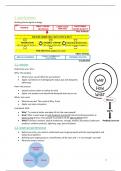
Determine your ‘why’:
Why= the purpose
What is your cause? What do you believe?
Apple: we believe in challenging the status que and doing this
differently
How= the process
Specific actions taken to realize the why
Apple: our products are beautifully designed and easy to use
What= the result
What do you do? The result of Why. Proof
Apple: we make computers
Voorbeeld: IKEA:
Why? ‘To create a better everyday life for the many people’
How? Offer a wide range of well-designed, functional home furnishing products at
prices so low that as many people as possible will be able to afford them’
What? furniture, kitchens, beds & mattresses, storage, textiles, decoration, bathroom
products, outdoor products, lightning, rugs, pots and plants.
1.2. target group-behaviour
Before you start, you need to understand your target group(s) and their psychographic and
behavioural patterns
Defining your target group as: male/female, 18-62 years old -> is not enough= too wide
What we need to look at:
1
,Segmentation criteria:
Trends:
Trend-spotting= spotting opportunities
o Trend-spotting tools:
Trend watching
Trending stories
Real-time Twitter trending
Google trends
Type of trends:
o Mega trends (10-50 years): substantial social, economic, political, environmental or
technological changes. Underlying forces for other trends (climate change)
o Sociocultural trends (5-10 years): sociological tendencies, the moral, how society
adapts to mega trends (environmental awakening)
o Consumer trends (2-5 years): changes in consumer lifestyle or behaviour (rethink
consumer patterns due to environmental awakening)
o Behavioural trends (months – 1 year): new practices with consumption or service,
technology usage (unpackaged goods)
o Hypes or fads: die out quickly after an initial peak or interest
o Industry related trends: look at the trends in your industry
Behaviour:
You must also uncover:
o What your target audience wants
o What they consider when making a buying decision
o What prices the find appropriate
o The likes and dislikes (frustrations) or pros and cons of current products or services
o Things they would like to see improved, what are their expectations related to your
sector – product
o Where do they find inspiration: friends, websites, media (social media TikTok…?)
Get consumer insights about the behaviour and thinking of your (potential) customers
2
, Interviews:
o People of your target group: in order to better understand their needs, wants,
feelings, drivers …
o Internal investigation: interview your colleagues from the sales department,
aftersales …: people who are in contact with the target group
Social listening:
o What do customers say about your brand? Business?
o Sentimental analysis
Metion.com
Brand24.com
o Follow # of your company, business
o Reviews Google, Facebook, website, forums …
Target group:
Once you have done your desk research, interviews and social listening, you can visualise
your insights and conclusions
A popular way to do this, is drawing up a Buying persona
Buying personas are based on ‘profound research’: desk research, trend analysis, interviews,
social listening
1.3. competitive analysis
Describe in which market/category you are playing
Identify your top 3 competitors
Research their
o Mission: what is their ‘why’?
o Pricing policy: sales, promotions, discounts on their product or services
o Product and services features: see website, social media, press releases or press
mentions, get insights into breakthroughs, new products
o Place: which selling channels, online and offline (mystery shopping POP)
o Promotion= communication:
Digital media channels, tools, tactics: POE-model
Offline: sponsoring, PR, Direct Marketing, above-the-line media
o Target group:
Segmentation criteria
Social listening: review on Google My Business, Facebook, website,
Monitor and follow your competitors
o Subscribe to their blogs and newsletters
o Similarsites.com: discover sites and topics similar to yours
o Follow.net: keep track of your competitors
o Visit their website and shops
o Mention.com: alerts you to mention about your brands across the webs and social
channels
Create conclusions
o SWOT-analysis
o Value curve to determine your pops (point of parity) and pods (points of
differentiation)
1.4. positioning – brand identity
In a positioning statement marketeers try to summarize the whole positioning in one
sentence
By doing so marketeers are forced to make choices and this results in unambiguity
3
, All stakeholders have to agree to this statement
In the end it is a real work instrument, this sentence can be used in creative briefings, during
meetings, …
This phrase has a clear structure
Positioning statement:
To Target group (segmentation criteria + target market need)
(The Product name)
Is Product category
From Brand
That Offers you the customer promise (USP or ESP= main benefit that differentiates
your offering from the competitors)
Because Reasons to believe (reason why your target group should believe your
differentiating customer promise)
The brand character is Brand personality traits
Brand character: if your brand was a person, what kind of personality would they have. There
are different frameworks
Voorbeeld: positioning statement:
Before you can write your positioning statement, it is important to determine:
o Who is your target group
o Who are your competitors: your points of parity and differentiation
You can write a positioning statement for your company, but you can also write positioning
statement for your different products/brands within your company
Focus on 1 USP and/or ESP:
Focus on dominant USP or ESP that is relevant for your target group and is different from
your competitor, stay focused. Example:
o Price, accessibility, product, service, quality, experience
Brand visual identity:
Brand visual identity is a set of characteristics that define the look and the feel of a brand
across channels, it includes these element
o Logo, colors, typography, photography
4
Building blocks digital strategy:
1.1. mission
Determine your ‘why’:
Why= the purpose
What is your cause? What do you believe?
Apple: we believe in challenging the status que and doing this
differently
How= the process
Specific actions taken to realize the why
Apple: our products are beautifully designed and easy to use
What= the result
What do you do? The result of Why. Proof
Apple: we make computers
Voorbeeld: IKEA:
Why? ‘To create a better everyday life for the many people’
How? Offer a wide range of well-designed, functional home furnishing products at
prices so low that as many people as possible will be able to afford them’
What? furniture, kitchens, beds & mattresses, storage, textiles, decoration, bathroom
products, outdoor products, lightning, rugs, pots and plants.
1.2. target group-behaviour
Before you start, you need to understand your target group(s) and their psychographic and
behavioural patterns
Defining your target group as: male/female, 18-62 years old -> is not enough= too wide
What we need to look at:
1
,Segmentation criteria:
Trends:
Trend-spotting= spotting opportunities
o Trend-spotting tools:
Trend watching
Trending stories
Real-time Twitter trending
Google trends
Type of trends:
o Mega trends (10-50 years): substantial social, economic, political, environmental or
technological changes. Underlying forces for other trends (climate change)
o Sociocultural trends (5-10 years): sociological tendencies, the moral, how society
adapts to mega trends (environmental awakening)
o Consumer trends (2-5 years): changes in consumer lifestyle or behaviour (rethink
consumer patterns due to environmental awakening)
o Behavioural trends (months – 1 year): new practices with consumption or service,
technology usage (unpackaged goods)
o Hypes or fads: die out quickly after an initial peak or interest
o Industry related trends: look at the trends in your industry
Behaviour:
You must also uncover:
o What your target audience wants
o What they consider when making a buying decision
o What prices the find appropriate
o The likes and dislikes (frustrations) or pros and cons of current products or services
o Things they would like to see improved, what are their expectations related to your
sector – product
o Where do they find inspiration: friends, websites, media (social media TikTok…?)
Get consumer insights about the behaviour and thinking of your (potential) customers
2
, Interviews:
o People of your target group: in order to better understand their needs, wants,
feelings, drivers …
o Internal investigation: interview your colleagues from the sales department,
aftersales …: people who are in contact with the target group
Social listening:
o What do customers say about your brand? Business?
o Sentimental analysis
Metion.com
Brand24.com
o Follow # of your company, business
o Reviews Google, Facebook, website, forums …
Target group:
Once you have done your desk research, interviews and social listening, you can visualise
your insights and conclusions
A popular way to do this, is drawing up a Buying persona
Buying personas are based on ‘profound research’: desk research, trend analysis, interviews,
social listening
1.3. competitive analysis
Describe in which market/category you are playing
Identify your top 3 competitors
Research their
o Mission: what is their ‘why’?
o Pricing policy: sales, promotions, discounts on their product or services
o Product and services features: see website, social media, press releases or press
mentions, get insights into breakthroughs, new products
o Place: which selling channels, online and offline (mystery shopping POP)
o Promotion= communication:
Digital media channels, tools, tactics: POE-model
Offline: sponsoring, PR, Direct Marketing, above-the-line media
o Target group:
Segmentation criteria
Social listening: review on Google My Business, Facebook, website,
Monitor and follow your competitors
o Subscribe to their blogs and newsletters
o Similarsites.com: discover sites and topics similar to yours
o Follow.net: keep track of your competitors
o Visit their website and shops
o Mention.com: alerts you to mention about your brands across the webs and social
channels
Create conclusions
o SWOT-analysis
o Value curve to determine your pops (point of parity) and pods (points of
differentiation)
1.4. positioning – brand identity
In a positioning statement marketeers try to summarize the whole positioning in one
sentence
By doing so marketeers are forced to make choices and this results in unambiguity
3
, All stakeholders have to agree to this statement
In the end it is a real work instrument, this sentence can be used in creative briefings, during
meetings, …
This phrase has a clear structure
Positioning statement:
To Target group (segmentation criteria + target market need)
(The Product name)
Is Product category
From Brand
That Offers you the customer promise (USP or ESP= main benefit that differentiates
your offering from the competitors)
Because Reasons to believe (reason why your target group should believe your
differentiating customer promise)
The brand character is Brand personality traits
Brand character: if your brand was a person, what kind of personality would they have. There
are different frameworks
Voorbeeld: positioning statement:
Before you can write your positioning statement, it is important to determine:
o Who is your target group
o Who are your competitors: your points of parity and differentiation
You can write a positioning statement for your company, but you can also write positioning
statement for your different products/brands within your company
Focus on 1 USP and/or ESP:
Focus on dominant USP or ESP that is relevant for your target group and is different from
your competitor, stay focused. Example:
o Price, accessibility, product, service, quality, experience
Brand visual identity:
Brand visual identity is a set of characteristics that define the look and the feel of a brand
across channels, it includes these element
o Logo, colors, typography, photography
4


