BIO245 - EXAM 3
Study online at https://quizlet.com/_g158de
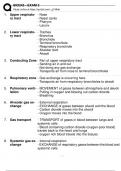
1. Upper respirato- - Nose
ry tract - Nasal cavity
- Pharynx
- Larynx
2. Lower respirato- - Trachea
ry tract - Bronchus
- Bronchiole
- Terminal bronchiole
- Respiratory bronchiole
- Alveolar duct
- Alveoli
3. Conducting Zone - Part of upper respiratory tract
- Sending air in and out
- Not doing any gas exchange
- Transports air from nose to terminal bronchioles
4. Respiratory zone - Gas exchange is occurring here
- Transports air from respiratory bronchioles to alveoli
5. Pulmonary venti- - MOVEMENT of gases between atmosphere and alevoli
lation - Pulling in oxygen and blowing out carbon dioxide
- Breathing
6. Alveolar gas ex- - External respiration
change - EXCHANGE of gases between alveoli and the blood
- Carbon dioxide moves into the alveoli
- Oxygen moves into the blood
7. Gas transport - TRANSPORT of gases in blood between lungs and
systemic cells
- Blood containing carbon dioxide (oxygen-poor blood)
travels back to the heart and lungs
- oxygen rich blood travels into the tissues
8. Systemic gas ex- - Internal respiration
change - EXCHANGE of respiratory gases between the blood and
systemic cells
, BIO245 - EXAM 3
Study online at https://quizlet.com/_g158de
- Oxygen moves into systemic cells to get gas exchange
and CO2 moves into blood
9. Where does gas - alveoli
exchange occur? - lungs
- systemic cells
10. Inspiration - Breathing in
- The atmospheric pressure is slightly greater than the
pressure inside the lungs
- (Patm > Ppulmonary system)
11. Expiration - Breathing out
- The atmospheric pressure is less than the pressure
inside the lungs
- (Patm < Ppulmonary system)
12. Bronchoconstric- - Decreasing diameter
tion - Could be that I am filled with mucus making it harder to
breathe in and out
13. Bronchodilation - Increasing diameter
- relaxation of airway
14. Alveolar sacs - Majority of gas exchange occurs here
- at the very bottom. of respiratory zone
- Can relax or contract to help air travel through
- "bunch of grapes"
15. Aveoli - "Individual grapes within the bunch"
- The more sacs, the more aveoli, the more surface area
for gas exchange
16. Aveolar type 1 - gas exchange happening on capillary networks
cells - thin barrier separating air from blood
17. Alveolar type 2 - no gas exchange happening
cells - secrete surfactant
- helps prevent the alveoli from collapsing
- decrease friction for gas exchange
Study online at https://quizlet.com/_g158de
1. Upper respirato- - Nose
ry tract - Nasal cavity
- Pharynx
- Larynx
2. Lower respirato- - Trachea
ry tract - Bronchus
- Bronchiole
- Terminal bronchiole
- Respiratory bronchiole
- Alveolar duct
- Alveoli
3. Conducting Zone - Part of upper respiratory tract
- Sending air in and out
- Not doing any gas exchange
- Transports air from nose to terminal bronchioles
4. Respiratory zone - Gas exchange is occurring here
- Transports air from respiratory bronchioles to alveoli
5. Pulmonary venti- - MOVEMENT of gases between atmosphere and alevoli
lation - Pulling in oxygen and blowing out carbon dioxide
- Breathing
6. Alveolar gas ex- - External respiration
change - EXCHANGE of gases between alveoli and the blood
- Carbon dioxide moves into the alveoli
- Oxygen moves into the blood
7. Gas transport - TRANSPORT of gases in blood between lungs and
systemic cells
- Blood containing carbon dioxide (oxygen-poor blood)
travels back to the heart and lungs
- oxygen rich blood travels into the tissues
8. Systemic gas ex- - Internal respiration
change - EXCHANGE of respiratory gases between the blood and
systemic cells
, BIO245 - EXAM 3
Study online at https://quizlet.com/_g158de
- Oxygen moves into systemic cells to get gas exchange
and CO2 moves into blood
9. Where does gas - alveoli
exchange occur? - lungs
- systemic cells
10. Inspiration - Breathing in
- The atmospheric pressure is slightly greater than the
pressure inside the lungs
- (Patm > Ppulmonary system)
11. Expiration - Breathing out
- The atmospheric pressure is less than the pressure
inside the lungs
- (Patm < Ppulmonary system)
12. Bronchoconstric- - Decreasing diameter
tion - Could be that I am filled with mucus making it harder to
breathe in and out
13. Bronchodilation - Increasing diameter
- relaxation of airway
14. Alveolar sacs - Majority of gas exchange occurs here
- at the very bottom. of respiratory zone
- Can relax or contract to help air travel through
- "bunch of grapes"
15. Aveoli - "Individual grapes within the bunch"
- The more sacs, the more aveoli, the more surface area
for gas exchange
16. Aveolar type 1 - gas exchange happening on capillary networks
cells - thin barrier separating air from blood
17. Alveolar type 2 - no gas exchange happening
cells - secrete surfactant
- helps prevent the alveoli from collapsing
- decrease friction for gas exchange