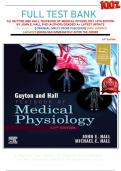
FULL TEST BANK
For GUYTON AND HALL TEXTBOOK OF MEDICAL PHYSIOLOGY 14TH EDITION
BY JOHN E. HALL PHD (AUTHOR) GRADED A+ LATEST UPDATE
PRINTEND PDF|ORIGINAL DIRECT FROM PUBLISHER|100% VERIFIED
ANSWERS|DOWLOAD IMMEDIATELY AFTER THE ORDER
14TH EDITION
Complete Test Bank, All Chapter Are Included
For More Documents Search (Testbankproferssor.Stuvia)
, GUYTON AND HALL TEXTBOOK OF MEDICAL PHYSIOLOGY 14TH EDITION
Table Of Contents
Chapter 1. Functional Organization Of The Human Body And Control Of The“Internal Environment” .....
Chapter 2. The Cell And Its Functions .......................................................................................................
Chapter 3. Genetic Control Of Protein Synthesis, Cell Function, And Cellreproduction .............................
Chapter 4. Transport Of Substances Through Cell Membranes ................................................................
Chapter 5. Membrane Potentials And Action Potentials ............................................................................
Chapter 6. Contraction Of Skeletal Muscle................................................................................................
Chapter 7. Excitation Of Skeletal Muscle: Neuromuscular Transmission And .........................................
Chapter 8. Excitation And Contraction Of Smooth Muscle .......................................................................
Chapter 9. Cardiac Muscle; The Heart As A Pump And Function Of The Heartvalves...............................
Chapter 10. Rhythmical Excitation Of The Hear ........................................................................................
Chapter 11. The Normal Electrocardiogram .............................................................................................
Chapter 12. Electrocardiographic Interpretation Of Cardiac Muscle And Coronary Blood Flow
Abnormalities: Vectorial Analysis.............................................................................................................
Chapter 13.Cardiac Arrhythmias And Their Electrocardiographicinterpretation .....................................
Chapter 14. Overview Of The Circulation; Biophysics Of Pressure, Flow, Andresistance ........................
Chapter 15. Vascular Distensibility And Functions Of The Arterial And Venous systems..........................
Chapter 16. The Microcirculation And Lymphatic System: Capillary Fluidexchange, Interstitial
Fluid, And Lymph Flow..............................................................................................................................
Chapter 17. Local And Humoral Control Of Tissue Blood Flow...............................................................
Chapter 18. Nervous Regulation Of The Circulation And Rapid Control Ofarterial Pressure ...................
Chapter 19. Role Of The Kidneys In Long-Term Control Of Arterial Pressure And In Hypertension:
The Integrated System For Aterial Pressure Regulation............................................................................
Chapter 20. Cardiac Output, Venous Return, And Their Regulation ........................................................
Chapter 21. Muscle Blood Flow And Cardiac Output During Exercise; Thecoronary Circulation And
Ischemic Heart Disease..............................................................................................................................
Chapter 22. Cardiac Failure.......................................................................................................................
Chapter 23. Heart Valves And Heart Sounds; Valvular And Congenital Heartdefects .............................
Chapter 24. Circulatory Shock And Its Treatmen......................................................................................
Chapter 25. The Body Fluid Compartments: Extracellular And Intracellular Fluids; Edema Chapter
26. The Urinary System: Functional Anatomy And Urine Formation By The Kidneys Chapter 27.
Glomerular Filtration, Renal Blood Flow, And Their Control Chapter 28. Renal Tubular
Reabsorption Andsecretion Chapter 29. Urine Concentration And Dilution; Regulation Of
Extracellular Fluid Osmolarity And Sodium Concentration Chapter 30. Renalregulation Of
Potassium, Calcium, Phosphate, And Magnesium; Integration Of Renal Mechanisms For Control Of
Blood Volume And Extracellular Fluid Volume Chapter 31. Acid-Base
Regulation................................................................
Chapter 25: The Body Fluid Compartments: Extracellular And Intracellular Fluids; ..............................
Chapter 32. Diuretics, Kidney Diseases ....................................................................................................
Chapter 33. Red Blood Cells, Anemia, And Polycythemia .......................................................................
Chapter 34. Resistance Of The Body To Infection: I. Leukocytes, Granulocytes,The Monocyte-
Macrophage System, And Inflammation
....................................................................................................
Chapter 35.-Cjapter 36 Resistance Of The Body To Infection: Ii. Immunityand Allergychapter 36.
, Guyton And Hall Textbook Of Medical Physiology 14th Edition
Guyton And Hall Textbook Of Medical Physiology 14th Edition Hall Test Bank
Chapter 1. FUnctional Organization of the Human Body and Control of the “Internal
Environment”
Test Bank
1. The MOst abundant type of cell in the human body is which of the FOllowing?
A. Neuron
B. Epithelial cell
C. Red blood cell
D. White blood cell
E. Vascular sMOoth muscle cell
F. Skeletal muscle cell
ANS: C
2. The MOst abundant SUbstance in the human body and the approximate percentage of that
SUbstance in the body is which of the FOllowing?
A. Protein, 30%
B. Protein, 60%
C. Water, 30%
D. Water, 60%
E. Carbohydrate, 30%
F. Carbohydrate, 60%
, Guyton And Hall Textbook Of Medical Physiology 14th Edition
Ans: D
3. A Large Volume Of Blood Is Transfused To A Person Whose Baroreceptor Blood Pressure
Control System Is Not Functioning And Arterial Blood Pressure Rises From The Normal Level Of 100
To160 Mm Hg. If The Same Volume Of Blood Is Infused Into The Same Person When The
Baroreceptor System Is Functioning And This Time The Arterial Pressure Increases From The
Normal Level From 100Mm Hg Up To 120 Mm Hg, Calculate The Gain Of The Baroreceptor System
In This Person.
A. -3
B. -2
C. -1
D. 0
E. +1
F. +2
G. +3 ANS: B
4. Which of the FOllowing SUbstances has the highest extracellular fluid to intracellular fluid
concentration ratio FOr MOst mammalian cells?
A. Sodium ions
B. Potassium ions
C. Carbon dioxide
D. Glucose
E. Protein
ANS: A
5. Exchange of SUbstances between the cardiovascular system and the interstitial fluid occurs
mainly in which of the FOllowing?
A. Arteries
B. Arterioles
C. Capillaries
D. Venules
E. Veins
Ans: C
6. Which Of The Following Is The Approximate Distance From The Capillaries To Most Cells Of
TheBody?
A. Less Than 50 Angstroms
For GUYTON AND HALL TEXTBOOK OF MEDICAL PHYSIOLOGY 14TH EDITION
BY JOHN E. HALL PHD (AUTHOR) GRADED A+ LATEST UPDATE
PRINTEND PDF|ORIGINAL DIRECT FROM PUBLISHER|100% VERIFIED
ANSWERS|DOWLOAD IMMEDIATELY AFTER THE ORDER
14TH EDITION
Complete Test Bank, All Chapter Are Included
For More Documents Search (Testbankproferssor.Stuvia)
, GUYTON AND HALL TEXTBOOK OF MEDICAL PHYSIOLOGY 14TH EDITION
Table Of Contents
Chapter 1. Functional Organization Of The Human Body And Control Of The“Internal Environment” .....
Chapter 2. The Cell And Its Functions .......................................................................................................
Chapter 3. Genetic Control Of Protein Synthesis, Cell Function, And Cellreproduction .............................
Chapter 4. Transport Of Substances Through Cell Membranes ................................................................
Chapter 5. Membrane Potentials And Action Potentials ............................................................................
Chapter 6. Contraction Of Skeletal Muscle................................................................................................
Chapter 7. Excitation Of Skeletal Muscle: Neuromuscular Transmission And .........................................
Chapter 8. Excitation And Contraction Of Smooth Muscle .......................................................................
Chapter 9. Cardiac Muscle; The Heart As A Pump And Function Of The Heartvalves...............................
Chapter 10. Rhythmical Excitation Of The Hear ........................................................................................
Chapter 11. The Normal Electrocardiogram .............................................................................................
Chapter 12. Electrocardiographic Interpretation Of Cardiac Muscle And Coronary Blood Flow
Abnormalities: Vectorial Analysis.............................................................................................................
Chapter 13.Cardiac Arrhythmias And Their Electrocardiographicinterpretation .....................................
Chapter 14. Overview Of The Circulation; Biophysics Of Pressure, Flow, Andresistance ........................
Chapter 15. Vascular Distensibility And Functions Of The Arterial And Venous systems..........................
Chapter 16. The Microcirculation And Lymphatic System: Capillary Fluidexchange, Interstitial
Fluid, And Lymph Flow..............................................................................................................................
Chapter 17. Local And Humoral Control Of Tissue Blood Flow...............................................................
Chapter 18. Nervous Regulation Of The Circulation And Rapid Control Ofarterial Pressure ...................
Chapter 19. Role Of The Kidneys In Long-Term Control Of Arterial Pressure And In Hypertension:
The Integrated System For Aterial Pressure Regulation............................................................................
Chapter 20. Cardiac Output, Venous Return, And Their Regulation ........................................................
Chapter 21. Muscle Blood Flow And Cardiac Output During Exercise; Thecoronary Circulation And
Ischemic Heart Disease..............................................................................................................................
Chapter 22. Cardiac Failure.......................................................................................................................
Chapter 23. Heart Valves And Heart Sounds; Valvular And Congenital Heartdefects .............................
Chapter 24. Circulatory Shock And Its Treatmen......................................................................................
Chapter 25. The Body Fluid Compartments: Extracellular And Intracellular Fluids; Edema Chapter
26. The Urinary System: Functional Anatomy And Urine Formation By The Kidneys Chapter 27.
Glomerular Filtration, Renal Blood Flow, And Their Control Chapter 28. Renal Tubular
Reabsorption Andsecretion Chapter 29. Urine Concentration And Dilution; Regulation Of
Extracellular Fluid Osmolarity And Sodium Concentration Chapter 30. Renalregulation Of
Potassium, Calcium, Phosphate, And Magnesium; Integration Of Renal Mechanisms For Control Of
Blood Volume And Extracellular Fluid Volume Chapter 31. Acid-Base
Regulation................................................................
Chapter 25: The Body Fluid Compartments: Extracellular And Intracellular Fluids; ..............................
Chapter 32. Diuretics, Kidney Diseases ....................................................................................................
Chapter 33. Red Blood Cells, Anemia, And Polycythemia .......................................................................
Chapter 34. Resistance Of The Body To Infection: I. Leukocytes, Granulocytes,The Monocyte-
Macrophage System, And Inflammation
....................................................................................................
Chapter 35.-Cjapter 36 Resistance Of The Body To Infection: Ii. Immunityand Allergychapter 36.
, Guyton And Hall Textbook Of Medical Physiology 14th Edition
Guyton And Hall Textbook Of Medical Physiology 14th Edition Hall Test Bank
Chapter 1. FUnctional Organization of the Human Body and Control of the “Internal
Environment”
Test Bank
1. The MOst abundant type of cell in the human body is which of the FOllowing?
A. Neuron
B. Epithelial cell
C. Red blood cell
D. White blood cell
E. Vascular sMOoth muscle cell
F. Skeletal muscle cell
ANS: C
2. The MOst abundant SUbstance in the human body and the approximate percentage of that
SUbstance in the body is which of the FOllowing?
A. Protein, 30%
B. Protein, 60%
C. Water, 30%
D. Water, 60%
E. Carbohydrate, 30%
F. Carbohydrate, 60%
, Guyton And Hall Textbook Of Medical Physiology 14th Edition
Ans: D
3. A Large Volume Of Blood Is Transfused To A Person Whose Baroreceptor Blood Pressure
Control System Is Not Functioning And Arterial Blood Pressure Rises From The Normal Level Of 100
To160 Mm Hg. If The Same Volume Of Blood Is Infused Into The Same Person When The
Baroreceptor System Is Functioning And This Time The Arterial Pressure Increases From The
Normal Level From 100Mm Hg Up To 120 Mm Hg, Calculate The Gain Of The Baroreceptor System
In This Person.
A. -3
B. -2
C. -1
D. 0
E. +1
F. +2
G. +3 ANS: B
4. Which of the FOllowing SUbstances has the highest extracellular fluid to intracellular fluid
concentration ratio FOr MOst mammalian cells?
A. Sodium ions
B. Potassium ions
C. Carbon dioxide
D. Glucose
E. Protein
ANS: A
5. Exchange of SUbstances between the cardiovascular system and the interstitial fluid occurs
mainly in which of the FOllowing?
A. Arteries
B. Arterioles
C. Capillaries
D. Venules
E. Veins
Ans: C
6. Which Of The Following Is The Approximate Distance From The Capillaries To Most Cells Of
TheBody?
A. Less Than 50 Angstroms