Written by students who passed Immediately available after payment Read online or as PDF Wrong document? Swap it for free 4.6 TrustPilot
logo-home
Exam (elaborations)

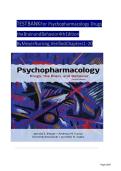
TEST BANK For Psychopharmacology Drugs the Brain and Behavior 4th Edition By Meyer Nursing, Verified Chapters 1 - 20

Rating
-
Sold
-
Pages
484
Grade
A+
Uploaded on
05-12-2024
Written in
2024/2025

Chapter 1. Principles of Pharmacology Chapter 2. Structure and Function of the Nervous System Chapter 3. Chemical Signaling by Neurotransmitters and Hormones Chapter 4. Methods of Research in Psychopharmacology Chapter 5. Catecholamines Chapter 6. Serotonin Chapter 7. Acetylcholine Chapter 8. Glutamate and GABA Chapter 9. Drug Abuse and Addiction Chapter 10. Alcohol Chapter 11. The Opioids Chapter 12. Psychomotor Stimulants: Cocaine, Amphetamine, and Related Drugs Chapter 13. Nicotine and Caffeine Chapter 14. Marijuana and the Cannabinoids Chapter 15. Hallucinogens, PCP, and Ketamine Chapter 16. Inhalants, GHB, and Anabolic-Androgenic Steroids Chapter 17. Disorders of Anxiety and Impulsivity and the Drugs Used to Treat These Disorders Chapter 18. Affective Disorders: Antidepressants and Mood Stabilizers Chapter 19. Schizophrenia: Antipsychotic Drugs Chapter 20. Neurodegenerative Diseases WWW.THENURSINGMASTERY.COM Page 3 of 247 Chapter 1: Principles of Pharmacology Multiple Choice 1. refer(s) to specific molecular changes that occur when a drug binds to a particular target site or receptor, while are the resulting widespread alterationsin function. a. Drug action; therapeutic effects b. Side effects; drug effects c. Therapeutic effects; side effects d. Drug action; drug effects ANSWER: d Textbook Reference: Pharmacology: The Science of Drug Action 2. After drug administration has occurred, the amount of drug in the blood that is free tobind at specific target sites is referred to as a. the therapeutic dose. b. first-pass effects. c. bioavailability. d. ED50. ANSWER: c Textbook Reference: Pharmacokinetic Factors Determining Drug Action 3. The specific molecular changes that occur when a drug binds to a particular target siteor receptor are referred to as a. drug effects. b. drug action. WWW.THENURSINGMASTERY.COM Page 4 of 247 c. side effects. d. placebo effects. ANSWER: b Textbook Reference: Pharmacology: The Science of Drug Action 4. Which of the following is not a possible explanation for placebo effects? a. Pavlovian conditioning b. Genetic variation c. Drug competition d. Expectation of outcome ANSWER: c Textbook Reference: Pharmacology: The Science of Drug Action WWW.THENURSINGMASTERY.COM Page 5 of 247 5. The administration of oxytocin has been proposed as a treatment for autism. a. intravenous b. oral c. intranasal d. intracerebral ANSWER: c Textbook Reference: Pharmacokinetic Factors Determining Drug Action 6. Which factor does not affect the pharmacokinetics of a drug? a. Route of administration b. Lipid solubility c. Depot binding d. Drug action ANSWER: d Textbook Reference: Pharmacokinetic Factors Determining Drug Action 7. First-pass metabolism occurs when drugs are taken a. orally. b. intravenously. c. subcutaneously. d. nasally. ANSWER: a Textbook Reference: Pharmacokinetic Factors Determining Drug Action 8. The area postrema is one area in the brain where the is not complete. a. cerebrospinal fluid b. blood–brain barrier c. choroid plexus d. phospholipid membrane ANSWER: b WWW.THENURSINGMASTERY.COM Page 6 of 247 Textbook Reference: Pharmacokinetic Factors Determining Drug Action 9. First-pass metabolism occurs with orally administered drugs because a. their absorption is slowed by food. b. drugs absorbed into the bloodstream from the stomach go to the liver on the way togeneral circulation. c. drugs must first survive the acidic environment of the stomach. d. salivary enzymes in the mouth begin the process of metabolism. ANSWER: b Textbook Reference: Pharmacokinetic Factors Determining Drug Action 10. Toxic substances in the blood trigger a vomiting response by activating the a. blood–brain barrier. b. choroid plexus. c. area postrema. d. median eminence. WWW.THENURSINGMASTERY.COM Page 7 of 247 ANSWER: c Textbook Reference: Pharmacokinetic Factors Determining Drug Action 11. Drugs administered _ have the most rapid onset of action. a. subcutaneously b. intramuscularly c. orally d. intravenously ANSWER: d Textbook Reference: Pharmacokinetic Factors Determining Drug Action 12. Ionization of a drug depends on the of the solution and the of thedrug. a. pH; pKa b. pKa; pH c. concentration; lipid solubility d. pH; concentration ANSWER: a Textbook Reference: Pharmacokinetic Factors Determining Drug Action 13. The absorption of a drug depends on all of the following except a. lipid solubility. b. ionization. c. body temperature. d. the concentration of the drug. ANSWER: c

Show more Read less
Institution
Psychopharmacology Drugs The Brain And Behavior
Course
Psychopharmacology Drugs the Brain and Behavior

Content preview

TEST BANK For Psychopharmacology Drugs
the Brain and Behavior 4th Edition
By Meyer Nursing, Verified Chapters 1 - 20


WWW.THENURSINGMASTERY.COM
Page 1 of 247

,Chapter 1. Principles of Pharmacology
Chapter 2. Structure and Function of the Nervous System
Chapter 3. Chemical Signaling by Neurotransmitters and Hormones
Chapter 4. Methods of Research in Psychopharmacology
Chapter 5. Catecholamines
Chapter 6. Serotonin
Chapter 7. Acetylcholine
Chapter 8. Glutamate and GABA
Chapter 9. Drug Abuse and Addiction
Chapter 10. Alcohol
Chapter 11. The Opioids
Chapter 12. Psychomotor Stimulants: Cocaine, Amphetamine, and Related Drugs
Chapter 13. Nicotine and Caffeine
Chapter 14. Marijuana and the Cannabinoids
Chapter 15. Hallucinogens, PCP, and Ketamine
Chapter 16. Inhalants, GHB, and Anabolic-Androgenic Steroids
Chapter 17. Disorders of Anxiety and Impulsivity and the Drugs Used to Treat These
Disorders
Chapter 18. Affective Disorders: Antidepressants and Mood Stabilizers
Chapter 19. Schizophrenia: Antipsychotic Drugs
Chapter 20. Neurodegenerative Diseases


WWW.THENURSINGMASTERY.COM
Page 2 of 247

, Chapter 1: Principles of Pharmacology


Multiple Choice


1. refer(s) to specific molecular changes that occur when a drug binds to a
particular target site or receptor, while are the resulting widespread
alterationsin function.
a. Drug action; therapeutic effects
b. Side effects; drug effects
c. Therapeutic effects; side effects
d. Drug action; drug effects
ANSWER: d
Textbook Reference: Pharmacology: The Science of Drug Action


2. After drug administration has occurred, the amount of drug in the blood that is free
tobind at specific target sites is referred to as
a. the therapeutic dose.
b. first-pass effects.
c. bioavailability.
d. ED50.
ANSWER: c
Textbook Reference: Pharmacokinetic Factors Determining Drug Action


3. The specific molecular changes that occur when a drug binds to a particular target
siteor receptor are referred to as
a. drug effects.
b. drug action.

WWW.THENURSINGMASTERY.COM
Page 3 of 247

, c. side effects.
d. placebo effects.
ANSWER: b
Textbook Reference: Pharmacology: The Science of Drug Action


4. Which of the following is not a possible explanation for placebo effects?
a. Pavlovian conditioning
b. Genetic variation
c. Drug competition
d. Expectation of outcome
ANSWER: c
Textbook Reference: Pharmacology: The Science of Drug Action


WWW.THENURSINGMASTERY.COM
Page 4 of 247

Written for

Institution
Psychopharmacology Drugs the Brain and Behavior
Course
Psychopharmacology Drugs the Brain and Behavior

Document information

Uploaded on
December 5, 2024
Number of pages
484
Written in
2024/2025
Type
Exam (elaborations)
Contains
Questions & answers

Subjects

  • catecholamines
  • serotonin
  • acetylchol
$20.99
Get access to the full document:

Wrong document? Swap it for free Within 14 days of purchase and before downloading, you can choose a different document. You can simply spend the amount again.
Written by students who passed
Immediately available after payment
Read online or as PDF

Get to know the seller

Seller avatar
Reputation scores are based on the amount of documents a seller has sold for a fee and the reviews they have received for those documents. There are three levels: Bronze, Silver and Gold. The better the reputation, the more your can rely on the quality of the sellers work.
StuviaSource Teachme2-tutor
View profile
Follow You need to be logged in order to follow users or courses
Sold
43
Member since
1 year
Number of followers
2
Documents
823
Last sold
1 month ago
test bank tutors

Ace Your Exams with Our Top-Quality Test Banks! Unlock your academic potential with our expertly curated test banks, available now on Stuvia. Get access to comprehensive and reliable study materials to boost your grades and confidence. Why Choose Us? Extensive range of subjects and courses Accurate and up-to-date content Guaranteed to enhance your study sessions Act Now! Visit my Stuvia profile and get the test banks you need to succeed. Don’t miss out—start preparing smarter today!

Read more Read less
4.8

111 reviews

5
101
4
4
3
3
2
0
1
3

Recently viewed by you

Why students choose Stuvia

Created by fellow students, verified by reviews

Quality you can trust: written by students who passed their tests and reviewed by others who've used these notes.

Didn't get what you expected? Choose another document

No worries! You can instantly pick a different document that better fits what you're looking for.

Pay as you like, start learning right away

No subscription, no commitments. Pay the way you're used to via credit card and download your PDF document instantly.

Student with book image

“Bought, downloaded, and aced it. It really can be that simple.”

Alisha Student

Working on your references?

Create accurate citations in APA, MLA and Harvard with our free citation generator.

Working on your references?

Frequently asked questions