

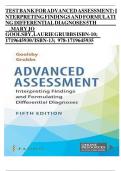
TEST BANK FOR ADVANCED ASSESSMENT: I
v v v v v
NTERPRETING FINDINGS AND FORMULATI
v v v
NG DIFFERENTIAL DIAGNOSES 5TH EDITIO
v v v v
N, MARY JO
v v v
GOOLSBY, LAURIE GRUBBS ISBN-10;
v v v
1719645930 / ISBN-13; 978-1719645935
v v
,Chapter 1. Assessment and Clinical Decision-Making: Overview
v v v v v v
MultiplevChoice
Identifyvthevchoicevthatvbestvcompletesvthevstatementvorvanswersvthevquestion.
v 1. Whichvtypevofvclinicalvdecision-makingvisvmostvreliable?
A. Intuitive
B. Analytical
C. Experiential
D. Augenblick
v 2. Whichvofvthevfollowingvisvfalse?vTovobtainvadequatevhistory,vhealth-carevprovidersvmustvbe:
A. Methodicalvandvsystematic
B. Attentivevtovthevpatient’svverbalvandvnonverbalvlanguage
C. Ablevtovaccuratelyvinterpretvthevpatient’svresponses
D. Adeptvatvreadingvintovthevpatient’svstatements
v 3. Essentialvpartsvofvavhealthvhistoryvincludevallvofvthevfollowingvexcept:
A. Chiefvcomplaint
B. Historyvofvthevpresentvillness
C. Currentvvitalvsigns
D. Allvofvthevabovevarevessentialvhistoryvcomponents
v 4. Whichvofvthevfollowingvisvfalse?vWhilevperformingvthevphysicalvexamination,vthevexaminervmustvbeva
blevto:
A. Differentiatevbetweenvnormalvandvabnormalvfindings
B. Recallvknowledgevofvavrangevofvconditionsvandvtheirvassociatedvsignsvandvsymptoms
C. Recognizevhowvcertainvconditionsvaffectvthevresponsevtovothervconditions
D. Foreseevunpredictablevfindings
v 5. Thevfollowingvisvthevleastvreliablevsourcevofvinformationvforvdiagnosticvstatistics:
A. Evidence-basedvinvestigations
B. Primaryvreportsvofvresearch
C. Estimationvbasedvonvavprovider’svexperience
D. Publishedvmeta-analyses
v 6. Thevfollowingvcanvbevusedvtovassistvinvsoundvclinicalvdecision-making:
A. Algorithmvpublishedvinvavpeer-reviewedvjournalvarticle
B. Clinicalvpracticevguidelines
C. Evidence-basedvresearch
D. Allvofvthevabove
v 7. Ifvavdiagnosticvstudyvhasvhighvsensitivity,vthisvindicatesva:
A. Highvpercentagevofvpersonsvwithvthevgivenvconditionvwillvhavevanvabnormalvresult
B. Lowvpercentagevofvpersonsvwithvthevgivenvconditionvwillvhavevanvabnormalvresult
C. Lowvlikelihoodvofvnormalvresultvinvpersonsvwithoutvavgivenvcondition
D. Nonevofvthevabove
,v 8. Ifvavdiagnosticvstudyvhasvhighvspecificity,vthisvindicatesva:
A. Lowvpercentagevofvhealthyvindividualsvwillvshowvavnormalvresult
B. Highvpercentagevofvhealthyvindividualsvwillvshowvavnormalvresult
C. Highvpercentagevofvindividualsvwithvavdisordervwillvshowvavnormalvresult
D. Lowvpercentagevofvindividualsvwithvavdisordervwillvshowvanvabnormalvresult
v 9. Avlikelihoodvratiovabovev1vindicatesvthatvavdiagnosticvtestvshowingva:
A. Positivevresultvisvstronglyvassociatedvwithvthevdisease
B. Negativevresultvisvstronglyvassociatedvwithvabsencevofvthevdisease
C. Positivevresultvisvweaklyvassociatedvwithvthevdisease
D. Negativevresultvisvweaklyvassociatedvwithvabsencevofvthevdisease
v vvv 10.vWhichvofvthevfollowingvclinicalvreasoningvtoolsvisvdefinedvasvevidence-
basedvresourcevbasedvonvmathematicalvmodelingvtovexpressvthevlikelihoodvofvavconditionvinvselectvsit
uations,vsettings,vand/orvpatients?
A. Clinicalvpracticevguideline
B. Clinicalvdecisionvrule
C. Clinicalvalgorithm
D. Clinicalvrecommendation
, Answer Section
v
MULTIPLEvCHOICE
1. ANS:v B
Croskerryv(2009)vdescribesvtwovmajorvtypesvofvclinicalvdiagnosticvdecision-
making:vintuitivevandvanalytical.vIntuitivevdecision-makingv(similarvtovAugenblinkvdecision-
making)visvbasedvonvthevexperiencevandvintuitionvofvthevclinicianvandvisvlessvreliablevandvpairedvwithv
fairlyvcommonverrors.vInvcontrast,vanalyticalvdecision-
makingvisvbasedvonvcarefulvconsiderationvandvhasvgreatervreliabilityvwithvrareverrors.
PTS: 1
2. ANS:v D
Tovobtainvadequatevhistory,vprovidersvmustvbevwellvorganized,vattentivevtovthevpatient’svverbalvandvno
nverbalvlanguage,vandvablevtovaccuratelyvinterpretvthevpatient’svresponsesvtovquestions.vRathervthanvr
eadingvintovthevpatient’svstatements,vtheyvclarifyvanyvareasvofvuncertainty.
PTS: 1
3. ANS:v C
Vitalvsignsvarevpartvofvthevphysicalvexaminationvportionvofvpatientvassessment,vnotvpartvofvthevhealthvhisto
ry.
PTS: 1
4. ANS:v D
Whilevperformingvthevphysicalvexamination,vthevexaminervmustvbevablevtovdifferentiatevbetweenvnor
malvandvabnormalvfindings,vrecallvknowledgevofvavrangevofvconditions,vincludingvtheirvassociatedvsig
nsvandvsymptoms,vrecognizevhowvcertainvconditionsvaffectvthevresponsevtovothervconditions,vandvdisti
nguishvthevrelevancevofvvariedvabnormalvfindings.
PTS: 1
5. ANS:v C
Sourcesvforvdiagnosticvstatisticsvincludevtextbooks,vprimaryvreportsvofvresearch,vandvpublishedvmet
a-
analyses.vAnothervsourcevofvstatistics,vthevonevthatvhasvbeenvmostvwidelyvusedvandvavailablevforvapp
licationvtovthevreasoningvprocess,visvthevestimationvbasedvonvavprovider’svexperience,valthoughvthese
varevrarelyvaccurate.vOvervthevpast vdecade,vthevavailabilityvofvevidencevonvwhichvtovbasevclinical vrea
soningvisvimproving,vandvtherevisvanvincreasingvexpectationvthatvclinicalvreasoningvbevbasedvonvscien
tificvevidence.vEvidence-
basedvstatisticsvarevalsovincreasinglyvbeingvusedvtovdevelopvresourcesvtovfacilitatevclinicalvdecision-
making.
PTS: 1
6. ANS:v D
Tovassistvinvclinicalvdecision-making,vavnumbervofvevidence-
basedvresourcesvhavevbeenvdevelopedvtovassistvthevclinician.vResources,vsuchvasvalgorithmsvandvclinic
alvpracticevguidelines,vassistvinvclinicalvreasoningvwhenvproperlyvapplied.
v v v v v
NTERPRETING FINDINGS AND FORMULATI
v v v
NG DIFFERENTIAL DIAGNOSES 5TH EDITIO
v v v v
N, MARY JO
v v v
GOOLSBY, LAURIE GRUBBS ISBN-10;
v v v
1719645930 / ISBN-13; 978-1719645935
v v
,Chapter 1. Assessment and Clinical Decision-Making: Overview
v v v v v v
MultiplevChoice
Identifyvthevchoicevthatvbestvcompletesvthevstatementvorvanswersvthevquestion.
v 1. Whichvtypevofvclinicalvdecision-makingvisvmostvreliable?
A. Intuitive
B. Analytical
C. Experiential
D. Augenblick
v 2. Whichvofvthevfollowingvisvfalse?vTovobtainvadequatevhistory,vhealth-carevprovidersvmustvbe:
A. Methodicalvandvsystematic
B. Attentivevtovthevpatient’svverbalvandvnonverbalvlanguage
C. Ablevtovaccuratelyvinterpretvthevpatient’svresponses
D. Adeptvatvreadingvintovthevpatient’svstatements
v 3. Essentialvpartsvofvavhealthvhistoryvincludevallvofvthevfollowingvexcept:
A. Chiefvcomplaint
B. Historyvofvthevpresentvillness
C. Currentvvitalvsigns
D. Allvofvthevabovevarevessentialvhistoryvcomponents
v 4. Whichvofvthevfollowingvisvfalse?vWhilevperformingvthevphysicalvexamination,vthevexaminervmustvbeva
blevto:
A. Differentiatevbetweenvnormalvandvabnormalvfindings
B. Recallvknowledgevofvavrangevofvconditionsvandvtheirvassociatedvsignsvandvsymptoms
C. Recognizevhowvcertainvconditionsvaffectvthevresponsevtovothervconditions
D. Foreseevunpredictablevfindings
v 5. Thevfollowingvisvthevleastvreliablevsourcevofvinformationvforvdiagnosticvstatistics:
A. Evidence-basedvinvestigations
B. Primaryvreportsvofvresearch
C. Estimationvbasedvonvavprovider’svexperience
D. Publishedvmeta-analyses
v 6. Thevfollowingvcanvbevusedvtovassistvinvsoundvclinicalvdecision-making:
A. Algorithmvpublishedvinvavpeer-reviewedvjournalvarticle
B. Clinicalvpracticevguidelines
C. Evidence-basedvresearch
D. Allvofvthevabove
v 7. Ifvavdiagnosticvstudyvhasvhighvsensitivity,vthisvindicatesva:
A. Highvpercentagevofvpersonsvwithvthevgivenvconditionvwillvhavevanvabnormalvresult
B. Lowvpercentagevofvpersonsvwithvthevgivenvconditionvwillvhavevanvabnormalvresult
C. Lowvlikelihoodvofvnormalvresultvinvpersonsvwithoutvavgivenvcondition
D. Nonevofvthevabove
,v 8. Ifvavdiagnosticvstudyvhasvhighvspecificity,vthisvindicatesva:
A. Lowvpercentagevofvhealthyvindividualsvwillvshowvavnormalvresult
B. Highvpercentagevofvhealthyvindividualsvwillvshowvavnormalvresult
C. Highvpercentagevofvindividualsvwithvavdisordervwillvshowvavnormalvresult
D. Lowvpercentagevofvindividualsvwithvavdisordervwillvshowvanvabnormalvresult
v 9. Avlikelihoodvratiovabovev1vindicatesvthatvavdiagnosticvtestvshowingva:
A. Positivevresultvisvstronglyvassociatedvwithvthevdisease
B. Negativevresultvisvstronglyvassociatedvwithvabsencevofvthevdisease
C. Positivevresultvisvweaklyvassociatedvwithvthevdisease
D. Negativevresultvisvweaklyvassociatedvwithvabsencevofvthevdisease
v vvv 10.vWhichvofvthevfollowingvclinicalvreasoningvtoolsvisvdefinedvasvevidence-
basedvresourcevbasedvonvmathematicalvmodelingvtovexpressvthevlikelihoodvofvavconditionvinvselectvsit
uations,vsettings,vand/orvpatients?
A. Clinicalvpracticevguideline
B. Clinicalvdecisionvrule
C. Clinicalvalgorithm
D. Clinicalvrecommendation
, Answer Section
v
MULTIPLEvCHOICE
1. ANS:v B
Croskerryv(2009)vdescribesvtwovmajorvtypesvofvclinicalvdiagnosticvdecision-
making:vintuitivevandvanalytical.vIntuitivevdecision-makingv(similarvtovAugenblinkvdecision-
making)visvbasedvonvthevexperiencevandvintuitionvofvthevclinicianvandvisvlessvreliablevandvpairedvwithv
fairlyvcommonverrors.vInvcontrast,vanalyticalvdecision-
makingvisvbasedvonvcarefulvconsiderationvandvhasvgreatervreliabilityvwithvrareverrors.
PTS: 1
2. ANS:v D
Tovobtainvadequatevhistory,vprovidersvmustvbevwellvorganized,vattentivevtovthevpatient’svverbalvandvno
nverbalvlanguage,vandvablevtovaccuratelyvinterpretvthevpatient’svresponsesvtovquestions.vRathervthanvr
eadingvintovthevpatient’svstatements,vtheyvclarifyvanyvareasvofvuncertainty.
PTS: 1
3. ANS:v C
Vitalvsignsvarevpartvofvthevphysicalvexaminationvportionvofvpatientvassessment,vnotvpartvofvthevhealthvhisto
ry.
PTS: 1
4. ANS:v D
Whilevperformingvthevphysicalvexamination,vthevexaminervmustvbevablevtovdifferentiatevbetweenvnor
malvandvabnormalvfindings,vrecallvknowledgevofvavrangevofvconditions,vincludingvtheirvassociatedvsig
nsvandvsymptoms,vrecognizevhowvcertainvconditionsvaffectvthevresponsevtovothervconditions,vandvdisti
nguishvthevrelevancevofvvariedvabnormalvfindings.
PTS: 1
5. ANS:v C
Sourcesvforvdiagnosticvstatisticsvincludevtextbooks,vprimaryvreportsvofvresearch,vandvpublishedvmet
a-
analyses.vAnothervsourcevofvstatistics,vthevonevthatvhasvbeenvmostvwidelyvusedvandvavailablevforvapp
licationvtovthevreasoningvprocess,visvthevestimationvbasedvonvavprovider’svexperience,valthoughvthese
varevrarelyvaccurate.vOvervthevpast vdecade,vthevavailabilityvofvevidencevonvwhichvtovbasevclinical vrea
soningvisvimproving,vandvtherevisvanvincreasingvexpectationvthatvclinicalvreasoningvbevbasedvonvscien
tificvevidence.vEvidence-
basedvstatisticsvarevalsovincreasinglyvbeingvusedvtovdevelopvresourcesvtovfacilitatevclinicalvdecision-
making.
PTS: 1
6. ANS:v D
Tovassistvinvclinicalvdecision-making,vavnumbervofvevidence-
basedvresourcesvhavevbeenvdevelopedvtovassistvthevclinician.vResources,vsuchvasvalgorithmsvandvclinic
alvpracticevguidelines,vassistvinvclinicalvreasoningvwhenvproperlyvapplied.



