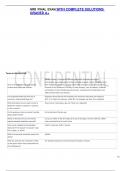
Exam 2 CCCWITH 100- COMPLETE SOLUTIONS
Terms in this set (10)
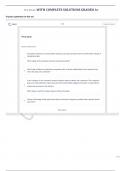
Which intravenous fluids are hypertonic? 5% dextrose in normal saline
(Pulls water out of cells)
Which intravenous fluids are isotonic? Ringers and lactated ringer
Which intravenous fluid is slightly 5% dextrose in water
hypotonic? (Pulls fluid into the cell}
Which electrolyte concentration has the High serum potassium of 7.2 mEq/L
potential to precipitate dysthymia's and
cardiac arrest in a client?
What is the normal range of K (potassium)? 3.5-5.0
What is the normal range of Na (sodium)? 135-145
What is the normal range of Cl (chloride)? 96-106
What is the normal range of Ca (calcium)? 9-10.5 mg/dL
Which clinical finding would you anticipate Distended jugular veins
with a client with extra cellular fluid volume
excess?
Hypokalemia and electrolyte deficiency Leg cramps
S/S Muscle weakness
1/1
Terms in this set (10)
Which intravenous fluids are hypertonic? 5% dextrose in normal saline
(Pulls water out of cells)
Which intravenous fluids are isotonic? Ringers and lactated ringer
Which intravenous fluid is slightly 5% dextrose in water
hypotonic? (Pulls fluid into the cell}
Which electrolyte concentration has the High serum potassium of 7.2 mEq/L
potential to precipitate dysthymia's and
cardiac arrest in a client?
What is the normal range of K (potassium)? 3.5-5.0
What is the normal range of Na (sodium)? 135-145
What is the normal range of Cl (chloride)? 96-106
What is the normal range of Ca (calcium)? 9-10.5 mg/dL
Which clinical finding would you anticipate Distended jugular veins
with a client with extra cellular fluid volume
excess?
Hypokalemia and electrolyte deficiency Leg cramps
S/S Muscle weakness
1/1